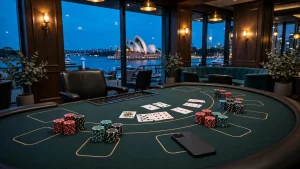
Bitcoin describes how an account is funded, while the pokie remains a slot game; free play and real-money play are distinct.

A Bitcoin pokie is a digital slot machine that accepts Bitcoin as payment. The phrase joins two separate things: the game and the currency used to fund it. That distinction matters. Bitcoin does not turn a slot machine into a different kind of game; it identifies the payment method associated with it.
The naming can make the currency seem like the main event. It is the newer, more conspicuous part of the label, while the pokie itself belongs to a familiar category of casino game. The screen may present a slot machine; Bitcoin describes the financial rail attached to it. One is the form of entertainment, the other the means of payment. They meet at the account, but they are not interchangeable.
This is a useful distinction in a market where compact labels do a great deal of work. “Bitcoin pokies” can sound like a special class of machine, perhaps with rules or outcomes tied to the currency. The term alone establishes no such thing. It describes a digital slot game that accepts Bitcoin, not a new game format. The currency does not, by its name, explain the game’s design or promise a particular result.
When looking for real-cash online pokies in Australia in 2026, check the licensing and payment details available for each option. This list provides a concise reference to those stated details.
Rollero Casino
Rollero Casino is listed with a Curacao Gaming Control Board licence, OGL/2023/176/0095, held by Hollycorn N.V.
LuckyVibe
LuckyVibe is listed with a Curacao Gaming Control Board licence, OGL/2023/176/0095, held by Hollycorn N.V.
House of Pokies
House of Pokies lists an international iGaming licence, though the source does not name the jurisdiction. PayID withdrawals are stated as taking 1–24 hours; the minimum deposit is A$30, or A$10 via PayID.
Wild Tokyo
Wild Tokyo is listed as licensed in Curacao. Its stated minimum deposit is A$10, with crypto payouts taking 30–60 minutes and fiat payouts 1–5 days.
Uptown Pokies
Uptown Pokies is listed as operating since 2017 with a Curacao licence. Its stated minimum deposit is A$20.
MrPacho
MrPacho lists crypto payouts of 30–120 minutes and fiat payouts of 24–72 hours. Its stated minimum deposit is A$30.
Golden Pokies
Golden Pokies is listed with a Curacao licence.
WinSpirit Casino
WinSpirit Casino is listed with a Curacao eGaming licence, OGL/2024/923/0383, held by Antillephone N.V. Its stated minimum deposit is A$30.
JustCasino
JustCasino is listed with a Curacao Gaming Control Board licence.
Kingmaker
Kingmaker lists crypto payouts at around 90 minutes and fiat payouts at 1–5 days. Its stated minimum deposit is A$30.
Nor does the word “cash” settle what a product is. In everyday speech, cash suggests money readily exchanged or held in conventional form. In a digital gambling context, the label may instead point loosely toward play involving money rather than a purely recreational mode. Bitcoin, however, remains the payment currency named in this particular category. The phrase should not be read as evidence that a balance is held in banknotes, that a prize is guaranteed, or that a game has any special cash-out property.
This is where the vocabulary tends to blur. A search for a real-money slot game may lead to language about cash, coins, credits or cryptocurrency, as if these words were different names for the same thing. They are not. A slot game is the product being played; Bitcoin is a payment form; and “real cash” is a broad expression whose meaning depends on how a particular service uses it. Conflating them makes the description sound clearer than it is.
The distinction is also cultural. Gambling has always borrowed the language of the payment systems around it. Coins once made the wager visible in the hand; cards and electronic accounts made it less so. Bitcoin brings another form of money into the vocabulary, but the underlying category remains recognisable: a digital slot machine associated with a payment method. New rails, old nouns.
That familiarity should not be mistaken for a statement about access. A phrase describing a type of game does not establish that the game is available in a particular place, lawful there, or suitable for any particular person. In Australia, wording such as “Bitcoin pokies Australia” is a description people may encounter, not a verdict on the legal position or a recommendation to use a service. The label does not do the work of regulation.
The same care applies to apps and websites. A slot game appearing in a digital setting does not make every app a casino, and the presence of a Bitcoin reference does not establish that an app accepts deposits or pays winnings. Those are separate claims about a service, not meanings contained in the term “Bitcoin pokie.” A name can identify a category; it cannot verify the conduct behind it.
There is a quiet change in emphasis when payment becomes part of a game’s public identity. The entertainment is presented alongside a financial technology, and the pairing can give the whole arrangement an air of novelty. But novelty belongs to the rail, not necessarily to the machine. The word “Bitcoin” may command attention; “pokies” still names the game.
This page is affiliate material and may include sponsored links. That disclosure describes the commercial context of the page, not an endorsement of gambling or a claim that any service is appropriate for Australian residents. A label is not permission. Nor is it a promise.
A game can display a balance without that balance having the same meaning in every mode. In free play, credits are part of the game’s internal record: they let the screen register a stake and show how play changes the balance. In real-money play, the balance is connected to funds put at risk. The visual language may be similar, but the financial relationship is not.
That distinction matters because a number on a game screen can look more definite than it is. Credits are not a universal currency shared across every game. A specialist review describes them as specific to the individual game, with their Bitcoin value depending both on that game’s credit system and on the current BTC price. The point is not that every game uses one standard conversion. It does not follow that a credit in one title has the same value as a credit in another.
The exchange rate adds another moving part. Where a balance is denominated in Bitcoin, its value in conventional currency changes with the Bitcoin price. A credit count can remain unchanged while the value represented by those credits shifts. The screen may offer the reassuring appearance of a fixed unit; the underlying arithmetic is less settled.
Free play and real-money play are distinct options for online pokies. Free play is a way to use a game without putting money at stake in that session. Real-money play attaches the game’s activity to an actual financial balance. These modes can look alike because both may show reels, a stake control and a running total. Their resemblance is a matter of interface, not consequence.
The difference also affects what a displayed balance can tell anyone. In free mode, the credits describe activity within the game. In real-money mode, the credits are tied to funds and to the game’s own representation of those funds. The credit label itself does not explain the conversion, nor does it establish that a balance can be carried from one game to another.
This is why “real cash” is an imprecise description of the screen. It tends to collapse several steps into one phrase: a game’s credit unit, its relationship to a Bitcoin balance, and the changing value of Bitcoin beyond the game. None is quite interchangeable with the others. A player might see a stable credit count, a balance expressed in Bitcoin, and a changing external price at the same time.
The familiar history of coin-operated machines offers a small explanation for the persistence of credits. A machine needed a unit it could count; the player needed a visible record of what remained. Digital games inherited that grammar, even when the unit no longer resembles a coin. Credits make play legible, but legibility is not the same as transparency. A label can show how many units are on screen without explaining what those units mean financially.
Free and real-money modes should not be treated as alternate labels for a single experience. A free-play balance is not the same thing as a balance funded with money, while a real-money balance should not be read as a fixed cash figure unless the game and currency conversion make that relationship clear. The credit system belongs to the game; Bitcoin’s price belongs to a market outside it.
In Australia, real-money online casino games are not a locally licensed service that may be offered to residents. Anyone under 18 must not participate in real-money gambling. Those boundaries matter even when the question appears to be only about how a game counts its credits.
The screen is a useful ledger, but a partial one. It records the game’s units; it cannot, by itself, settle their value. This article is affiliate material and may include sponsored links.
“Pay” can describe several different things: accepting a deposit, recording a balance, or sending money out. An app label that promises cash payouts does not, by itself, establish which of those functions is available or whether a payment will be made. A wallet transfer is a payment mechanism, not a guarantee about an app or its operator.
The basic arrangement described for Bitcoin play has two parts. An account is created with the service, which generally means supplying basic information and choosing a secure password. Bitcoin is then sent from a personal wallet to the address provided by the casino. The app, if one is involved, is only the interface through which some of this activity may be presented; the transfer itself moves between wallet addresses.
That distinction matters because familiar terms can blur separate systems. “Casino apps for real cash” sounds like a single category, but the phrase does not say whether an app is merely a way to access an account, whether it accepts a Bitcoin deposit, or what conditions apply to any payout. Nor does the presence of casino games on a screen prove that winnings are withdrawable. A payment claim needs to be assessed as a claim about the operator and its terms, not inferred from the word “app.”
Bitcoin’s role here is specific: it is the asset sent from a wallet to the casino’s supplied address. It does not make every game a payment service, and it does not make an interface a reliable source of cash. The transaction can be visible as a transfer while the account’s treatment of that deposit remains a separate matter. The distinction is less glamorous than an app-store slogan. It is also more useful.
Searches for casino games that pay cash often gather together free play, real-money gambling and payment services as though they were interchangeable. They are not. A free game may offer play without establishing any route to withdrawable money. A real-money account may accept funds without proving that every payout request will be approved. The word “pay” is therefore incomplete unless it refers to a particular transaction and the conditions attached to it.
Account setup is similarly modest in what it establishes. Basic registration information and a password create access credentials; they do not certify the quality of the service, its payment practices or the outcome of a later request. Secure passwords help protect access, but account security and operator reliability are different questions. One protects the doorway. It says nothing about what lies beyond it.
Bitcoin Deposit Process
Account Creation
Create an account with the service by providing basic information and choosing a secure password.
Address Acquisition
Obtain the specific Bitcoin address provided by the casino for deposits.
Wallet Transfer
Send Bitcoin from a personal wallet to the provided casino address.
The wallet transfer also depends on using the address supplied for that purpose. Bitcoin is not sent by tapping a generic “pay” button in the abstract: the sender’s wallet directs a transaction to a particular address. That description should not be mistaken for an endorsement of any app, a recommendation to open an account, or evidence that a particular service is available or dependable.
This material is affiliate content and may include sponsored links. That disclosure does not turn a payment claim into a guarantee or make an app suitable for real-money gambling. Real-money play is for adults aged eighteen or older. A screen can make money movement look like one seamless action; in practice, the account, the wallet and the operator remain distinct. Short version: “pay” is not proof.
In Australia, the distinction between a local licence and an offshore one is not a technicality. The Interactive Gambling Act 2001 makes it illegal for operators to provide real-money online casino games, including pokies, to people physically in the country. A locally licensed online casino therefore cannot lawfully offer real-money pokies to Australian residents. The familiar language of “licensed casinos” can obscure this boundary: a licence issued overseas does not make an operator locally authorised.
The offshore services discussed here hold licences primarily from Curacao eGaming or the Anjouan Gaming Authority. Those licences come from outside Australia and do not override Australian law. Online casino-style games offered to people in Australia are treated as prohibited interactive gambling services, whether the game is a poker table, roulette wheel or digital pokie. The legal responsibility described by the Act falls on operators providing the service; an individual player does not incur a fine or criminal prosecution merely for playing offshore.
That distinction can make the market look more settled than it is. An offshore site may present a licence, account pages and familiar casino language, while remaining beyond the framework that governs local consumer disputes. Australian consumer protection laws do not apply to these offshore operators. If a disagreement arises over an account or a payment, the protections available against a locally regulated business cannot simply be assumed to travel with the website.
The practical landscape is also shaped by enforcement. Offshore online casino services are actively blocked in Australia, so a site’s appearance online does not mean that access is stable or that its service has local approval. Blocking is part of the regulatory boundary, not an inconvenience that changes the operator’s legal status. A digital doorway can be visible without being a local institution.
This is why “real cash online pokies Australia” is an uneasy phrase: it joins a familiar form of entertainment to a market in which local operators are barred from providing it for money. Offshore licensing describes where an operator is authorised; it does not describe protection under Australian law. The words may sit close together on a screen. Legally, they remain far apart.
The setting reflects a broader choice about who may offer gambling and who can be held to account. Australia does not treat online casino games as an ordinary extension of a local venue. The prohibition targets the provision of the service to people in the country, while offshore licences belong to another jurisdiction. That leaves a sharp divide between the reach of an overseas licence and the remedies available under Australian consumer law.
This material is affiliate content and may include sponsored links. That disclosure does not alter the legal boundary: offshore operators are not locally licensed providers, and Australian consumer protection laws do not apply to them. A commercial label is not a substitute for local oversight.
A Bitcoin deposit begins with an address, not a card form. The casino displays an account address; the player copies it and sends Bitcoin to it from a personal wallet. That is the basic transfer. It does not, by itself, establish how much must be sent, when an account will show the deposit, or whether a particular offer applies.
Minimum-deposit wording should therefore be treated as specific to the service and its current terms, rather than as a general feature of Bitcoin payments. A search for a real-cash casino with a small deposit may produce crisp figures and confident promises, but neither makes those terms universal. The amount requested, any conditions attached to it and whether Bitcoin is accepted are matters to verify in the service’s own payment information before any transfer. No particular minimum can be inferred from the payment method alone.
There is a quieter risk in the address itself. If an address is reused, a transfer may not be matched cleanly to the intended account. A deposit can also go unrecognised if the amount sent is below what the service expects, or if its system detects the transaction late. From the player’s side, a wallet may show that Bitcoin has been sent while the casino balance remains unchanged. Those are different records of the same attempted payment, and a visible transfer is not proof that the receiving account has credited it.
This makes the details of a deposit less trivial than they appear. Copying an address accurately matters: cryptocurrency sent to an incorrect address is generally unrecoverable because blockchain transfers cannot simply be reversed. Reusing an old address or relying on a previous payment instruction can also create uncertainty about where the funds were meant to go. A new transfer made in response to an uncredited one may compound the problem rather than resolve it.
“No deposit” language belongs to a different category. It describes a promotional claim, not a deposit method, and the phrase alone says little about whether an offer exists, who can access it, or what conditions govern it. It should not be read as evidence that free pokies can produce withdrawable cash, nor as a promise that a casino will provide real-money play without payment. The label is the easy part; the terms determine what it means.
This article is affiliate material and may include sponsored links. That disclosure is not an endorsement or an invitation to use an offshore gambling service. Australian consumer protection laws do not apply to offshore operators, and real-money online casino services are prohibited from being provided to people in Australia. Anyone under eighteen must not gamble for real money. These boundaries matter more than a deposit banner.
A payment screen can make the process look settled: address copied, Bitcoin sent, balance expected. In practice, the address, amount and operator’s recognition of the transfer all matter. The blockchain records a transaction; it does not decide whether a casino has credited an account or whether promotional wording has any cash value.
A balance held in Bitcoin is not the same thing as cash sitting in a bank account. It is a digital asset whose value is expressed in Bitcoin, while its value in Australian dollars can change with the market. That distinction can make a displayed balance look stable in one unit while its purchasing power shifts in another. “Real money” describes the stakes, not a promise that the balance behaves like cash.
Bitcoin’s security is often attributed to the blockchain: transactions are recorded on a distributed ledger rather than settled through a conventional card network. That is a feature of the payment system, not a blanket guarantee about every service that accepts Bitcoin. A secure transaction can still be sent to the wrong destination, and the safety of a platform’s accounts or business practices is a separate matter. Different questions, inconveniently.
A specialist review describes Bitcoin as offering more anonymity than traditional payment methods. The comparison should not be mistaken for invisibility. Bitcoin transactions are associated with wallet addresses and recorded on a public blockchain; the degree to which an address can be linked to a person depends on what information is connected to it. The social appeal is clear enough: a payment may reveal less at the point of use than a card transaction, while leaving a trace of its own.
Fees are another part of the contrast. A specialist review characterises Bitcoin transaction costs as lower than those attached to credit cards and other conventional methods. That is a comparative claim, not a fixed price: network conditions and the transaction itself matter, and fees can change. A payment rail can be cheaper without making the underlying activity less risky or more valuable.
This difference also alters how “cash” is understood. Conventional money is familiar because prices, wages and bills are generally reckoned in dollars. Bitcoin inserts an additional layer between the amount shown on a screen and its value in everyday life. That layer can feel modern, private or simply unfamiliar; none of those impressions changes the financial exposure.
Real-money gambling is restricted by Australian law, and this discussion is not an offer or advertisement for casino play. Real-money gambling is for adults aged eighteen or older. This page is affiliate material and may include sponsored links; disclosure does not change the legal boundary or turn a payment method into a safeguard.
A free mode and a cash prize are different things, even when they appear under the same game title. Online pokies can offer a choice between free play and real-money play; that choice alone says nothing about whether a free session can produce money that may be withdrawn.
The distinction matters because “win” can describe two unlike outcomes. A game may show a result during free play, but a displayed result is not, by itself, evidence of a cash balance or a right to withdraw funds. Free access describes the mode of play. It does not establish the terms attached to any prize.
This is the gap behind the promise implied by phrases such as “play for free and win cash”. The wording can make free entertainment sound like a route to a real-money payout, when the two are separate questions. Whether a particular free mode offers anything beyond play cannot be inferred simply from its existence. Nor does “no deposit” settle the matter: it describes an absence of an initial payment, not the conditions for turning a result into withdrawable cash.
The distinction is less exciting than the pitch. It is also more useful. A claim about real cash requires clear terms establishing that winnings from free play can be credited and withdrawn. Without that, free play should be understood as free play—not as a cash prize waiting at the end of a session.
That boundary is especially important in Australia, where the legal setting for real-money online pokies is restrictive. Free access should not be read as proof that a service may lawfully offer cash gambling to people in the country. A free mode does not change the character of a prohibited real-money service.
The small word “free” does a great deal of work in gambling language. Sometimes it describes the price of entry; sometimes it sits beside a suggestion of winnings. Those are not equivalent promises. Free is not payable.
This article is affiliate material and may include sponsored links.
Online games may offer a free mode or a mode that involves real-money gambling. The screen can look much the same in either case; the important difference is whether money is being staked. Free play is a way to use a game without placing a real-money wager. Real-money play means gambling, not merely viewing the same interface with a different balance.
That distinction matters in Australia, where real-money online casino games cannot lawfully be offered to people in the country. A page describing an online casino for real cash should not make the activity sound like an ordinary local service. Offshore availability does not change the legal boundary, and Australian consumer protections do not apply to the offshore operators discussed elsewhere on this page.
Age is another boundary, not a footnote. Real-money gambling is for adults aged 18 or older; being old enough does not make an otherwise prohibited service lawful. Free access, meanwhile, should not be confused with permission to gamble for money. The modes differ in what is at stake, and the rules around them are not interchangeable.
The language used to describe these options can blur the line. Phrases such as “play for cash” or “real-money mode” may sound like a simple settings choice, but the presence of a button does not settle whether an activity is lawful or protected. Nor does a free mode turn an offshore casino into a local, regulated service. Interface design is not a licence.
This is a matter of framing as much as mechanics. Free online play and gambling with real money may sit side by side in a menu, yet they belong to different categories. One involves no real-money stake; the other carries legal and financial consequences. A neat pair of buttons cannot make that distinction disappear.
This page is affiliate material and may include sponsored links. That disclosure does not endorse or promote real-money casino services to Australian audiences.
A Bitcoin withdrawal begins inside the casino account. The player copies a receiving address from their own wallet, pastes it into the withdrawal form and submits the request. The address is not a decorative detail: blockchain transfers sent to the wrong destination are generally irreversible, with no ordinary reversal process waiting in reserve.
After the operator approves the request, it sends Bitcoin to that address. A specialist review reports that most Bitcoin withdrawal transactions are completed within an hour, but that account of timing is not a guarantee for an individual request. The word “completed” can also conceal two separate stages: the operator releasing a payment and the blockchain recording it. A request still awaiting approval has not reached the network.
Network fees belong to the transfer itself. They are paid to miners and vary with conditions on the Bitcoin network; a specialist review describes them as generally very small. That charge is different from delay inside the operator’s own system. An approval queue, unfinished identity checks or payments released in batches during business hours can hold up a withdrawal before a transaction is sent. A slow request is not necessarily a slow blockchain.
The distinction matters when a balance appears to be going nowhere. A transaction identifier can help show whether payment has reached the network; an account status or support response may be needed to clarify an operator-side hold. Neither should be mistaken for a reason to send another payment.
A request to deposit more money to “unlock” a stuck withdrawal is a warning sign, not a sensible troubleshooting step. Sending additional Bitcoin does not reverse an earlier transfer or prove that a payout will follow. Once Bitcoin leaves a wallet for an incorrect address, recovery is generally not available. The payment rail is exacting; the people managing the queue are not the blockchain.
Account checks can extend beyond registration. Stage-two verification may be requested at the first withdrawal or after cumulative deposits reach a threshold somewhere between AUD 2,000 and AUD 5,000; the point varies by operator. Crypto checks can also ask for evidence linking a wallet to its owner, such as a signed message from the deposit address or a screenshot showing the outgoing transaction. These requests make the wallet part of the paperwork.
Bonus disputes often begin with contribution rules buried in terms. A game’s contribution may differ from another’s: table games can count at 0%, while pokies may count at 100%, and some high-return games can be capped at 50%. A player can therefore complete substantial play without making the progress expected. Exceeding a maximum bet limit can void bonus play as well. The dispute is then less about luck than about which clause was noticed in time.
A significant win can bring a security review, sometimes delaying a payout, particularly on a new account or a first large withdrawal. Completing verification before requesting a withdrawal can reduce common administrative delays, though it cannot guarantee a particular outcome. A specialist review recommends finishing the later verification stages early; that is advice from a review, not a timetable that applies to every operator.
A mistaken crypto address is a more final problem. Bitcoin and Ethereum transfers are irreversible, and a payment sent to the wrong address is generally unrecoverable. A stalled withdrawal is different: sending more money to “unlock” it does not resolve the underlying issue and risks compounding the loss.
This material is affiliate content and may include sponsored links; that disclosure does not change the legal position. Australian consumer protection laws do not apply to offshore operators. Real-money gambling is for adults aged eighteen or older. Verification is paperwork, not protection.