Jackpot Jill Payments for Australian Players
 Available in US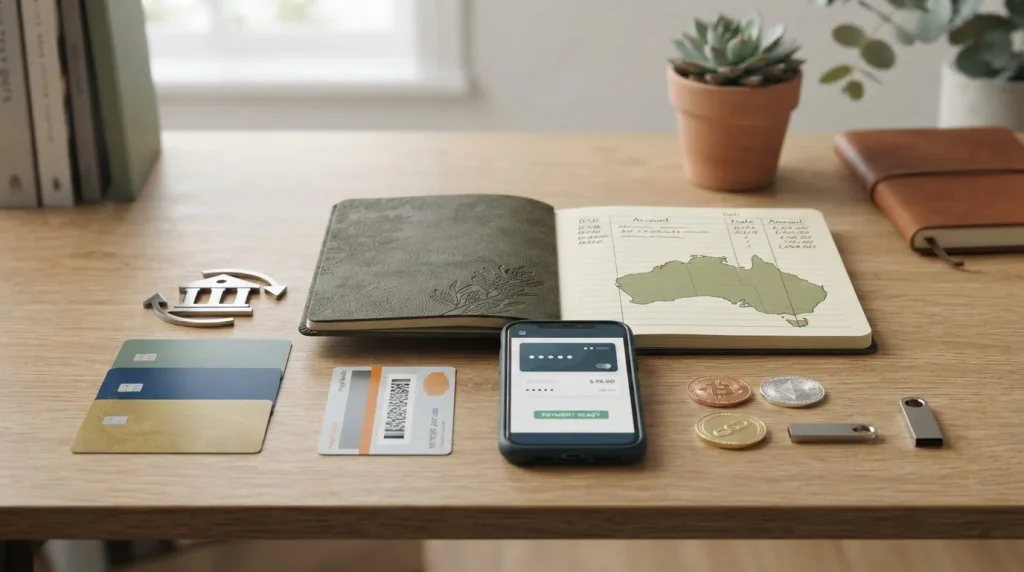
Jackpot Jill supports several core payment categories that are familiar to Australian online users: Visa, Mastercard, bank transfer, Neosurf, EzeeWallet and major cryptocurrencies. That gives players a mix of card, account-to-account, prepaid, wallet-style and crypto routes rather than forcing every deposit through one method.
PayID needs to be treated differently. It is widely used in Australia – around half of respondents in the Reserve Bank of Australia’s 2025 Consumer Payments Survey had used PayID during the prior year – but that does not prove Jackpot Jill offers it. Brand-specific sources conflict on PayID, so it should not be counted as an available Jackpot Jill payment method unless it appears in the cashier for your account.
For the broader overview, see the full Jackpot Jill review.
Table of Contents
- Which Jackpot Jill deposit methods are confirmed?
- Cards remain the most familiar Australian option
- Bank transfer for players who prefer account-to-account payments
- Why PayID is the most important method not to assume
- Neosurf as a prepaid-style option
- What EzeeWallet adds
- Crypto support is real, but it is not the Australian norm
- AUD handling matters more than the logo on the payment button
- Deposit method and withdrawal method are separate decisions
- What to check before making the first deposit
- How payments connect with account setup and trust
- Which Jackpot Jill payment route fits best?
- Jackpot Jill Payments for Australian Players
Which Jackpot Jill deposit methods are confirmed?
The confirmed core set includes Visa, Mastercard, bank transfer, Neosurf, EzeeWallet and cryptocurrency. The mix matters because each category solves a different problem. Cards are familiar and convenient, bank transfer keeps the payment within a banking workflow, prepaid methods can separate casino spending from a primary card, and crypto offers an alternative funding rail for users who already understand digital assets.
That list should not be read as a promise that every option will appear for every account at every moment. Cashier menus can differ by account, access route and payment-provider availability. The logged-in cashier is therefore the practical place to confirm what can be selected before you fund the account.
For deposits, the main considerations are method availability, currency handling and any displayed fees or limits. Cashout mechanics, verification requirements and timing are covered under Jackpot Jill withdrawals.
Cards remain the most familiar Australian option
Visa and Mastercard fit naturally with Australian payment habits. The RBA’s 2025 Consumer Payments Survey found that cards accounted for 73% of consumer payments, with debit cards alone making up 49%. Cards were also used across transactions of all sizes, including many low-value purchases that were once more likely to be paid in cash.
That broad familiarity is useful when evaluating a casino cashier because there is little learning curve. Most users already understand card authorisation, transaction notifications and how a card payment appears in online banking. Convenience, however, should not be confused with guaranteed casino acceptance. A card can still be declined by the issuing bank, payment processor or merchant route.
Before using a card, check the amount shown at the final confirmation screen and review any fee information displayed there. Exact Jackpot Jill card fees, minimums and processing times are not stated here because those values can change and require current cashier-level confirmation.
Bank transfer for players who prefer account-to-account payments
Bank transfer is another confirmed Jackpot Jill payment category. It suits users who prefer moving money directly from a bank account instead of entering card details or managing a separate wallet balance.
The trade-off is usually convenience versus process. A card payment can feel immediate because it happens within one checkout flow, while a bank transfer may require more deliberate account handling. The exact transfer route shown by Jackpot Jill should be followed carefully because payment references, recipient details or supported banking rails can vary.
For Australian users, the phrase “bank transfer” should not automatically be interpreted as PayID. PayID is one specific account-to-account service within Australia’s New Payments Platform ecosystem. A cashier can support a bank-transfer option without offering PayID at all.
Why PayID is the most important method not to assume
PayID is highly relevant to Australian readers because adoption has grown quickly. In the RBA’s 2025 survey, around 80% of respondents were aware of PayID and around 50% said they had used it in the previous year. Users commonly cited simplicity, faster payments and payee verification as reasons for choosing it.
A payment method can be common in Australia without being supported by a particular casino. PayID availability at Jackpot Jill is not consistently confirmed, so it should not be treated as an established cashier option.
If PayID is essential to you, sign in and check the deposit screen before treating Jackpot Jill as a match. If it is not shown, do not assume a generic bank-transfer button is equivalent. The distinction matters because PayID uses an identifier such as a phone number, email address or ABN rather than ordinary account details.
Neosurf as a prepaid-style option
Neosurf gives the cashier a different type of funding route from cards or direct bank transfer. Prepaid methods can appeal to players who want a clearer separation between gambling spend and their everyday bank account because the amount available is limited by what has already been loaded or purchased.
The practical benefit is budgeting discipline rather than any special casino advantage. A prepaid balance can make it easier to decide in advance how much money is available for a session. That can be useful for anyone who prefers not to place a primary debit or credit card directly into an online casino cashier.
Check the current cashier for the exact Neosurf workflow and any amount restrictions before paying. Do not assume that the same limits or fees used by another casino apply here.
What EzeeWallet adds
EzeeWallet gives Jackpot Jill a wallet-style payment option alongside cards, transfer and prepaid funding. Wallets can reduce repeated entry of card or banking details and can provide a separate transaction layer between the casino and a user’s primary account.
Whether that is useful depends on how you already manage online payments. If you do not use the wallet elsewhere, creating another account can add friction rather than remove it. If you already keep a wallet balance, the extra separation may be convenient.
The presence of a wallet name in the cashier does not guarantee identical deposit and withdrawal functionality. Some payment services support one direction more smoothly than the other, so check the withdrawal options separately before choosing a deposit method solely because you hope to cash out the same way.
Crypto support is real, but it is not the Australian norm
Jackpot Jill supports cryptocurrency as part of its payment mix. That can be useful for players who already hold digital assets and understand wallet addresses, network selection and transaction finality. It is less compelling as a first exposure to crypto purely for the purpose of funding a casino account.
The Australian payment context is important here. RBA survey data shows that awareness of cryptocurrency is much higher than actual payment use: around 66% of respondents were familiar with crypto as a payment method, but only around 2% had used it to make a payment in the previous year. In everyday Australian payments, crypto remains a niche choice rather than a mainstream alternative to cards or bank-based methods.
Crypto also introduces risks that do not exist in the same form with ordinary AUD payments. Wallet addresses must be correct, networks must match, and the AUD value of the asset can move between deposit and withdrawal. Do not treat a crypto balance as fixed Australian-dollar cash.
AUD handling matters more than the logo on the payment button
For an Australian player, the cleanest payment experience is one where the amount entering the account is clear in AUD and any conversion is visible before confirmation. Jackpot Jill is presented to Australian users with AUD context, but the exact behaviour of each funding route should still be checked at the cashier.
If a payment method settles in another currency, conversion costs can matter more than a small difference in deposit speed. The same is true for crypto: even when the casino displays an AUD account balance, the asset used to fund it can fluctuate independently.
Do not calculate expected conversions from an exchange rate found elsewhere and assume that is the amount the casino or payment provider will use. The relevant figure is the amount shown in the transaction flow at the time you confirm it.
Deposit method and withdrawal method are separate decisions
A common mistake is choosing a deposit method only for convenience and thinking about cashout later. Casinos can have different withdrawal routes, verification requirements and processing steps from those used for deposits. A method that is easy for funding is not automatically the best choice for receiving money back.
Before making a larger deposit, look at the withdrawal section of the account and identify the routes offered there. If you want to minimise friction, it can be sensible to choose a funding method that also fits your likely withdrawal path, where the casino supports that approach.
Exact withdrawal limits, fees and processing times can vary and should be checked against current account terms before choosing a funding method.
What to check before making the first deposit
- Confirm that your preferred method actually appears in the logged-in cashier.
- Check the amount and currency shown immediately before authorising the payment.
- Read any displayed fee or limit information rather than borrowing figures from another casino.
- If PayID matters to you, look for PayID specifically rather than assuming bank transfer means the same thing.
- If using crypto, confirm the wallet address and network before sending funds.
- Review withdrawal options before making a large deposit.
- Keep deposits within a budget you can afford to lose, regardless of which method feels most convenient.
How payments connect with account setup and trust
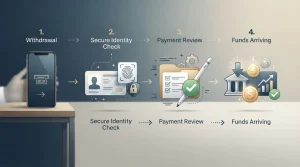
Payments do not sit in isolation from the rest of the account. Registration details, identity checks and the name attached to a payment instrument can all affect later account handling. Jackpot Jill registration covers the account setup steps, while identity verification can also affect how payment methods are handled.
It is also important not to interpret familiar payment brands as evidence of Australian licensing. Visa, Mastercard or a recognised wallet can be present at many international merchants. Their presence tells you how money can move, not which regulator licenses the casino. The separate trust and regulatory status covers that question.
That separation keeps the payment decision practical: choose a method because it suits your funding preferences, cost visibility and likely withdrawal route, not because a familiar logo appears to validate the operator.
Which Jackpot Jill payment route fits best?
For most Australian users, cards are the easiest starting point because they match established payment habits and require little extra setup. Bank transfer suits players who prefer account-to-account funding, while Neosurf and EzeeWallet provide more separation from a primary card. Crypto is available for users who already understand digital-asset transactions, but it remains a niche payment choice in Australia.
The key exception is PayID. It is common in Australia but not confirmed for Jackpot Jill, so it should be treated as a cashier question rather than a listed feature. Whichever method you choose, the best option is the one that shows clear AUD amounts, acceptable terms and a workable withdrawal path before any money is committed.