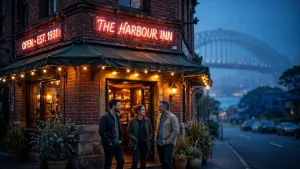
Australian casinos may operate around the clock, while restaurants, bars and customer services keep separate schedules.
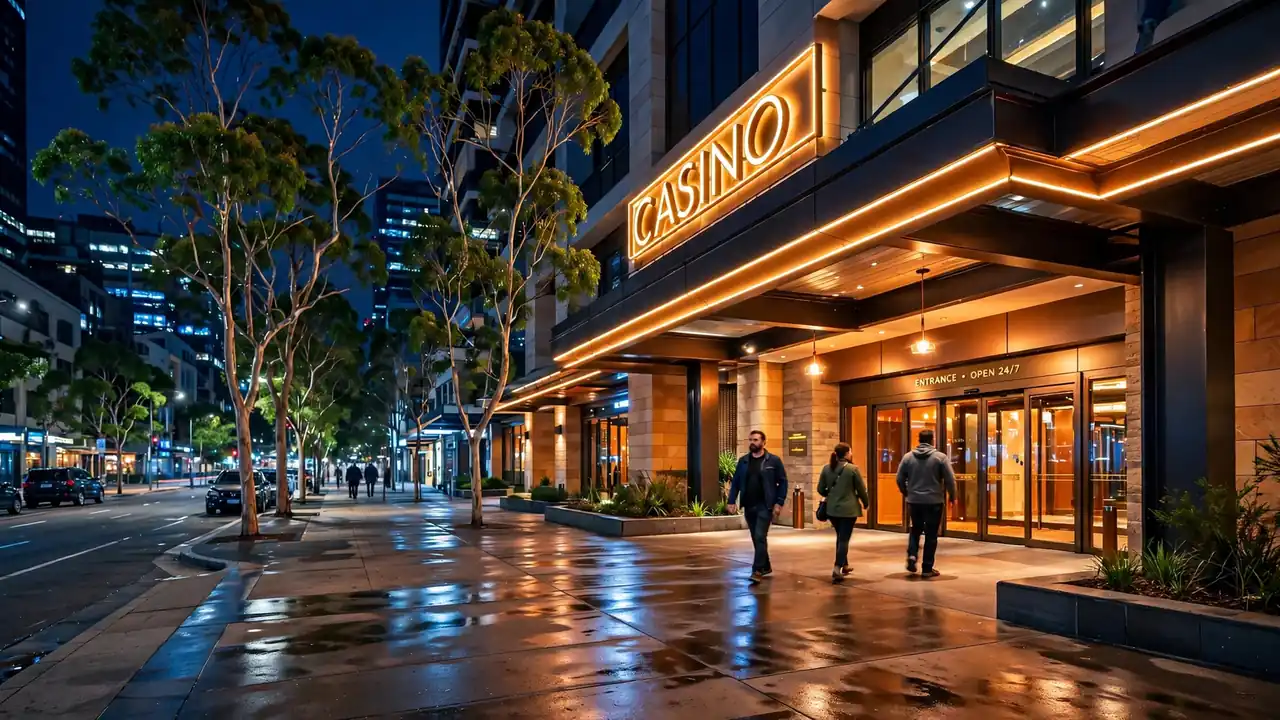
“Open now” sounds like a simple description of a door and its hours. At a casino, it can refer to a more complicated arrangement: the venue may operate continuously while the services inside it follow their own schedules. All major Australian casinos operate around the clock, but that broad description does not mean every restaurant, bar, counter or other facility is available at every hour.
The distinction matters because a building is not a single service. A casino can be operating while a particular restaurant is closed, an event space is not in use or a customer service desk is unavailable. Those details belong to the facility concerned, not to the general operating-hours claim. An open casino is therefore not a promise that every part of it is open, or that every activity can be accessed at any moment.
The language used for a nearby venue can blur those categories. “Pokies” may be used casually for a casino floor, a pub or another gaming venue, although these are not interchangeable descriptions. A search for a pub with gaming machines does not establish that a casino is nearby, and the fact that a casino operates continuously says nothing about the hours of a separate pub. The name and type of venue matter.
If you’re looking for pokies to play online in Australia in 2026, check the available operator details before choosing where to play. This list provides a concise reference to the information supplied for each option.
Rollero Casino
Rollero Casino is listed with a Curaçao Gaming Control Board licence, OGL/2023/176/0095, held by Hollycorn N.V.
LuckyVibe
LuckyVibe is listed with a Curaçao Gaming Control Board licence, OGL/2023/176/0095, held by Hollycorn N.V.
House of Pokies
House of Pokies is listed with an international iGaming licence, though the jurisdiction is not named in the source. Its stated PayID payout speed is 1–24 hours, and the minimum deposit is A$30, or A$10 for PayID.
Wild Tokyo
Wild Tokyo is listed as Curaçao-licensed, with a minimum deposit of A$10. Its stated payout times are 30–60 minutes for crypto and 1–5 days for fiat.
Uptown Pokies
Uptown Pokies is listed as operating since 2017 and licensed in Curaçao. Its minimum deposit is A$20.
MrPacho
MrPacho lists crypto payouts at 30–120 minutes and fiat payouts at 24–72 hours. Its minimum deposit is A$30.
Golden Pokies
Golden Pokies is listed as Curaçao-licensed. No other operator details were provided.
WinSpirit Casino
WinSpirit Casino is listed with a Curaçao eGaming licence, OGL/2024/923/0383, held by Antillephone N.V. Its minimum deposit is A$30.
JustCasino
JustCasino is listed with a Curaçao Gaming Control Board licence. No other operator details were provided.
Kingmaker
Kingmaker lists crypto payouts at approximately 90 minutes and fiat payouts at 1–5 days. Its minimum deposit is A$30.
Nor does “nearby” settle the question of access. It describes a relationship to a location, not a guarantee that a particular entrance is open or a particular service is operating. At major Australian casinos, entry is restricted to adults aged eighteen or older, and valid photo identification is required. An operating venue does not remove those conditions. They are part of what “open” means in practice.
A request about cash or cheques belongs to another category altogether. Opening hours do not establish how a venue handles payments, whether a particular counter is available or what arrangements apply to any transaction. Those are operational details, not consequences of a casino being open. A search for a “top rated” venue asks something different again: a rating is a judgement that depends on a ranking method and its source. Continuous operation is not evidence of quality, popularity or suitability.
This is one reason the phrase “open now” can be misleading when treated as a complete answer. It supplies a broad statement about casino operations, but leaves the particular service, entrance or facility to be considered on its own terms. The clock is only one part of the matter.
There is also a boundary between a physical casino and an online site that appears to offer casino games. A website loading on a phone, or using a different web address, does not make it an Australian-licensed online casino. The federal Interactive Gambling Act 2001 prohibits operators from providing real-money online casino games to people in Australia. That legal distinction is separate from whether a land-based venue is operating.
The Australian Communications and Media Authority, the federal regulator responsible for enforcing that law, can ask internet providers to block sites offering prohibited gambling services or advertising them in Australia. Following enforcement actions, it has blocked more than 1,455 illegal gambling and affiliate websites since November 2019. Blocking can change which addresses load through Australian internet providers; a site’s availability is not proof of its legal status.
Public figures on the regulator’s enforcement record do not always align. One account says more than 210 illegal services have withdrawn from Australia since enforcement began in 2017; another gives the figure as more than 190. The discrepancy is worth stating plainly rather than smoothing into a single number. Neither figure changes the basic distinction: an online service and a casino building are different things, governed and accessed in different ways.
The national habit of searching for something “open now” reflects a practical need, but the phrase compresses several questions into two words. Is the venue itself operating? Is the relevant facility available? Does the person meet its entry conditions? Is the listing describing a physical casino or an online service? These are not all answered by one general statement about operating hours.
So the useful reading is a modest one. Major Australian casinos operate twenty-four hours a day; the statement describes the casino’s broad operation. It does not automatically describe every room, counter, amenity or transaction within it. Nor does a claim of continuous operation amount to a rating. A small distinction, with consequences.
A request for a gaming venue open at six or seven in the morning sounds precise. The answer, at first, seems equally simple: all major Australian casinos operate around the clock. That establishes a broad operating-hours baseline, including the early morning and the stretch before dawn. It does not, by itself, settle what is available at a particular property at a particular hour.
The distinction matters because a casino is not a single room with one switch. A venue may contain several facilities, each with its own purpose and operating arrangements. A building’s general operating status therefore cannot safely be read as a promise that every service within it is running, or that every entrance and area is accessible in the same way at all times. The general claim is useful, but it has a boundary.
That boundary is easy to lose in a short phrase such as “open now.” Someone asking about six in the morning may be trying to establish whether a venue is operating at all; someone asking about seven or eight may have a particular facility in mind. Those are related questions, not identical ones. The first concerns the casino’s broad hours. The second concerns what the venue makes available during those hours. The 24-hour baseline answers the first for major casinos, not the second for every facility.
The same distinction applies to a venue expected to remain open until five or six in the morning. A round-the-clock operating schedule means that the general operation does not close for the night and reopen at dawn. It does not define the hours of every component, nor does it specify the arrangements for entering or moving through a property at any given time. The clock can be clear while the details remain local.
 Best Pokies in Adelaide: Hours, Venues and Online RulesAdelaide has no single gaming-room timetable. Learn how to verify venue hours, assess “best” claims and distinguish mobile access from Australian licensing.
 Pokies in Melbourne: Locations, Hours and Practical ChecksCompare Melbourne-area searches by location, venue hours and what map results can verify, with context on returns, randomness and gambling-harm duties.
This is why a request for “what is open” can be more complicated than a request for a venue’s operating hours. A casino may be operating while the availability of a particular service is governed by separate arrangements. A visitor who treats the whole property as one uniform facility may arrive with expectations that the general schedule never promised. The distinction is not a technicality; it is the difference between a venue being in operation and every part of it being available.
Early hours also make the wording of an opening claim unusually important. “Open 24 hours” describes duration, not a complete inventory of what can be accessed during that duration. It says nothing in itself about which facilities are active at dawn, whether an area has separate hours, or what conditions apply at an entrance. Those points require information specific to the venue and the facility concerned. A national statement about major casinos cannot fill in such local details.
There is a quiet social history in the idea of a place that does not sleep. Casinos belong to a leisure economy that can extend beyond ordinary office hours, meeting people whose schedules do not follow the same pattern. But a long operating day does not erase the practical divisions inside a large venue. The public tends to compress a complicated property into the word “open”; operators and visitors may be using that word to describe different things. The disagreement is often hidden until someone reaches a closed counter or an unavailable area.
For an early-morning visit, the sound reading is therefore measured: major Australian casinos operate around the clock, so six, seven or eight in the morning falls within the general operating period. A venue’s overall hours should not be mistaken for confirmation that a named facility is available then. Nor does a late-night closing phrase necessarily describe the entire property when the broader operation continues through the night.
The hours are one fact. The doors within them are another.
Good Friday can make an ordinary question about whether a casino is open harder to answer. A calendar date does not, by itself, establish the hours of a particular property. Nor does a general description of Australian casinos settle what a venue will offer on a public holiday. The useful distinction is between the status of an individual venue and a national assumption about its schedule.
Australia has no single casino-licensing authority setting one timetable for every property. Casino operations are licensed by the state or territory in which each property is located. That local structure matters on a day such as Good Friday: a schedule for one casino cannot safely stand in for the schedule of another elsewhere in the country.
It is tempting to treat a public holiday as a uniform switch, turning every venue either on or off. Licensing does not work that way. The fact that a casino operates under a local licence identifies the jurisdiction responsible for it; it does not, on its own, provide a holiday opening time. A national answer would therefore claim more than the licensing structure can support.
 Best pokies in Canberra: hours and venue checksThere is no single Canberra-wide opening time: venue hours may differ from gaming-area hours, and listings cannot confirm current access or temporary…
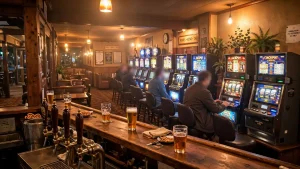 NSW Pokies: Hours, Venues and Online Search LimitsLearn why a venue listed as open may not have pokies available, why online information can be out of date, and where…
The same caution applies when the question concerns “today” or tonight. Those words depend on the date and the venue, and a broad statement about casino operations cannot confirm a particular property’s current arrangements. A listing that says a venue is open on an ordinary day may not answer a question about Good Friday. A holiday notice, where available, needs to be read as applying to the named venue and date, not as a rule for every casino in Australia.
There is a practical difference between knowing that a casino exists, knowing that it holds a local licence, and knowing whether it is open at a specific time on a public holiday. Each is a separate claim. Conflating them makes a confident answer sound easier than it is. A licence establishes the local regulatory setting; it does not turn one property’s timetable into a national calendar.
This is why searches about Good Friday are best understood as requests for venue-specific information rather than invitations to guess at a national custom. The same goes for a late-night visit on that date. “Open” can refer to a venue’s overall operation, while the arrangements for particular areas or services may be a separate matter. A holiday announcement should be checked for its scope as well as its date.
The word “today” also ages quickly. Information that described a venue’s arrangements on one date may not answer the same question later, especially when the date in question is a public holiday. The relevant detail is not a general impression of Australian casino hours but the current notice for the property and the day being considered.
That leaves no tidy national timetable to recite. Australian casinos sit within state and territory licensing systems, and Good Friday schedules must be established property by property. The calendar supplies the occasion; it does not supply every venue’s answer. No national shortcut.
“Nearby” is a local word in a country whose gambling map is anything but small. A place that looks close on a state map may be far from a particular suburb; a city with several gambling venues does not necessarily have a casino around every corner. The first useful distinction is between a city where gambling is recorded and a location of a full-scale casino. Those are not interchangeable measures.
A specialist affiliate review reports gambling activity across 147 Australian cities. That figure describes a broad spread of gambling locations, not 147 cities each containing a casino. The same kind of review counts more than 20 full-scale casinos across all eight states. These are reported counts, not a permanent national inventory: venues and classifications can change, and a count of properties cannot tell anyone which one is closest to a particular address. Scale, not a personal distance calculation.
The difference matters in places where a name on a map can suggest more than the location establishes. Redcliffe, for instance, may appear in a local search for gaming venues, but that phrase alone does not identify a full-scale casino there. Nor does a result for a nearby city settle whether the venue is the closest option from a particular starting point. The geography has to be read at the level of the named property, rather than inferred from a broad regional label.
The Australian map becomes easier to picture through particular addresses. Lasseters Casino is at 93 Barrett Drive in Alice Springs, Northern Territory. Jupiters Gold Coast Casino & Hotel is on Broadbeach Island, on the Gold Coast. Country Club Casino is listed at Country Club Avenue, Prospect, in Meander Valley. These locations place properties in very different parts of the country; they do not establish how long a journey between them might take, or which is nearest to any individual.
Alice Springs is a useful example because the city name and the venue address do separate work. The address identifies Lasseters within the city; it does not mean that every result associated with Alice Springs refers to the same property or that the city is close to a traveller’s starting point. A specialist affiliate review identifies Alice Springs as the Northern Territory city with the most casinos, counting one. That wording is a reported classification, not a reason to treat the city as a cluster of venues.
On the Gold Coast, the location of Jupiters is more specific than the regional name alone: Broadbeach Island identifies where the property sits within that coastal area. “Gold Coast” can function as a broad destination label, while an address gives a more useful point on the map. The distinction is mundane and important. A city or region may be familiar; a venue still has a particular location.
Located at 93 Barrett Drive in Alice Springs, Northern Territory.
Located on Broadbeach Island, on the Gold Coast.
Located at Country Club Avenue, Prospect, in Meander Valley.
Country Club Casino offers another kind of geographic clue. Its listing places it at Country Club Avenue, Prospect, in Meander Valley. The place names narrow the location from a national search to a regional one, but they should not be made to prove more than that. A listed address is a locator, not a statement about distance, transport, or the availability of any particular facility.
The phrase “near me” also depends on what counts as near. Someone looking for a gaming venue may have a suburb, a town, or a larger region in mind; the same named property can be close in one frame and remote in another. The national count of cities with gambling says something about distribution across the country, but not about the density of venues within each city. It cannot turn a broad map into a reliable nearest-venue ranking.
That is why a location check is most useful when it resolves the property’s identity first. A venue name paired with a city, suburb, or street address is more informative than a regional label on its own. Alice Springs, Broadbeach Island and Prospect in Meander Valley are distinct geographic anchors, not interchangeable ways of saying “somewhere nearby.” The map becomes more precise as the location description becomes more precise.
The same caution applies to phrases such as “open today” or “still open” when attached to a nearby place. Location and operating status are separate questions. A city-level result may help identify a possible venue, but it does not itself establish the status of that property at a particular moment. Likewise, a casino’s location does not describe every service or room inside it. Geography can narrow the field; it cannot supply facts about a facility that the address does not contain.
Australia’s gambling map is therefore best understood in layers: country, state or territory, city or region, then named venue and address. Each layer answers a different question. National counts sketch the scale, while specific locations make individual properties legible. Neither a large total nor a familiar city name can determine which venue is closest to an unstated starting point.
There is no single national “nearby” setting. Only a place on the map.
A casino described as operating around the clock is being described at the level of the venue’s general operation. That statement has a clear but limited scope: all major Australian casinos operate throughout the day and night. It does not turn every part of a property into an always-open facility, or settle the conditions under which each space can be entered.
The distinction matters because a casino is not a single room with a single purpose. A property may contain gaming areas alongside restaurants, bars, accommodation, event spaces and other facilities. The broad operating-hours description does not establish that each of these has the same timetable, or that every entrance and service is available at every moment. Nor does it identify the hours of a particular room or amenity.
That is the difference between a venue-level claim and a facility-level one. “Open” can describe the continuing operation of a major casino without answering every practical question about what is available inside it. The phrase is useful as a general indication, not a floor plan or a promise that every door will be open.
It also says nothing by itself about entry arrangements. Casino entry in Australia is for adults aged 18 and over, and valid photo identification is required at major casinos. Those conditions remain relevant regardless of the hour. A building’s operating status does not erase its entry rules, and it does not confirm that a particular person will have access to every area.
There is a small linguistic trap here. In ordinary speech, “the casino is open” sounds comprehensive: lights on, doors open, services ready. In practice, the word “casino” can refer to the operating venue as a whole, while the thing being sought may be one specific facility within it. The general statement answers the first question, not necessarily the second. A neat shorthand, with untidy edges.
So a claim that a major Australian casino operates 24 hours should be read narrowly and accurately. It supports the broad point that the venue’s casino operation is not confined to a conventional daytime schedule. It does not confirm that every restaurant, counter, entertainment space or other part of the property follows that pattern. It does not specify access arrangements for individual facilities, either.
This is not a contradiction. A venue can operate continuously while particular parts have their own arrangements. The two statements concern different levels of detail, and confusing them makes a broad description carry more weight than it can bear. The word “all” in “all major casinos” refers to the major casinos’ operating pattern, not to every room, service or entrance within them.
For someone trying to establish whether a particular facility is available, the general 24-hour description is only a starting point. The answer depends on information about that facility and the relevant access conditions, rather than on the venue-wide label alone. “Open around the clock” is not an inventory.
The distinction is plain once stated. Less plain on a sign.
A late-night visit in Australia sits within a local licensing system, not a single national one. Each casino operates under a licence issued by the state or territory where it is located. That gives the question of evening access a distinctly local shape: the relevant authority is the jurisdiction responsible for that property, rather than a national schedule covering every venue.
The distinction matters because a familiar phrase such as “open late” can sound like a standard shared across the country. It is not enough, by itself, to identify a closing time or establish what is available inside a particular venue. A licence belongs to a specific property and jurisdiction; it does not turn every casino into an interchangeable branch of one national enterprise.
Australia’s regulatory map reflects its federated structure. States and territories hold responsibility for casino licensing within their own borders, so the framework begins locally. That does not mean every late-night detail can be inferred from the existence of a licence. The licence establishes the jurisdictional basis of the operation, not a universal clock that can be applied to every gaming venue.
This is why a search for a nearby casino open late cannot be answered reliably by treating the country as one venue with many addresses. The location identifies which jurisdiction’s casino licensing system is relevant. From there, the particular property remains the subject of the question. The broad regulatory arrangement explains who licenses the operation; it does not supply a closing time for an individual casino.
There is a quiet institutional logic in that arrangement. Gambling may look like a single industry from the outside, but its public authority is divided along state and territory lines. The result is not a national promise of identical late-night access. It is a local licensing relationship, attached to each property and governed within its own jurisdiction.
A licence is not a timetable.
Christmas Day changes the question from whether a casino operates in ordinary conditions to what a particular venue does on that date. A general description of Australian casinos as operating around the clock cannot settle that point. It does not establish that every property keeps the same arrangements through Christmas, or that every part of a venue is available.
There is no single national holiday timetable to apply. Casino operations sit within state and territory licensing systems, and each property holds a licence from its own jurisdiction. That local structure matters: a national answer would smooth over the very differences that determine how a venue operates. Christmas may be a shared date on the calendar, but licensing is not administered from one national venue office.
The distinction is practical as well as legal. A statement about a casino’s ordinary operation is not a Christmas opening notice. Nor does a venue’s name appearing in a general directory establish its arrangements for a particular holiday. A claim that a nearby casino is open on Christmas Day needs to be tied to that property and that date, rather than inferred from a broad description of the industry.
The same caution applies to the word “open.” It can be used loosely for a whole complex, even though a venue may contain separate facilities with their own arrangements. Without a Christmas-specific notice, the word alone cannot tell whether the intended service is operating. The calendar does not provide the missing detail.
For anyone considering a visit, the dependable answer is the venue’s own current Christmas announcement or a direct confirmation from the property. That is not needless ceremony; it is the difference between a general operating-hours statement and a date-specific one. Christmas Day deserves its own answer.
Anzac Day can make an ordinary opening-hours assumption unreliable. A nearby gaming venue may operate under arrangements set for its own jurisdiction, rather than follow a timetable shared across Australia. Casino licences are issued by state and territory authorities, so the national map is also a patchwork of local oversight.
That structure matters when someone is trying to establish whether a casino is open on Anzac Day. The existence of a licensed property nearby does not, by itself, establish that it will admit guests on that date or that every part of the venue will be available. Nor does one property’s schedule settle the position for another state or territory. A national yes-or-no answer would flatten differences that are decided locally.
The sensible way to resolve the question is to look for a date-specific notice from the particular venue or its operator, and to distinguish casino access from the opening of restaurants, bars or other facilities. A general statement about a venue’s operations is not a substitute for a schedule that names Anzac Day. The date is the point.
This is why searches for nearby pokies on Anzac Day often produce an answer that depends on location. “Near me” identifies geography, not the relevant licence or that day’s access arrangements. The venue’s own current information is the useful next stop; if it does not state the holiday schedule, the answer remains unsettled rather than safely inferred.
The licensing framework explains why no single national timetable can be assumed. It does not, on its own, tell whether a particular gaming venue will be open on Anzac Day. Local detail decides.