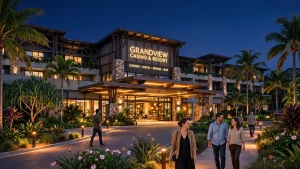
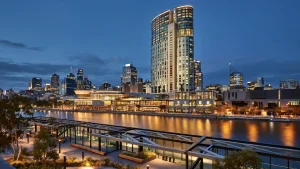
A practical guide to distinguishing casino-linked rooms from nearby stays and checking the venue’s dining, events and visitor information.
A hotel search linked to Adelaide’s casino can mean two different things: a room sold by a property associated with the venue, or a separate hotel chosen for its proximity. The distinction matters before comparing prices. A result that places the words “casino” and “hotel” together does not, by itself, establish that the room is operated by the casino, included in a casino package or even part of the same property.
For a stay presented as an Adelaide casino hotel, begin with the identity of the accommodation provider. Check the name shown on the booking page, who takes the reservation and which property appears in the confirmation. The casino’s name in a search result or advertisement is not enough to settle those details. Booking platforms can describe location and nearby attractions in broad terms; the final reservation should make clear where the room is and which business is responsible for it.
Hotel deals can look alike while covering different arrangements. One rate may be for the room alone; another may bundle services or conditions that change the total value. Read the offer itself rather than relying on a short headline. Confirm the selected dates, room category, occupancy, included services, cancellation terms and when payment is due. If a special offer has restrictions, those should be visible before booking.
Choosing an online casino while looking for options connected to Adelaide calls for checking the details available for each operator. This list provides a concise starting point for that review.
Rollero Casino
Rollero Casino is listed with a Curacao Gaming Control Board licence, OGL/2023/176/0095, held by Hollycorn N.V.
LuckyVibe
LuckyVibe is listed with a Curacao Gaming Control Board licence, OGL/2023/176/0095, held by Hollycorn N.V.
House of Pokies
House of Pokies lists an international iGaming licence, though the source does not name the jurisdiction. PayID payouts are stated as taking 1–24 hours, and the minimum deposit is A$30, or A$10 for PayID.
Wild Tokyo
Wild Tokyo is listed as Curacao-licensed. Its stated payout times are 30–60 minutes for crypto and 1–5 days for fiat, with a A$10 minimum deposit.
Uptown Pokies
Uptown Pokies is listed as operating since 2017 and as Curacao-licensed. Its minimum deposit is A$20.
MrPacho
MrPacho's stated payout times are 30–120 minutes for crypto and 24–72 hours for fiat. The minimum deposit is A$30.
Golden Pokies
The supplied detail for Golden Pokies is its Curacao licence; no other operator information is available here.
WinSpirit Casino
WinSpirit Casino is listed with a Curacao eGaming licence, OGL/2024/923/0383, held by Antillephone N.V. Its minimum deposit is A$30.
JustCasino
JustCasino is listed with a Curacao Gaming Control Board licence. No further details are provided here.
Kingmaker
Kingmaker's stated payout times are around 90 minutes for crypto and 1–5 days for fiat. The minimum deposit is A$30.
The total payable amount is more useful than a prominent nightly price. Taxes, fees, deposit conditions and cancellation charges can affect the final cost, while a non-refundable rate may leave little room to change plans. If breakfast or another inclusion is important, check that it is expressly listed for the selected room and dates. A photograph or general description of the property does not establish what a particular rate contains.
Room names also deserve a close reading. “Standard”, “deluxe” and similar labels are not universal measures of size, outlook or facilities. Compare the room description attached to the exact offer, and retain the confirmation showing what was booked. This is less glamorous than a package banner. It is also the part that survives checkout.
A deal described as being beside the casino may refer to convenience of location rather than a formal partnership. Before treating it as a casino hotel package, look for explicit wording about what is included and who provides each element. If the booking page does not resolve that point, ask the accommodation provider before paying.
Questions about Adelaide casino opening hours belong to the venue, not automatically to the hotel. A casino’s operating schedule does not establish when a hotel room is ready, when reception is staffed or whether arrival outside a stated check-in window can be accommodated. Those arrangements are property-specific and should be confirmed with the accommodation provider.
The reverse is just as important. A hotel reservation does not establish that every casino facility will be open at the time of a visit. Operating schedules can change, and separate areas may have their own hours. Check current venue information close to the planned visit rather than treating an old listing, a booking page or an assumed all-day schedule as definitive.
For a room sold directly in connection with the venue, the booking confirmation should identify the property and set out the practical arrival details. For a separate hotel nearby, distance and transport arrangements need to be judged from that hotel’s own listing; the phrase “near the casino” is not a measurement. The surrounding area’s accommodation choices are a separate consideration from rooms actually associated with the casino.
A careful comparison therefore has three plain questions: who operates the room, what the rate includes, and which hours apply to the stay rather than the gaming venue. The answers prevent a familiar category error: treating proximity, branding and a bundled price as proof of the same thing. A room can be convenient without being casino-run; a deal can mention the casino without changing the hotel’s own booking rules. Clear terms are the useful part. The label is only a label.
Poker-room searches point to a different kind of casino visit from a hotel booking. Here, “rooms” means spaces for gaming, not bedrooms attached to the venue. The distinction matters: a listing for casino rooms in Adelaide may describe a gaming area, while a hotel page uses the same word for accommodation. Neither wording, on its own, confirms which facilities are currently operating.
For anyone considering poker at Adelaide Casino, the first practical question is whether a dedicated poker room is open and what play it offers on the intended date. A venue may change its arrangements, and a room’s existence does not establish that a particular game is running. Current information should be checked through the venue’s official channels before travelling; old listings and undated forum posts can preserve a room or schedule long after circumstances have changed.
Tournament searches call for a little more detail than a general question about poker. A tournament has its own structure, registration process and start time, all of which can differ from one event to another. Any published schedule should be read as date-specific rather than as a standing promise. Details worth confirming include whether registration is open, what format is being played, when players must arrive and whether late entry is permitted. Those are practical checks, not evidence that a tournament is scheduled.
The words “Adelaide Casino poker tournaments” can also lead to pages describing past events. A result with a tournament title may be an archive, not an invitation to a future game. Dates matter. So does the page’s publication or update information. When no current date or registration information appears, the safest interpretation is that the listing may be historical.
Poker rooms and electronic gaming areas are not interchangeable. A poker table involves players competing in a shared game; Electronic Gaming Machines (EGMs) are individual machines. The distinction is more than architectural. It changes the pace of play and the way people occupy a casino: around a table, attention is social and visible; at a machine, it can become private and repetitive. Neither format makes gambling a source of income. A session budget should be set in advance, losses should not be chased, and a bet should not be raised in an attempt to recover money already lost.
A search for a casino sports bar is another possible detour. It may refer to a separate venue area rather than a poker room, and it does not confirm that poker is available there. The same caution applies to broad searches for casino rooms: the phrase may be used loosely by directories or visitors, so the description should be checked against the venue’s own current information. A room name in a listing is not a schedule.
Opening-status searches are especially time-sensitive. “Open today” can refer to the casino generally, a particular gaming room or a specific tournament; these are not necessarily the same thing. “Open now” ages even faster. Before setting out, check the current opening information and, where relevant, confirm that the poker area is open separately. A general venue listing cannot settle the status of every room.
The useful distinction is simple: a casino’s gaming rooms describe where play may take place; tournament pages describe scheduled competitions; neither wording alone guarantees availability. Details change.
The Adelaide casino is easiest to understand as a venue within a changing city, rather than as a fixed promise of a particular night out. Searches about development, reopening and entertainment often point to different things: changes to the building, a change in operating status, or a programme of events. Those questions should not be collapsed into one. A development announcement does not, by itself, establish that a venue has closed, reopened or altered its usual access.
For anyone checking whether the casino is open, the practical distinction is between a general description of the venue and a current operating notice. Opening arrangements can change, and an old article or event listing may remain visible after its information is no longer useful. The most dependable confirmation is a current notice from the venue itself. The same caution applies to reports of a reopening: the word may describe a particular area, a return after temporary works, or the venue as a whole. Context matters.
A casino development is not only a construction story. It can also signal how a city makes room for leisure, tourism and commercial activity in a shared urban setting. The venue’s role is therefore larger than its gaming rooms: it belongs to the city’s evening economy and to the public conversation about how central spaces are used. Yet the word “development” can cover plans, proposals and completed work alike. Without a clear description of the stage reached, it says little about what visitors will actually encounter.
That distinction is worth keeping in mind when reading announcements. A proposal is not a finished facility, and a reference to works does not necessarily mean that the entire venue is unavailable. For current details, look for an update that specifies what has changed and whether the change affects the public programme or access. Buildings move at the pace of contracts and permissions. Headlines move faster.
The phrase “casino events” may refer to entertainment hosted at the venue, a seasonal programme or a private function. It is not evidence that a particular event is scheduled. Listings can also be time-sensitive: a past performance may continue to circulate online even when its date has passed. A current calendar is more useful than a general promotional description, particularly when an event’s location, admission arrangements or timing are important.
Entertainment is part of how a casino presents itself to the city, but it does not make the venue’s activities interchangeable. A performance, a public gathering and gaming are different reasons for attending, and their arrangements may differ. Checking the specific listing helps separate what is happening from what the venue offers in general. That is a small act of civic housekeeping.
Interest in employment reflects another side of the casino’s presence: a large leisure venue depends on people working across a range of functions, not only those visible to visitors. But broad discussion of development cannot establish which roles are available, what their conditions are, or whether recruitment is under way. Those details belong to current vacancy notices and formal employment information, rather than to speculation based on a building project or an event announcement.
Taken together, development, events and employment describe a venue connected to the city’s commercial and cultural life. They do not settle practical questions about a particular visit. For those, current operating information and the details attached to each event matter more than an old headline or a broad claim about what is coming next.
Parking is a practical part of planning a visit to the Adelaide casino, but car-park arrangements can change. Before setting out, check the venue’s current visitor information for entry points, availability, fees and any access conditions; an old listing may describe a facility or arrangement that no longer applies. The same care helps when comparing driving with public transport: journey times and services depend on the day and time, so they are best checked against current travel information rather than guessed from a map.
A land-based casino in Adelaide and an online casino are not interchangeable versions of the same service. The first is a physical venue; the second involves gambling services delivered over the internet. That distinction matters because Australian law treats online casino games differently from a visit to a venue. Under the Interactive Gambling Act 2001, operators based in Australia cannot offer real-money online casino services to people in Australia. The restriction covers games such as pokies, blackjack and roulette.
This is why searches for online casino options in Adelaide can lead into a different legal landscape from searches about visiting the casino in person. Offshore platforms are not regulated under Australian law. Although it is technically not illegal for Australian players to use them, that does not make them locally licensed or protected by Australian regulation. The grey area belongs to the platform’s status, not to a guarantee of safety or recourse.
A licence search needs the same distinction. A land-based venue’s authorisation and the legality of an online service are separate questions; one should not be treated as evidence for the other. Nor does a website become an Australian-authorised casino merely by presenting itself as suitable for local players. In this market, the law restricts the provision of online casino games to Australians by operators based here, while offshore services sit outside Australian regulatory oversight.
The difference is easy to blur in ordinary language. Someone looking up casino dining, lunch or bingo may be planning a visit to a physical venue, while someone typing “online casino Adelaide” may be looking for remote play. Those are different activities, with different practical and legal considerations. Search wording cannot turn a building into a website, or confer local regulation on an offshore operator.
For a visit, current parking and access details belong with the venue’s own visitor information. For online play, the central point is more consequential: offshore platforms are not regulated under Australian law, and Australian-based operators are prohibited from supplying online casino games to people in Australia. A familiar name is not a regulatory status.
Staying near the Adelaide casino is a different proposition from booking a room associated with the venue. The first means choosing independent accommodation in the surrounding city; the second concerns rooms tied to the casino itself. The distinction matters when comparing prices, inclusions and booking conditions. A nearby address does not, by itself, make a hotel part of the casino or give a guest access to a casino stay package.
The Adelaide casino location can serve as a reference point when comparing places to stay, but “near” is a flexible word in travel listings. A property may describe itself as close while still requiring a longer walk, public transport or a taxi, depending on its exact position and the route available. Map distance, walking directions and arrival arrangements are more useful than a headline label. So is checking whether the journey remains practical late in the evening, when the city’s character can change.
Accommodation choices around a city casino tend to span different styles and price points, but availability and rates shift with dates and demand. A deal advertised as casino accommodation may refer to a partner offer, a package or simply a hotel nearby; those are not interchangeable. The terms should identify what is included, whether the booking is refundable and whether any casino-related benefit is actually part of the reservation. A promotion is only as useful as its conditions.
The surrounding area also shapes the stay. Some visitors may value a short journey back after an evening out; others may prefer to choose a hotel for its access to work, transport or other parts of the city. In either case, the address should be checked against the activities planned beyond the casino. A room selected solely by proximity can prove less convenient for the rest of a trip. Geography has a way of correcting advertising.
Comparisons are clearest when made on the same dates and for the same room type. The nightly price alone may not reveal cancellation rules, breakfast inclusion, taxes or other charges; these can change the real cost of a booking. Casino promotions and accommodation deals should therefore be treated as separate offers unless the booking details explicitly connect them. No assumed discount is worth much.
For a stay near the Adelaide casino, the useful question is not simply whether a hotel is close, but what “close” means in practice and what the booking buys. Check the exact address, the route to the venue, arrival arrangements and the full terms before committing. Those details separate a genuinely convenient base from a listing that has borrowed the casino’s name for atmosphere. Nearby is not the same as included.
A practical visit often begins with a small piece of administration: confirming the venue’s current contact details before making plans around it. The Adelaide casino’s official website is the sensible place to look for its latest phone number, visitor information and any contact form. Details copied into directories can linger after they cease to be useful; a published number is not necessarily a current one.
The same applies to a map. An official venue map, where available, can help distinguish the casino entrance from nearby streets and other buildings in the precinct. For directions or car-park access, current venue information is more dependable than an old pin or an unexplained entrance marker. Parking is a matter of arrival logistics, not a promise that a space will be waiting. Small distinction. Often the important one.
A casino bar belongs to the social architecture of the place as much as to its drinks list. It offers a pause between one activity and another, or a reason to meet without making the gaming floor the whole evening. Bar names, opening hours, menus and access arrangements can change, so those details are best checked through the venue’s own listings close to the visit.
Concert searches point to a different kind of evening: one organised around a performance rather than the casino itself. The venue’s official events pages are the appropriate place to check whether a concert is scheduled, where it takes place, and what entry or ticket conditions apply. A performance listing should be treated as an event notice, not as evidence that every part of the casino has the same access arrangements.
There is a useful social history in that overlap. Casinos have long been built not only as places for wagering but as destinations where hospitality and entertainment share an address. The combination can make a night feel broader than a visit to a gaming room, although each activity still has its own rules and practical details.
Baccarat and craps are familiar names in casino searches, but their presence, format and availability are matters for current venue information rather than assumption. Table games are not interchangeable with Electronic Gaming Machines (EGMs), and a general description of a casino does not establish which games are operating at a particular time. Checking the venue’s own information before travelling avoids treating a remembered listing as a live one.
For contact details, bar information, concert listings and maps, official channels offer one useful advantage: they bring separate questions together in a place maintained by the venue. That does not make every detail permanent. Hours, event schedules and access instructions are precisely the kinds of information that can change. A quick check before setting out is less glamorous than the night itself. It is also less likely to end at the wrong door.
Breakfast and buffet searches often begin with a simple assumption: a casino must also operate a hotel-style dining service. The phrase “Adelaide casino resort” can strengthen that impression, though it does not establish that the venue is a resort or that breakfast is served on site. A search for breakfast at the casino may mean a meal inside the venue, a buffet nearby, or a hotel package that includes breakfast. Those are different arrangements, and one should not be inferred from another.
The same care applies to buffet wording. “Buffet” may describe a particular service, a past offering, or a nearby venue rather than a current casino facility. Availability, opening hours, booking conditions and any package inclusions can change. A listing that appears in an old directory is not proof of what is operating now; current venue information is the sensible reference point before making plans. The distinction is mundane, but useful. A buffet is not a promise.
A breakfast search is best treated as a question about a specific service, not a general description of the casino. If the relevant information does not clearly identify breakfast or a buffet as part of the venue’s present offering, the safer reading is that the detail remains unconfirmed. The label “casino resort” should be handled in the same way: it may reflect how someone describes a planned visit or a broader stay, rather than the formal character of the property.
This is also where food-service searches differ from restaurant searches. Breakfast and buffet terms tend to signal timing or style of service; they do not, by themselves, identify a particular restaurant. That small distinction prevents a loose phrase from turning into a fictional amenity. In travel planning, expectation is often built from a handful of words. The words can be more confident than the facts.
A search for casino rewards points toward a separate kind of benefit: a loyalty or membership programme, if one is currently offered. The word alone does not establish how membership works, what it includes, or whether it applies to dining, accommodation or other services. Those details need to be confirmed from the programme’s current terms rather than assumed from the general idea of casino rewards.
Jobs searches carry a different practical purpose. Employment at a casino can involve more than gaming-floor work: large venues may have operational, customer-facing, administrative and hospitality functions. That is a description of the kinds of work associated with a complex venue, not confirmation that any particular role is open at Adelaide Casino. Vacancies and selection conditions are time-sensitive, so a current careers page or recruitment notice is the appropriate place to establish whether applications are being accepted.
The phrase “casino career” can suggest a single industry, but the work behind a public venue is varied and often ordinary in the best sense: shifts, service standards, maintenance, coordination. The glamour belongs mostly to the building. The work belongs to people keeping it running. A job title, duties, eligibility requirements and application process should all be checked in the actual listing; a general search result cannot stand in for those terms.
Spa searches attached to the Adelaide casino can blur two different things: a treatment facility at the venue and a spa elsewhere in the city. A name in a search result is not proof that the casino operates a day spa, offers treatments or has a spa available to guests. Those details need confirmation through the venue’s current information before they are treated as part of a visit. A casino is not a spa by association.
The same care applies to the address. “Adelaide casino” points towards a particular city venue, but an address copied from an old directory, map listing or third-party page may not reflect the venue’s current visitor information. The official venue listing is the sensible reference for the street address and any entry instructions. That matters when plans depend on reaching a particular entrance; a broad map pin may identify the complex without answering which door is intended.
Dress-code searches are less straightforward than they appear. A venue may set expectations that differ between its public areas, gaming spaces and individual events, and those conditions can change. No single outfit rule should be assumed to cover every part of a visit. Current entry guidance from the venue is more reliable than a general claim that a casino is either formal or casual. Where the guidance is unclear, checking before setting out avoids making clothing an avoidable point of friction.
Practical details belong together because they shape the threshold between intention and entry. Address information answers where the venue is; dress guidance concerns whether entry conditions apply; spa information establishes whether a particular facility is actually there. These are separate questions, even when directories bundle them under one venue name. A listing that combines a casino, hotel or nearby business may also make a facility seem more closely connected than it is.
The word “casino” can do a great deal of work in a search listing. It can identify the gaming venue, the wider building or an associated business, without guaranteeing that every amenity is operated on site. For a spa visit in particular, the distinction is material: a city spa may be nearby without belonging to the casino, while a casino-branded result may describe no treatment service at all.
The Adelaide venue is a land-based place, not an invitation to use online casino games. Under Australia’s Interactive Gambling Act 2001, operators are prohibited from providing online casino-style games to people in Australia. Venue details and online gambling services are different matters. For an actual visit, current location and entry information should come from the venue itself; amenities should be confirmed rather than inferred from a label. A little verification, then.
Dining at a casino is not one simple category. A restaurant inside the Adelaide casino, a place elsewhere in the surrounding precinct and a bar serving food may all appear under similar labels, while offering quite different evenings. The distinction matters most when a meal is part of a larger plan: a booking at the venue itself is not interchangeable with a nearby restaurant that happens to share the same destination in a map listing.
Restaurant names, menus and opening arrangements can change. The most dependable starting point is the casino’s current venue directory, followed by the restaurant’s own booking information where available. That helps establish whether a listing is actually on the casino premises, what style of dining it describes and whether service is available at the intended time. A map pin alone can be less decisive than it looks; “near” and “in” are small words with practical consequences.
The same care applies to menus. A restaurant page may describe its cuisine and show sample dishes, but a sample is not a guarantee that every item will be available on a particular visit. Dietary requirements, booking conditions and any changes to service are best checked with the venue before setting plans around them. This is especially useful when dinner is tied to a show, a gathering or another fixed commitment, rather than being an open-ended stop.
The phrase “Adelaide casino rooftop bar” belongs to a different kind of search from a restaurant booking. A rooftop bar may be sought for its setting and drinks, rather than for a full meal; the label alone does not establish that a particular venue exists or is operating. Current venue information should settle whether a rooftop option is listed, and whether it serves food or requires a separate reservation. A view is not a menu.
For visitors comparing restaurants at the casino with those nearby, the useful questions are therefore modest and concrete: is the venue on site, what kind of meal does it offer, and what booking or service details apply on the day? Those checks avoid treating the whole district as a single dining room. It is a small act of geography.
The casino’s identity as a place for gaming can dominate its public image, but restaurants serve a more ordinary social purpose: meals mark time, occasion and company. The practical details deserve the same attention as the more theatrical setting. A current listing, a direct confirmation and a clear distinction between restaurant and bar are better guides than an old menu or a vague location label.
Food searches around Adelaide’s casino can mean several different things: a quick place to eat between activities, a shared food-court-style space, or simply a way to find what is available inside the venue. Those are not interchangeable descriptions. A food court implies a particular kind of arrangement, and the phrase alone does not establish that one operates there.
The practical distinction is modest but useful. General food information concerns what service is available and where; a food-court listing would need to identify a shared area and its offerings. Venue information can change, so current details should be confirmed through the casino’s own visitor channels rather than inferred from a broad label. Restaurant choices are a separate matter.
Pool searches need the same care. The words “casino pool” may suggest a swimming facility, but they do not confirm that the casino itself has one. A pool mentioned in connection with a nearby hotel or another property is not automatically a casino amenity. The address and facility listing attached to any result matter more than the loose association in its wording.
This is a small distinction with a familiar cause: large entertainment precincts blur boundaries in the public imagination. A hotel, a casino and other nearby facilities may share a setting while remaining separate properties, with different access and services. Search results compress those relationships into a few words. Reality is less obliging.
For anyone comparing food options or checking whether swimming is part of a visit, the safest reading is literal: rely on a current venue listing that names the facility and its location. General references to food or a pool are not a promise of a particular service. No more than that.
NetEnt’s wide-area progressive jackpot games, including Mega Fortune and Hall of Gods, were blocked from Australian players. NYX Gaming/Next Gen titles such as Foxin’ Wins and Doctor Love were also region-blocked.
Yes. Under the Interactive Gambling Act, Australian-based operators cannot offer online casino games such as pokies, blackjack and roulette to players in Australia. Offshore casinos are not regulated under Australian law, although it is technically not illegal for Australian players to use them.
Club Liverpool has the highest number of operational poker machines among clubs in NSW.
Offshore online casinos are not regulated under Australian law, though it is technically not illegal for Australian players to use them. In NSW, players must be at least 18 to use poker machines, and mandatory pre-commitment systems require players to set a loss limit before playing.
A VPN can make a player’s digital location appear to be in another country, but games may still be blocked because of licensing restrictions. A blocked game may not appear in the lobby or may fail to load.
Free-spin winnings commonly carry wagering requirements of 20x to 50x before withdrawal; the stated requirement for free-spin winnings is 30x. Pokies typically contribute 100% toward wagering requirements.