A practical look at opening-hour claims, venue access, travel searches and the limits of what online results establish.
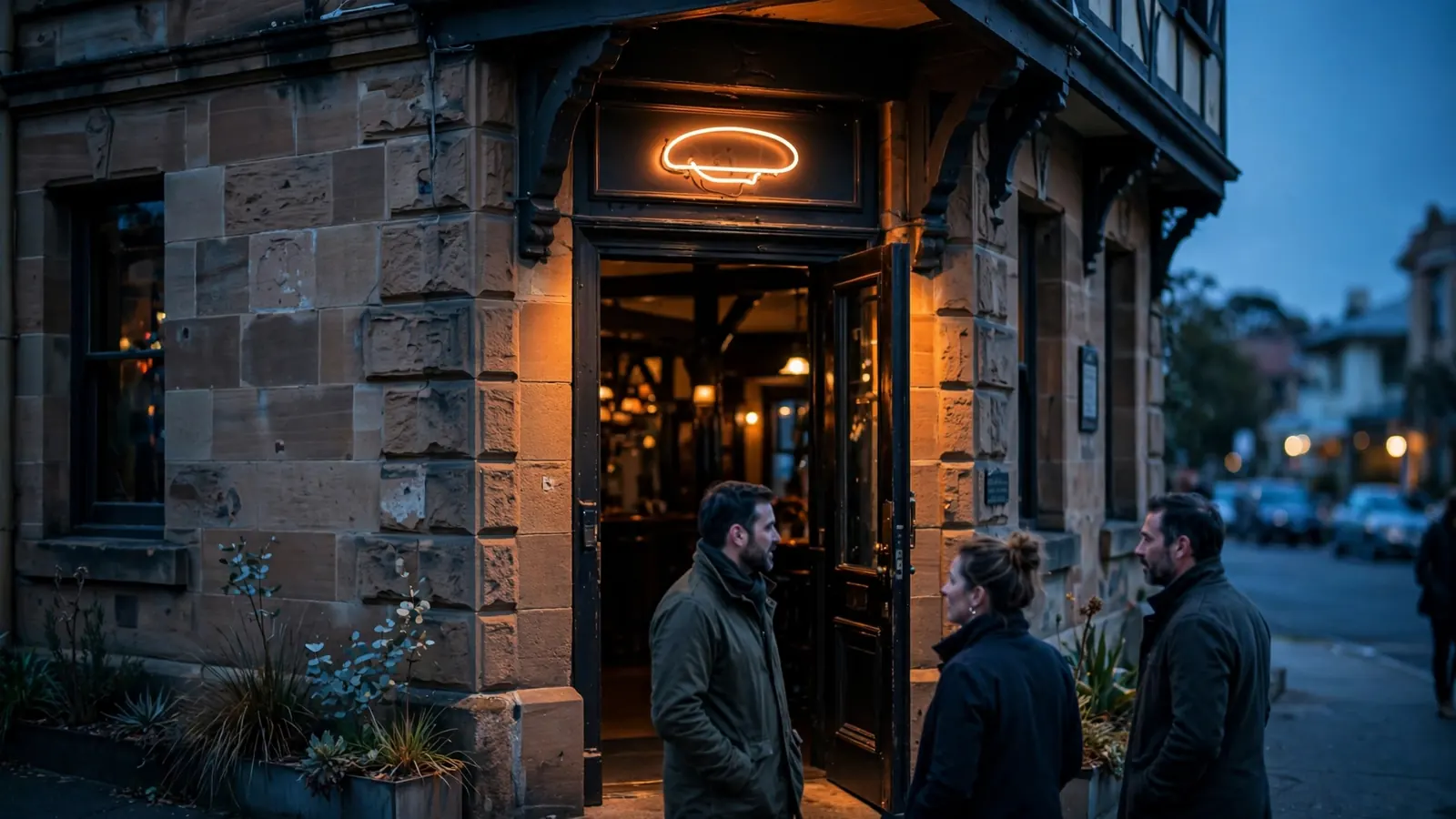
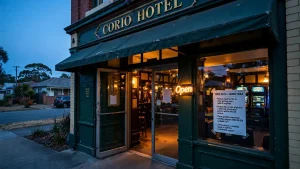
A venue’s opening time looks like a simple fact: a clock, a door, a line on a listing. Yet “open” can mean several different things. The building may be open while a particular area is not; a published schedule may describe ordinary hours rather than the present moment; and a result labelled open may not have been updated when circumstances changed. The word carries more certainty than the information behind it.
That matters for searches about pokies in Tasmania that are open now, opening early, or still operating later in the day. Such searches express a practical need, but they do not establish the status of any venue. A result appearing prominently, or displaying an opening time, is not itself confirmation that the doors are open at that moment. Nor does a general venue listing necessarily say whether pokies are available whenever the broader premises are accessible.
There is a difference between a schedule and a live status. A schedule is a statement about expected hours, often intended to describe a routine. Live status is a claim about what is happening now. One can remain visible after the other has changed. A public holiday, a temporary closure, a private event or an operational decision can make a regular schedule an imperfect guide. None of those possibilities proves that a venue is closed; they explain why a timetable alone cannot settle the question.
The distinction is easy to miss because search results compress information into a small space. A venue name, an address and an opening label may sit together as though they were one verified statement. They are not necessarily the same kind of information, and they may not have been updated at the same time. A listing can be useful as a starting point without being a reliable account of a particular hour. The neatness of the display belongs to the screen.
Even a phrase such as “open now” can be narrower than it sounds. It may refer to a general business listing, not to every service inside the premises. Conversely, a result that does not show a current opening status does not establish that the venue is closed. Search interfaces are not windows into a building. They are summaries assembled from information whose timing and scope may differ.
The wording of a venue’s own published hours can also leave room for interpretation. An opening time might refer to the premises as a whole, while access to a particular facility follows a separate arrangement. Without a clear statement that connects the hours to pokies, the two should not be treated as interchangeable. That is not a claim that they differ at any particular Tasmanian venue; it is a reason not to turn one kind of opening information into another.
The same caution applies to searches that attach a familiar casino name to Tasmania. A name in a search phrase does not establish that a venue under that name operates in the state, or that a particular location is open. Search suggestions and combined terms can reflect what people have typed, not what is present on the ground. Familiarity is not evidence of local availability.
There is no single phrase that can turn a general search result into a dependable, moment-by-moment account. The more precise the question becomes—whether a specific premises is open at a specific time, and whether pokies are accessible then—the more important it is for the information to state exactly what it covers and when it was updated. A broad business-hours panel may not answer either part.
This uncertainty is not unique to gambling venues. It is a small consequence of turning changing arrangements into static records. Still, it has a particular shape here: a person looking for pokies may see “open” and assume that the machine area is included, while the listing may only describe the business in general. The assumption is understandable. It is not confirmation.
A careful reading therefore separates three things: the venue’s stated schedule, its current operating status, and the availability of pokies within it. They may align, but one does not automatically prove the others. Where a listing makes only a broad claim, the narrow conclusion is the sound one: it says something about the listing, not necessarily everything about the venue.
Opening information can help narrow a search, but it should not be mistaken for a live guarantee. A page that names a time is still a page; an “open” label is still a label. The clock, unfortunately, remains attached to the door.
Choosing pokies in Tasmania for 2026 means checking the available details before deciding where to play. Use this list as a starting point, and review each casino’s terms and suitability for your needs.
Rollero Casino
Rollero Casino is listed with a Curaçao Gaming Control Board licence, OGL/2023/176/0095, held by Hollycorn N.V.
LuckyVibe
LuckyVibe is listed with a Curaçao Gaming Control Board licence, OGL/2023/176/0095, held by Hollycorn N.V.
House of Pokies
House of Pokies lists an international iGaming licence, though the source does not name its jurisdiction. PayID withdrawals are stated as taking 1–24 hours, and the minimum deposit is A$30, or A$10 for PayID.
Wild Tokyo
Wild Tokyo is listed as licensed in Curaçao. Its stated payout times are 30–60 minutes for crypto and 1–5 days for fiat, with a minimum deposit of A$10.
Uptown Pokies
Uptown Pokies is listed as licensed in Curaçao and operating since 2017. Its minimum deposit is A$20.
MrPacho
MrPacho lists crypto payouts of 30–120 minutes and fiat payouts of 24–72 hours. Its minimum deposit is A$30.
Golden Pokies
Golden Pokies is listed as licensed in Curaçao.
WinSpirit Casino
WinSpirit Casino is listed with a Curaçao eGaming licence, OGL/2024/923/0383, held by Antillephone N.V. Its minimum deposit is A$30.
JustCasino
JustCasino is listed with a Curaçao Gaming Control Board licence.
Kingmaker
Kingmaker lists crypto payouts at approximately 90 minutes and fiat payouts in 1–5 days. Its minimum deposit is A$30.
“Best” sounds like a settled verdict: one pokie above the rest, paying more often or returning more over time. But the word can refer to two quite different things. A game’s stated return setting is a long-run mathematical measure; the result of a particular spin is a separate event. Confusing those scales turns a comparison into a prediction it cannot support.
Return to player, or RTP, describes the share of total stakes a game is designed to return across an enormous number of plays. It is not a promise about what will come back to one person, during one session, or on any particular day. A higher stated RTP may offer a useful basis for comparing settings, but it does not make a win due, nor does it tell anyone when one will arrive. The measure belongs to the game’s theoretical design, not to a forecast of tomorrow’s result.
There is another complication. A specialist review reports that some providers let casinos choose between more than one RTP setting for the same pokie. If that account applies to a particular game, its return percentage may differ between casinos even though the title and basic appearance remain the same. A name alone therefore cannot settle the comparison. The relevant setting would need to be disclosed for the version being offered, and a figure from one casino should not automatically be treated as the figure elsewhere.
That distinction matters to anyone trying to identify the best-paying pokies in Tasmania. “Best-paying” can be a request for the highest stated return, but it can also be shorthand for a hope of a quick or frequent win. Those are not equivalent claims. A return setting can describe an average across vast play, while saying nothing reliable about the pattern an individual will encounter. A game with a comparatively favourable theoretical return can still produce losses; a brief run of wins does not prove that its setting is higher.
The machinery behind each result is designed to keep those events separate. A Random Number Generator selects the outcome, and one spin does not carry a memory of the last. A losing sequence does not make a win more likely on the next turn; a recent win does not make another one less likely. The familiar human instinct to detect a pattern is powerful, especially when outcomes arrive one after another. The machine has no such narrative.
No pattern to read.
This is why “best” cannot honestly mean “most likely to pay on the next spin.” Nor can a single player’s experience establish which game pays best. Short sessions are too narrow a window for judging a long-run return, and anecdotes cannot reveal which setting was in use. Even a displayed RTP, where available, should be read as a characteristic of a particular game configuration, rather than as an assurance of personal results.
For a comparison to mean anything, it has to name the measure being compared. A disclosed RTP setting can help distinguish one version from another, provided the information refers to that exact version. Without a confirmed setting, claims about one pokie paying better than another have no clear basis. Themes, sounds and bonus features may make games feel different, but they do not by themselves establish a higher return.
The same caution applies to broad labels such as “best pokies in Tasmania.” A location does not alter the mathematics of an individual spin, and a city or venue label cannot stand in for the game’s actual return setting. Nor does a list of popular titles answer a question about returns unless it supplies comparable, relevant information. Popularity measures attention, not what a player can expect to receive.
The sensible meaning of “best,” then, is modest: a game whose disclosed characteristics can be compared on a stated basis, without pretending those characteristics predict an individual outcome. For some providers, the casino’s selected RTP setting may matter, so the same game name may not tell the whole story. But even the clearest comparison stops at the boundary between long-run design and the next random result.
A comparison, not a forecast.
A request for pokies near an airport sounds like a simple matter of proximity. In practice, “near” can mean a short walk, a quick drive, or somewhere on the route into town. Those are different kinds of convenience, and a map pin alone cannot settle which one matters. The same problem appears with searches for pokies close to a central business district: the centre is a useful reference point, but not a precise destination.
Tasmania’s dispersed geography gives these words extra weight. A search for a venue in the north of the state describes a broad area, not a particular neighbourhood. A search for pokies near Tasmania may also leave the intended place unclear: the island, a town, an airport, or somewhere already nearby. Results can look relevant while answering different versions of the question.
The airport wording carries its own ambiguity. It may refer to a venue within the airport, one close enough to reach after landing, or a stop on the way elsewhere. Those distinctions matter most when the practical aim is to fit a visit around a flight or onward journey. A result that merely mentions an airport area does not, by itself, explain the route, the distance on foot, or whether a car is needed.
There is also a difference between geographic nearness and easy access. A place can appear close on a map yet be awkward to reach because of the route, transport arrangements or the point from which the journey begins. Conversely, a venue farther away may be simpler to reach from a particular starting point. “Near me” is therefore not a stable location description; its meaning changes with the device’s position and the journey being planned.
This is why airport, CBD and regional searches are best understood as different travel questions, rather than interchangeable labels for a list of nearby places. The airport search centres on arrival and onward movement. A CBD search is anchored to an urban centre. A regional search may cover a much wider area, where the starting town and intended route become decisive. A result useful for one purpose may be beside the point for another.
The phrase “pokies in the airport” suggests something more specific than “near the airport”: it implies a venue inside the terminal or airport grounds. That distinction should not be blurred. Likewise, a place described as near a city centre should not be treated as being in the centre. Location language can compress a journey into a few words, but it cannot make unlike places equivalent.
A useful venue listing would need to distinguish the address from the landmark used to describe it, and give a clear basis for any distance claim. Without that, a phrase such as “near the CBD” is a loose orientation, not a travel instruction. The same applies to the north of Tasmania: regional shorthand can help narrow a search, but it cannot identify a destination on its own.
Geography is not a verdict. For anyone comparing possible stops, the relevant question is not simply whether a venue is described as nearby, but whether its actual position fits the journey in mind. A map label can point in the right direction. It cannot complete the trip.
A venue is more than the room around a row of pokies. It is also the place where signs of harm may become visible to staff: a patron distressed by losses, unable to disengage, or behaving in a way that suggests gambling is taking a toll. The responsibilities attached to machines therefore concern not only their presence, but how a venue responds when play appears to be causing harm.
A report by regionriverina.com.au describes a requirement for venues operating more than 20 gaming machines to have a dedicated responsible gambling officer (RGO) on duty whenever those machines are running, beginning on 1 July. It also reports a one-month grace period for venues to remove signage and put the officer arrangement in place. These are details of the change described in that report, not a basis for assuming that the same requirement applies to every Tasmanian venue.
The role matters because a general expectation that staff will “keep an eye out” can dissolve into nobody’s particular responsibility. A designated RGO gives the task a name and a place in the shift: noticing concerning behaviour, responding to it, and helping ensure that the venue’s procedures are followed. The title does not make gambling harm simple to identify. Distress can be private; a person may look composed while struggling. Still, an assigned duty is more concrete than a sentiment printed on a wall.
A dedicated officer required by some regulations for venues with more than 20 machines to notice concerning behaviour and ensure venue procedures are followed.
The same report says venues will have to maintain a gambling incident register. It is intended to record occurrences, including situations in which a patron’s behaviour indicates that they may be at risk of harm or already affected by it. A register turns an isolated moment into something that can be documented and reviewed. That matters in a setting where one employee may see a fragment, while another encounters the same person later. Records can give a venue a way to recognise a pattern rather than treating each episode as unrelated.
Paperwork is not care. Nor is the presence of an officer proof that a venue is safer in every respect. The value lies in whether responsibilities are understood and acted on: whether a concerning incident is noticed, whether the response is recorded, and whether staff know who is accountable. Compliance can establish a floor. It cannot, by itself, describe what happens on the floor.
That distinction also limits what a venue label can tell anyone. Calling a place one of Tasmania’s better pokies venues would require evidence about the machines and the experience there; a formal duty or incident register is not a ranking. Venue-level safeguards describe obligations and processes, not the odds of a spin or the likely outcome for a patron. Those are separate questions.
A machine may be the visible centre of the room, but the obligations around it belong to the venue and its people. The less visible work—recognising risk, assigning responsibility, recording incidents—says more about institutional care than a polished sign ever could. A rule is only a beginning.
A ferry is a place of passage, not a promise of entertainment. The words “pokies on the Spirit of Tasmania” can sound like a straightforward question about what is aboard, but a vessel’s name and route do not establish that it carries pokies, or that any particular gambling service is available during a crossing. Those details should not be inferred from a phrase on a screen.
The distinction matters because search results often compress several ideas into one: a ship, a destination, a venue and a game. Each requires its own evidence. A reference to the Spirit of Tasmania does not confirm onboard machines, their operating arrangements or access to an online service. Without reliable, current information from the operator, those claims remain unconfirmed. The modest answer is also the more useful one.
The same caution applies to references to “Crown Tasmania” or a Crown casino in Tasmania. A familiar brand name beside a state name is not proof of a local casino, nor does it establish which venue, if any, the wording means. A search phrase can combine places that belong together only in the imagination of the person who typed it. That is not a map.
Online offers require a sharper distinction. “No deposit” describes a promotional claim; it does not establish that an offer is lawful, available in Tasmania or attached to an Australian-licensed casino. The Interactive Gambling Act 2001 prohibits companies from providing real-money online pokies to people in Australia without a domestic licence. No Australian online casino holds such a licence. A bonus label cannot alter that legal position.
Nor does the wording “real money” make an online service an authorised local option. The law concerns the operator’s provision of the service, not the reassuring tone of a promotion or the apparent ease of opening a webpage. An offer presented as being for Tasmanian players still needs to be understood within Australia’s legal framework; a local-sounding name is not a local licence.
There is a practical consequence beyond the fine print. If an offshore casino refuses to pay winnings, Australian players have no legal recourse in Australia to recover them. That leaves a substantial distance between being able to encounter an online offer and having meaningful protection when something goes wrong. A screen can make a service look close. The remedy may not be.
This is why claims about shipboard pokies, a Tasmanian Crown venue or online bonuses should not be treated as interchangeable. One concerns what may be available aboard a particular vessel; another concerns whether a named venue exists; the third concerns a service governed by national law. None proves the others. Names travel cheaply. Evidence does not.
The phrase “24-hour pokies” sounds like a simple promise: a venue, machines and access continuing through the night. But a phrase on a screen is not an opening-hours notice, and the number in it does not establish that any particular Tasmanian venue is open around the clock.
There are several different things that can be blurred together. A venue may be described as open; a particular part of it may have separate access; and the availability of pokies may be a different matter again. A result that appears to answer a late-night search may not clarify which of those it means. The distinction is small on a screen, and rather large after travelling to a locked door.
“Open now” is also a moment-specific claim. A listing can be out of date, ambiguous or detached from the status of the gaming area. Even a page that displays hours needs to be read for what it actually says: whether it describes the venue generally, the relevant facilities, or access to pokies. A search result alone cannot settle those details.
That is why broad claims about all-night access deserve particular caution. The words “24-hour” may describe what someone is trying to find, not a verified operating arrangement. Repetition across directories or snippets does not turn the phrase into confirmation. Nor does a general reference to a venue’s opening time establish that its pokies are available at every hour the doors are open.
The sensible distinction is between a search label and a current statement from the venue itself. Where late-night access matters, the clearest confirmation would need to come from a current source that explicitly covers the relevant venue and the availability of its pokies—not merely a result that matches the wording. If that detail is not stated, the exact hours remain unsettled.
This is not a claim that Tasmanian venues never operate late, or that a particular venue does. It is a limit on what can be concluded from a broad description. The expectation of continuous access is especially easy to form because “24-hour” reads like a complete answer. In practice, it is only a claim to check.
The same care applies to general references to pokies opening hours. Those words do not supply a dependable timetable by themselves, and no island-wide schedule can be inferred from them. Opening arrangements belong to individual venues and may be presented in different ways; the wording needs to identify what is open and when.
A search can point towards a possibility. It cannot keep the doors open.
A pokie’s visible features can make it seem as though a particular machine has a temperament: a run of wins, a long dry spell, a promising bonus round. The mechanics offer a less dramatic account. Each spin is generated separately by a Random Number Generator, so its result does not depend on what happened on the previous spin. A machine that has paid out recently is not thereby “due” to pay again; nor does a losing sequence make a win more likely on the next turn.
That independence matters when comparing pokies in Tasmania. Patterns remembered by players may feel persuasive, but a short run of outcomes cannot reveal what the next spin will produce. The machine has no memory in the human sense. There is no dependable rhythm to read.
A different question concerns RTP, or return to player: a published percentage describing the share of stakes a game is designed to return over a very large number of plays. A specialist review reports that some providers give casinos a choice among more than one RTP setting for the same pokie. If that account applies to a particular game, its return setting may differ between casinos, even though the game’s name and appearance are unchanged.
RTP is not a forecast for a session, and it does not specify what one player will receive. It is a long-run measure, not a personal promise. A setting with a higher published return would still leave individual results uncertain, because each spin is generated independently. The two ideas sit side by side: a game can have an overall return setting, while its next result remains unpredictable.
Searches about maximum bets or cash payouts point to another distinction. A bet setting concerns how much may be staked on a play; a payout rule concerns what a game or venue permits to be paid. Neither term describes the odds of the next spin. They are separate conditions, and the existence of one does not establish the other.
Machine names and graphics, meanwhile, are poor guides to these technical details. A familiar title need not identify the return setting used at a particular casino, while a sequence of eye-catching results says nothing reliable about the next one. The useful questions are narrower: whether a published RTP setting is stated, what the relevant bet and payout rules say, and whether those details apply to the exact game being considered.
That is less thrilling than a theory of lucky machines. It is also more honest. A pokie’s mechanics can describe how chance is organised; they cannot turn chance into a prediction.
Interest in online pokies associated with Tasmania sits across a legal divide that is easy to blur. The law places its prohibition on operators: providing real-money online casino games to people in Australia is unlawful without a domestic licence, and none has been issued. The player’s position is different. Australian law does not impose liability on an individual simply for playing on an offshore site that accepts them.
That distinction is not an endorsement. An offshore operator may accept Australian customers while operating outside the domestic licensing system; acceptance does not create Australian oversight or a local avenue of protection. If such a casino withholds winnings, the player has no legal recourse in Australia. The apparent simplicity of an online account can therefore conceal a sharp imbalance: the operator is beyond the domestic framework, while the money at stake belongs to someone here.
The Australian Communications and Media Authority (ACMA) enforces the Interactive Gambling Act 2001. It blocks access to illegal offshore gambling sites, and internet service providers must follow its blocklist. A site appearing in an online result, or remaining reachable at a particular moment, does not establish that it is lawful or approved in Australia. Blocking is an enforcement measure, not a seal of quality—and it does not turn a foreign operator into a locally accountable one.
This is relevant to searches for online casino play from Tasmania, including requests for the best-paying options or high-limit games. Those phrases express a wish to compare offers, but they cannot settle the more consequential question of who is answerable if a dispute arises. Nor does a claim about payouts, limits or access undo the regulatory boundary. A polished interface is still only an interface.
Tasmania’s land-based pokies and an offshore online casino belong to different legal settings. The word “casino” can make them sound like neighbouring choices; the rules do not. Online real-money casino services are prohibited when supplied to people in Australia, even though individual players are not the target of that prohibition. Meanwhile, ACMA’s blocking powers show that offshore access is actively restricted, not simply left to ordinary consumer choice.
That is the uneasy arrangement: no domestic online casino licence, enforcement aimed at operators, and no Australian legal remedy when an offshore site refuses to pay. A search result can offer a route to a page. It cannot supply the protections that a local legal framework would provide.
A club in a city centre can be more than a place to eat, meet or attend an event; it can also be a setting where gambling is part of an ordinary social outing. That mix matters. Familiar surroundings and company do not change the nature of a pokie, and a club’s community role is not evidence that play is harmless or that one venue’s machines are better than another’s.
Claims about particular clubs, their locations or the number of pokies they have need reliable, current support. Without it, naming a venue as a leading CBD choice would turn a familiar label into an unsupported recommendation. “Best” is especially slippery here: it may refer to atmosphere, convenience or a player’s preference, none of which establishes a safer experience or a better outcome.
Responsible play is less a promise of control than a set of ways to place boundaries around gambling. Deposit limits can restrict money put into play; loss limits can set a ceiling on losses; session time limits can mark when a visit ends. Self-exclusion is another standard tool, intended to prevent access to gambling for a person who chooses to step away. These measures address different parts of the experience, and none changes the randomness of a game.
Self-exclusion is not a single switch that automatically covers every venue or service. Its scope depends on the scheme and the places bound by it. BetStop, for instance, applies to Australian-licensed operators; it does not bind offshore gambling sites. That distinction is particularly relevant to online services, and BetStop should not be treated as proof that a club venue is covered by it.
The legal age for gambling in Australia, including online pokies, is eighteen. That is a baseline rule, not a measure of whether gambling is suitable for any particular adult. Clubs may carry social meanings—belonging, routine, local identity—that sit alongside their commercial functions. The safeguard question is whether boundaries are available and understood, not whether a venue feels familiar.
A local club can be part of a community and still be a place where gambling requires care. Those ideas are not opposites. The quietest safeguard is often the one made before a visit begins: deciding what the boundary is, and treating it as a boundary.
Cashless play sounds like a small change in how money reaches a machine. In practice, the phrase can cover different arrangements: a card or account used instead of notes and coins, a venue payment system, or a digital deposit method for online gambling. Those are not interchangeable. A search for cashless pokies in Tasmania does not establish which, if any, is available at a particular venue.
That distinction matters because payment technology is easy to mistake for a wider assurance. A cashless option, if offered, would say something about how a transaction is made; it would not by itself establish a game’s return setting, prove that a venue uses a particular machine system, or make an online operator legitimate. A payment channel is not a verdict.
PayID belongs to a separate context. It is an alias service built on Australia’s New Payments Platform, enabling transfers through an email address, mobile number or ABN. Using it for real-money play at an online casino would require linking it to a bank account first. But Australia has no locally licensed online casino, and the Interactive Gambling Act 2001 prohibits operators from offering real-money online casino games to people in the country. A familiar payment method does not alter that boundary.
Nor does the word “cashless” tell much about a venue’s procedures. It does not confirm whether patrons can move money between a bank account and a machine, whether a system is in use, or what safeguards accompany it. Those details would have to come from reliable, current information about the specific venue and system, rather than from the label alone.
The attraction of a cashless system is often framed as convenience, but convenience is not the same as transparency. A digital transaction can leave less visible evidence in a person’s wallet while still representing money spent. The terminology may be tidy. The underlying decision is not.
For Tasmania, the useful distinction is modest: cashless play is a technology category, not proof of local availability. A phrase attached to a town or a venue does not fill in the particulars.
You must be at least 18 years old to gamble online in Australia.
Australian players can legally play on offshore sites that accept them, but offering real-money online pokies to Australians without a domestic licence is illegal, and no Australian online casino licences have been issued. Players have no legal recourse in Australia if an offshore casino refuses to pay winnings.
Yes. Some game providers allow casinos to select from multiple RTP settings for the same game, so its return percentage may vary between casinos.