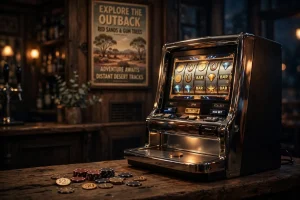
Lightning Link’s familiar name does not determine whether an online casino service may be supplied in Australia.

The name Lightning Link can appear beside the word “casino” in an Australian search, but that pairing does not settle what may lawfully be supplied online. The relevant distinction is between a game’s name and the service through which it is offered. Australian law regulates the latter: the Interactive Gambling Act 2001 restricts operators from providing specified online gambling services to people in Australia, including online poker and casino-style games.
That rule reflects a choice about where responsibility sits. The Act is directed at providers, not at individual players. Its central concern is the supply of prohibited services into Australia, rather than treating a person who encounters an offshore gambling site as the target of enforcement. The distinction matters in a market where a website can be visible from Australia without being authorised to provide its services here. Visibility is not permission.
The law also treats online casino-style gambling as a category, rather than granting an exception because a familiar game or brand is involved. A name associated with a casino does not make an online offering lawful by itself. Nor does an offshore operator’s claim of approval elsewhere alter the Australian rules. The legal question is whether the service may be supplied to people in Australia under the national framework.
If you’re looking for Lightning Link online pokies in Australia, use this list as a starting point and check the game selection and current terms directly with each casino. The details below highlight only the licensing, deposit and payout information available for these operators.
Rollero Casino
Rollero Casino is listed with a Curacao Gaming Control Board licence, OGL/2023/176/0095, held by Hollycorn N.V.
LuckyVibe
LuckyVibe is listed with a Curacao Gaming Control Board licence, OGL/2023/176/0095, held by Hollycorn N.V.
House of Pokies
House of Pokies lists an international iGaming licence, though the jurisdiction is not named in the source. PayID payouts are stated as 1–24 hours, and the minimum deposit is A$30, or A$10 with PayID.
Wild Tokyo
Wild Tokyo is listed as Curacao-licensed, with a minimum deposit of A$10. Its stated payout times are 30–60 minutes for crypto and 1–5 days for fiat.
Uptown Pokies
Uptown Pokies is listed as operating since 2017 and licensed in Curacao. Its stated minimum deposit is A$20.
MrPacho
MrPacho lists crypto payouts of 30–120 minutes and fiat payouts of 24–72 hours. Its stated minimum deposit is A$30.
Golden Pokies
Golden Pokies is listed as Curacao-licensed. No deposit or payout details are provided here.
WinSpirit Casino
WinSpirit Casino is listed with a Curacao eGaming licence, OGL/2024/923/0383, held by Antillephone N.V. Its stated minimum deposit is A$30.
JustCasino
JustCasino is listed with a Curacao Gaming Control Board licence. No deposit or payout details are provided here.
Kingmaker
Kingmaker lists crypto payouts at approximately 90 minutes and fiat payouts at 1–5 days. Its stated minimum deposit is A$30.
That framework is enforced by the Australian Communications and Media Authority, usually called ACMA. It is the federal body responsible for administering the Interactive Gambling Act and monitoring compliance with federal interactive gambling laws. In practice, enforcement is not limited to issuing statements about what the law says. ACMA can ask Australian internet service providers to block websites that provide prohibited interactive gambling services or advertise them in Australia.
Blocking is an administrative tool, not a declaration that the internet has become a border checkpoint. Websites and their addresses can change, and enforcement actions do not mean every prohibited service disappears at once. Still, the measure makes the government’s position visible in a practical way: the issue is not simply whether a site can be found, but whether its provision to Australians is permitted and whether authorities act against it.
ACMA reports that, following enforcement activity, it has blocked more than 1,455 illegal gambling and affiliate websites since November 2019. Those blocked addresses include sites involved in gambling services and their promotion. The scale says something about the work required to police a market built across borders: enforcement is a continuing process, not a single ban applied once and forgotten.
There is a discrepancy in published counts of services that have withdrawn from the Australian market since ACMA began enforcing the rules in 2017. One account puts the figure at more than 210; another gives a figure above 190. The two reports do not agree, so neither should be presented as an uncontested total. Both describe withdrawals after enforcement began, but the difference is a reminder that headline counts depend on how withdrawals are recorded and reported.
The legal context is therefore less tidy than a search result might suggest. A phrase joining Lightning Link and an online casino can describe a person’s interest, but it does not establish that the named game is offered lawfully online in Australia. The law concerns the service and its provision, while ACMA’s role concerns compliance and enforcement. A familiar label cannot do the work of a legal assessment.
This page is affiliate-linked and may contain sponsored recommendations. That commercial relationship is disclosed here as context, not as an endorsement of any gambling service. It does not change the law or turn prohibited advertising into neutral information. Australian restrictions apply to advertising online casino services as well as to their provision, so commercial language must not be used to steer readers towards them.
Real-money gambling content is for adults aged 18 and over. That age statement is not an invitation to gamble, and meeting an age requirement does not make a prohibited online service lawful. The distinction is important: consumer safeguards and legal supply rules address different questions. A person’s age cannot substitute for an operator’s compliance with the Act.
Australia’s approach places the burden on providers and gives the regulator tools to respond when services cross the line. It also leaves a recurring public task: separating a searchable name from a lawful offer. The distinction is plain. The internet is not.
“Free play” can describe a social game that borrows the look and language of pokies while keeping its activity inside a virtual-currency system. The distinction is not cosmetic. Under the Interactive Gambling Act, social casino platforms offering pokies-style games for virtual currency are not treated as gambling because players cannot win real money. The decisive point is what the play can return, not how convincingly a screen resembles a casino floor.
That boundary can be easy to blur. A game may use familiar casino imagery, call its activity a spin, or keep a tally of virtual credits. Those features can make it feel like gambling, but they do not by themselves turn it into real-money play. In the social-casino category, the currency is part of the game environment; it is not a cash balance that can be won and withdrawn as money. Nor should virtual credits be presented as prizes with a real-world value.
The word “free” is less exact than it sounds. In ordinary use, it may mean that a person can begin without placing a cash wager. It does not, by itself, explain every feature of a platform or whether virtual currency is involved. The legally relevant distinction is clearer: where the game is played for virtual currency and no real money can be won, it is not considered gambling under the IGA. A label alone cannot settle the question; the nature of the play does.
Lightning Link is often named in the same breath as free online pokies because its identity is associated with casino play. But a reference to Lightning Link does not establish that a particular social game is the same product, or that it offers the same experience as a venue machine. Nor does a free-play label turn a game into a source of cash winnings. The careful description is narrower: social platforms may offer pokies-style entertainment using virtual currency, and that category is distinct from gambling for money.
This distinction has a social history as well as a legal one. Casino imagery has travelled well beyond casino walls, finding a place in apps and online entertainment that imitate some of the familiar rituals without reproducing the financial exchange. The visual vocabulary can remain; the wager and its possible cash return do not. The law draws its line at that practical difference, rather than treating every game with casino-like decoration as a gambling service.
There is a reason to be precise. Calling a virtual-currency game “free pokies” can suggest more than the words establish: that it is a particular Lightning Link product, that it is available in a given form, or that a win has value outside the game. None follows simply from the phrase. “Free play” describes a mode of entertainment, not a promise of money or prizes. A virtual balance is not a payout.
That can make the category sound less exciting than its presentation. That is the point.
For Australian readers, the difference also prevents two separate questions from being folded together. One is whether a social game uses virtual currency and offers no real-money winnings. The other concerns real-money online gambling and the rules that apply to it. Treating the former as proof of the latter would confuse the legal categories; treating a casino-style appearance as proof of a cash wager would do the same. The screen may borrow the theatre. The underlying arrangement matters more.
The boundary does not depend on whether a game is entertaining, polished or familiar. It depends on the economic substance of the activity: virtual currency stays within the social game, while real money that can be won belongs to a different category. That is why a non-gambling game must not be described as a way to win cash, recover spending or collect a real-world prize. Such claims would erase the very distinction that makes the category non-gambling.
This page contains affiliate links and may include sponsored recommendations. That disclosure identifies a commercial relationship; it does not change the meaning of free play or endorse gambling services. Real-money gambling content is for adults aged 18 and over. In Australia, the distinction between social play and gambling is not a matter of tone or branding. It rests on whether real money can be won.
Lightning Link is a game series created by Aristocrat, an Australian developer. That origin is a useful place to begin: the name belongs to a recognisable product family, not to a general category of online entertainment. The Australian setting matters too. A locally developed game can be familiar in the country where it was made without being offered through every form of play people associate with it.
The phrase “Lightning Link online pokies Australia 2026” joins several different ideas: a named series, online access, Australian players and a particular year. They do not automatically fit together. A title’s appearance in an online discussion or in a description of similar games does not establish that the named game is available to play online in Australia. Nor does the word “online” change the identity of the product. It is still Aristocrat’s Lightning Link series.
That distinction can feel fussy, especially when the same visual language travels between physical venues, websites and social games. But names do work. They let people recognise a particular product amid a crowded field, and they can also blur the line between an original series and other games that resemble it. “Lightning Link pokies” is a natural way to refer to the named product in Australian English; it is not evidence of a particular online service.
The developer’s Australian identity offers a small cultural footnote. Gaming products cross borders easily, while the rules governing access do not. A game made by an Australian company can be discussed internationally, adapted into different commercial settings, or compared with titles from other developers. Those facts do not make every version equivalent, and they do not settle what is available to people in Australia. Familiarity is not permission.
The year in the page title has a similar limit. It places the subject in a current context, but it does not certify a new release, a fresh online version or a change in Australian availability. Product names often outlive the particular machines, interfaces and conversations around them. A year attached to a name may reflect the date someone is looking for information, rather than a new chapter in the series.
It is therefore more precise to speak of Lightning Link as a series by Aristocrat than to treat every reference to “online Lightning Link pokies” as a direct reference to a playable Australian online product. Related wording can point to comparisons, descriptions, or games built around familiar ideas. The distinction is ordinary, even if online listings often make it hard to see. Names travel faster than context.
This page is affiliate-linked and may contain sponsored recommendations. That disclosure describes the commercial nature of the page; it does not endorse a gambling service or establish that one is lawful or available in Australia. Any real-money gambling content is for people aged 18 and over. Here, the subject is the identity and place of a named series, not an invitation to play.
The boundary is worth keeping in view because a product’s origin and a market’s rules answer different questions. Aristocrat identifies who made Lightning Link. The phrase “Australian” identifies the setting in which the title is being discussed. Neither, on its own, describes an online route to the game. The language may be compact; the distinctions are not.
Lightning Link has a clear place in Australian gaming vocabulary because it is an Australian-developed series with a specific name. Its presence in online searches and conversations reflects that recognition, but recognition should not be mistaken for access. The name tells what the series is. It does not, by itself, tell where or how it can be played.
In Australia, Lightning Link belongs to the venue floor: it is played on physical machines, not offered online for real-money play to Australian players. That distinction matters because the machine is part of a public setting, among the routines and rules of a venue, rather than a title available through a domestic online casino. The phrase “Lightning Link slot machine” may suggest a single standard cabinet, but the series appears in several named variants.
A specialist review identifies Happy Lantern, Magic Pearl, Sahara Gold and High Stakes among the variants commonly associated with Lightning Link. Their names set different decorative tones, but the distinctions are not only visual. The variants have differences in paytables and bonus features. Those differences make the particular machine relevant: knowing the series name alone does not establish the precise terms or features of a given cabinet.
A paytable is the machine’s account of how symbol combinations are valued. It is a useful place to compare variants, but not a promise of what any individual session will return. Bonus features, too, are part of the variant’s specification; a familiar series name does not mean every version offers the same feature set. The details belong to the machine in front of the player, not to a broad description of Lightning Link as a whole.
That makes a venue-machine review most useful when it identifies the specific variant and explains its paytable and bonus features without treating one version as a stand-in for all the others. A review that merely repeats the series name leaves an important distinction blurred. A review that describes a feature as though it applies everywhere may blur it further.
The cabinet also gives the game a particular social geography. Its place is a venue, where the machine is encountered among other forms of leisure, not on an Australian real-money website. That does not turn the machine into a neutral object: it remains gambling equipment, with financial consequences attached to play. Nor does a venue setting make the experience equivalent to an online version. The physical context is part of what Lightning Link is in Australia.
A Lightning Link variant with its own specific paytable and bonus features.
A variant within the series that differs in decorative tone and specifications.
A specific cabinet version with distinct rules and payout structures.
A variant of the series with its own unique features and paytable.
The differences between Happy Lantern, Magic Pearl, Sahara Gold and High Stakes should therefore be treated as differences within a series, rather than as evidence that one is universally preferable. A player comparing machines can look at the displayed rules and paytable for the specific variant, while remembering that published descriptions cannot guarantee a result. Names are not terms and conditions.
This is also why a single “Lightning Link rules” summary can mislead if it speaks as though all versions share identical details. The series label helps identify the family; the individual machine supplies the relevant variant information. Paytables and bonus features may change across versions, so claims about one cabinet should not be carried over automatically to another. That is a modest point, but a consequential one.
Lightning Link is sometimes sought as an online game, yet the Australian venue-machine context is the relevant one for real-money play. Similar names or a familiar visual style elsewhere do not establish that the same product is available online to Australian players. The distinction is not a matter of taste. It separates a series encountered on venue machines from a real-money online service that is not offered here.
This page is affiliate-linked and may contain sponsored recommendations; that disclosure does not change the status of the product or amount to an endorsement. Real-money gambling content is for adults aged eighteen and over. For the variants themselves, the useful comparison remains specific and plain: identify the cabinet, read its paytable, and note which bonus features belong to that version. No universal ranking follows from the names.
Lightning Link is not available for real-money online play to people in Australia. Its Australian setting is the venue machine, not a website or app where a player can wager cash on the game. That distinction matters because a familiar title on a screen can suggest a connection that is not there: an online service using similar imagery or play features is not, for that reason, an online version of Lightning Link.
The legal boundary is set by the Interactive Gambling Act 2001. It makes it unlawful for operators to provide real-money online casino-style games, including pokies, to people physically in Australia. The law addresses the supply of the service. It is not a local licensing system under which an offshore casino can obtain permission to offer the same game to Australians.
The practical consequence is plain. A page claiming to provide real-money Lightning Link online to Australian players should not be treated as evidence that the game is legally available. Nor does a familiar game name establish that the service is connected to Aristocrat or to the venue machines found in Australia. Those are separate questions from whether a particular website accepts a wager.
There is an important distinction between the operator’s legal position and the player’s. The Act is directed at providers, not at individual Australians who use offshore sites. No known prosecutions of Australian players for gambling on those sites have been reported. That does not make the service lawful for the operator, or turn access into an authorised route to real-money play. Absence of a player prosecution is not a licence.
The difference can be easy to miss when search results use phrases such as “real-money Lightning Link” or describe a free online demo. Such labels do not change the Australian status of the game. A free demonstration is not a cash wager; a claim of real-money access is not proof that the service may lawfully be offered here. Details about virtual-currency play belong to a different question and should not be mistaken for a way to collect cash or prizes.
For anyone assessing the claim, the central issue is not whether a page looks convincing, but what it offers and to whom. In Australia, the decisive line is between Lightning Link played on a venue machine and real-money online casino services that the law bars operators from providing to people in the country. There is no online Australian real-money edition of Lightning Link to recommend.
Real-money gambling content is for adults aged eighteen and over. That age threshold does not remove the legal restriction on online casino services; it is not a route around it. This page is affiliate-linked and may contain sponsored recommendations. The disclosure does not endorse an offshore gambling service or make a prohibited offer lawful.
The boundary is not a technicality. It reflects a policy choice about who may supply gambling online, even where the game itself is familiar from a physical venue. Lightning Link’s local presence belongs to that venue context; a cash wager through an online casino is another matter, governed by a different legal rule. No workaround.
A phone-shaped icon can make a familiar name look like a promise of portability. Lightning Link, however, was designed for land-based venues; its identity belongs to a physical machine, not to a confirmed Australian app download. A search for a version to install can therefore lead to a category mistake: a game with similar play is not necessarily Lightning Link itself.
A specialist review describes online platforms carrying games with comparable Hold and Spin mechanics, from Aristocrat and other developers. That resemblance is a feature shared across games, not proof that a Lightning Link app has been released. Names, artwork and bonus language may echo the venue series while the product behind the screen is different. Branding can travel more readily than a machine.
The distinction matters particularly in Australia. Real-money online casino-style games are prohibited when supplied to people in the country, and Lightning Link is not offered online for real money to Australian players. An app label cannot change the legal character of the service it connects to. Nor does the existence of a mobile interface establish that a particular title is an authorised or genuine Lightning Link release.
The same caution applies to advice framed as tips for a phone version, including material tied to a named variant such as Happy Lantern. Instructions about a venue machine may not map onto another developer’s game, even where both use Hold and Spin. A similar screen is not the same product; differences in rules and features matter.
The Australian Communications and Media Authority can seek website blocking where prohibited interactive gambling services are involved. Access may consequently be interrupted, and an app’s presence or download page is not evidence that its service is lawful in Australia. The practical distinction is less glamorous than an icon: the series is built for venue machines, while online games that borrow a mechanic belong to their own products and platforms.
This article is affiliate-linked and may contain sponsored recommendations. That disclosure describes the page’s commercial relationship; it does not endorse an online casino service or alter the Australian restrictions. Real-money gambling content is for adults aged 18 and over. A download is not a loophole.
On linked Lightning Link machines, the Major and Grand jackpots are shared prizes rather than separate pools attached to a single cabinet. A specialist game review describes both amounts as rising over time as people wager across the linked machines. That makes the displayed total a moving figure, shaped by activity across the network—not a promise that a particular machine or player is close to a payout.
The distinction matters because a large number on a screen can seem to tell a story about what is due. It does not. A jackpot total can increase without indicating when it will be won, and no pattern in the amount establishes that a win is imminent. The figures describe the prize pool, not a timetable.
Eligibility is a separate question. A specialist game review says that claiming a jackpot may require a wager at the machine’s maximum bet. The condition can make the word “win” less simple than it sounds: a result may appear on a screen, while the rules governing that result determine whether the player qualifies for the advertised jackpot. The relevant conditions belong to the particular machine and its rules, rather than to a general assumption about every Lightning Link game.
That caveat also changes how the maximum bet should be understood. It is not merely a larger version of a smaller wager if jackpot eligibility depends on it; it may be a threshold attached to a specific prize. The distinction is important, but it says nothing about the likelihood of winning or whether raising a wager improves a player’s prospects. No such inference follows from the jackpot structure alone.
In Australia, Lightning Link is played on venue machines; this description is not a claim that the game is available online for real money. This affiliate-linked content may contain sponsored recommendations, but it does not recommend a gambling service. Real-money gambling content is for adults aged 18 and over.
A rising total is not a forecast.
Hold and Spin is a feature on the Lightning Link venue machine, not a separate way to play. When it begins, special symbols stay in their positions while the other positions spin independently. The locked symbols remain visible as the rest of the display changes, so the feature’s action comes from whether further special symbols appear and where they land.
That pause-and-repeat rhythm is the mechanic’s defining gesture. The rest of the machine may keep moving, but the held positions create a fixed frame around each new result. It is a small piece of theatre built into the hardware: motion, interruption, then another chance for the moving positions to change the picture. A specialist review describes this sequence; the exact presentation can vary between versions.
When this feature begins, special symbols are locked in their positions while the other positions spin independently. This creates a fixed frame where the goal is to see if further special symbols appear and where they land.
The bet is a separate matter from the feature. A specialist review gives a minimum-bet range of $0.20 to $1.00 per spin, with the amount depending on the venue-machine variant and the setting in use. That range is a reported detail, not a promise that every machine offers those same options. The machine’s displayed controls and terms determine the available stake.
This is not a guide to playing Lightning Link online: the series is played on venue machines in Australia, and real-money online casino games are prohibited for Australian residents. The distinction matters because search wording can blur a physical game with digital products that borrow similar mechanics. One is not evidence of the other.
This page is affiliate-linked and may contain sponsored recommendations; that disclosure does not change the legal boundary or amount to a casino endorsement. Real-money gambling content is for adults aged 18 and over. The Hold and Spin sequence can be described plainly without dressing it up as a promise of return. A mechanism, not a guarantee.
The phrase “Lightning Dollar Link” can suggest that a separate download exists, or that the venue game has been packaged for online use. Those are different claims. Lightning Link was designed for land-based venues; a specialist review describes online platforms offering similar Hold and Spin mechanics from Aristocrat and other developers. Similarity of a feature does not establish that a platform carries Lightning Link itself.
There is no confirmed Lightning Link download or Australian real-money online service to point to. A file bearing the game’s name would not, by that fact alone, demonstrate an official release, a genuine connection to Aristocrat, or lawful availability in Australia. Download labels are easy to make; provenance is harder.
The distinction matters because a related mechanic can appear in a different game, under a different title and from another developer. Searching for a dollar-themed version, a mobile app or a desktop file does not bridge that gap. Nor does an online title with familiar-looking symbols establish that it is the venue product in digital form.
For Australians, this is not a route to real-money Lightning Link play. The national legal setting does not permit online casino-style games to be provided for real money to people in Australia. Real-money gambling content is for adults aged 18 and over, but age does not change that boundary.
This page is affiliate-linked and may contain sponsored recommendations; that disclosure does not endorse or make available any online casino service. The useful distinction is modest: related Hold and Spin play exists online, while a verified Lightning Link download and an Australian real-money version are not established. Similar is not identical.
“Lightning Link games” can mean the named Aristocrat series, or a looser family resemblance: games built around a Hold and Spin feature. The distinction matters. A familiar mechanic does not make separate products versions of Lightning Link, nor does it establish that the named series is available online in Australia.
A specialist game description explains the feature this way: special-symbol positions remain locked while the other positions spin independently. That simple division—held symbols, moving spaces—can recur across games from different developers. The resemblance is structural, not proof of shared ownership, identical rules or identical outcomes. Details belong to each individual game.
The name itself has a narrower home. Lightning Link is Aristocrat’s series, while the broader language of “games” can sweep in unrelated products that borrow a similar mechanic. Search phrasing tends to blur those categories; product names do not. Dry distinction, but a useful one.
For Australians, the distinction also cannot be mistaken for a route to online play. Real-money online casino-style games are prohibited for operators serving people in Australia under the Interactive Gambling Act 2001. Lightning Link is played on venue machines here, not offered online for real money to Australian players. This page is affiliate-linked and may contain sponsored recommendations; that disclosure is not an endorsement or an invitation to use offshore services.
Any real-money gambling content is for adults aged 18 and over. Similar mechanics elsewhere do not change the legal boundary, and a shared feature does not turn another developer’s game into Lightning Link.
You can play pokies-style social casino games using virtual currency, but they do not pay real money. Lightning Link itself is played on venue machines in Australia, and online platforms may offer similar Hold and Spin games.
Australian law prohibits operators from supplying online casino-style gambling services to people in Australia. The law targets providers rather than individual players.
Lightning Link is not offered for real money online to Australian players. For online pokies generally, minimum bets typically range from $0.20 to $1.00 per spin, depending on the game and platform.
No. Lightning Link was designed for land-based venues, while online platforms may offer other games with similar Hold and Spin mechanics.