The guide distinguishes operator restrictions from player liability and explains why a live-dealer format does not change the legal boundary.
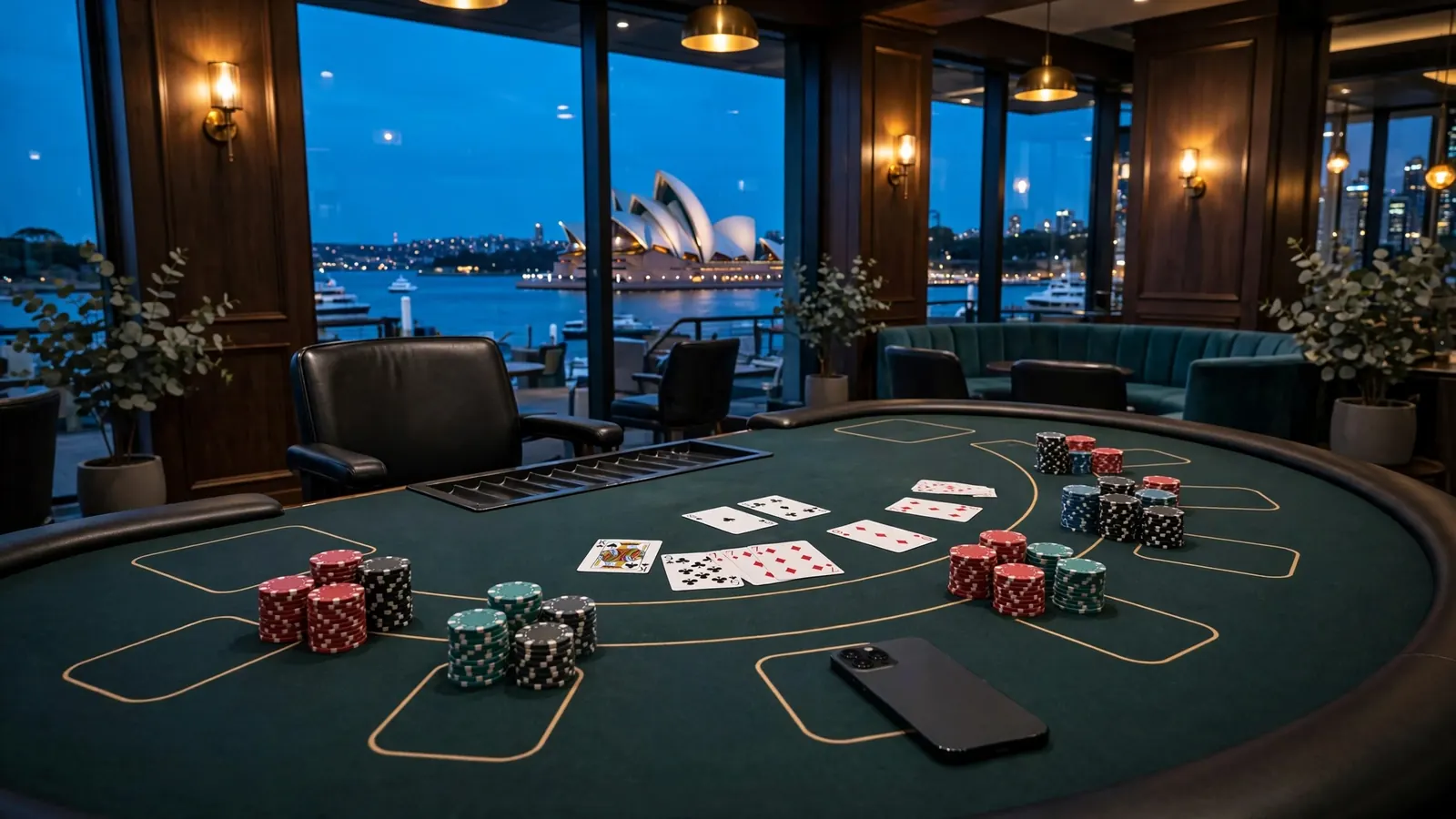
The phrase “live blackjack online casino Australia” joins two ideas that do not meet under Australia’s current legal framework: a familiar casino table game and a locally licensed online service offering it for real money. The distinction matters. A page about blackjack can describe the subject, but it cannot present Australian-licensed online casino play as an available product.
The Interactive Gambling Act 2001 prohibits Australian-licensed operators from providing online casino games to people physically located in Australia. The restriction covers blackjack alongside other casino-style games, whether a table is presented as live or offered through software. The format does not create an exception to the rule.
That boundary is about the operator’s conduct. The law makes it illegal for operators to provide real-money online casino services to people in Australia; it does not make a player criminally liable simply for playing at an offshore casino. These are separate questions, often blurred in casual discussion. One concerns the service being supplied. The other concerns the person using it.
There are no locally licensed online casinos officially operating in Australia. Accordingly, a claim that an Australian licence authorises an online casino to offer real-money blackjack would misstate the position. The existence of a website, a table labelled “live”, or a dealer visible on screen does not establish local authorisation. Nor does the word “licensed” on its own: the relevant point is whether the service is licensed to operate in Australia, where online casino provision is prohibited.
This is not a small-print distinction. In regulated industries, a licence usually signals that a provider has permission to offer a defined service in a particular place. Here, the legal framework does not provide a route for Australian-licensed operators to offer online casino games. A polished interface cannot supply the permission that the law withholds.
The Act also treats online casino-style games—including blackjack, roulette, poker and slots—as prohibited interactive gambling services when they are provided to customers in Australia. That category is broader than one particular table or software format. A real-time stream does not transform the underlying casino service into something outside the rule; neither does a digital version without a streamed dealer. For this section, the significant point is the legal category, not the mechanics of how a table appears on screen.
The law’s penalties underline that its principal target is the provision of the service. The maximum daily penalty is $360,000 for an individual and $1.8 million for a body corporate that violates the Act. Those figures concern providers and other people who breach the law; they are not a penalty imposed on a player merely for using an offshore service. The distinction is worth stating plainly, because the scale of a penalty can otherwise be mistaken for a warning directed at the wrong party.
Advertising has its own boundary. Real-money online casinos and other prohibited interactive gambling services cannot be advertised to Australian audiences. That makes promotional language especially consequential: describing a site as a recommended place to play, or presenting a route to signing up, would not be neutral explanation. The legal setting is not a backdrop that can be softened by a disclaimer or by calling the material a review.
The title of a game does not alter these limits. “Online blackjack casino” may describe what someone expects to find, but it does not name a locally lawful product category. A live blackjack table remains casino gambling when a customer in Australia is invited to stake real money on it. Calling it entertainment, an international service or a live experience does not change the question of who is providing it and to whom.
Australia’s approach draws a firm line around supply rather than pretending that a domestic online casino market exists under a local licence. This can make the language of casino websites seem more permissive than the law itself. The screen may suggest an open door; the statute defines the threshold.
The point is not that blackjack has disappeared as a game, or that the legal position is a judgement on the people drawn to it. It is that an informative account of live blackjack in Australia must not imply that locally licensed real-money online casino play is available. The legal boundary comes first. The game’s presentation comes after it.
18+ only. Gambling can cause financial harm. Jackpotjillcasinohubau.com is not liable for gambling losses.
“Live dealer” describes a way of presenting a game, not a legal credential. The phrase suggests a human dealer appearing through a video stream, rather than a game presented entirely through software-generated imagery. It may make a digital table feel closer to a room with cards and a person across it. But the camera answers only one question: what is being shown? It does not establish who may lawfully offer the game, where the operator is authorised, or whether the service is lawful for someone in Australia to use.
That distinction matters because the language of online gambling often turns a visual feature into a reassuring label. “Live” can sound immediate and accountable; “dealer” can sound like a person whose presence lends the table a certain solidity. Neither word, on its own, supplies a licence. A streamed image is evidence of a stream. It is not evidence of regulatory permission.
The same separation applies to a blackjack table shown online. The table may be represented as a real setting, with a dealer visible on screen, while the service behind it remains a separate matter. The design of the interface, the appearance of cards, and the presence of a human presenter cannot settle the platform’s legal status. A polished set is still a set. A convincing image cannot do the work of a regulator.
This is why “live dealer blackjack” should be understood as a format description rather than a guarantee about the circumstances in which the game is offered. It tells something about the proposed presentation: a dealer appears by video, and the experience is framed as taking place in real time. It does not, by itself, establish the game’s rules, the operator’s standing, the reliability of its claims, or the protections available to a participant. Those are different questions, and the label does not answer them.
There is also a practical distinction between the image and the transaction. A specialist review has reported that some live-dealer games are offered only for real-money play, which would require a real-money bankroll. That is a report about some offerings, not a dependable description of every table or platform. The phrase “live dealer” does not tell whether a particular game has a practice mode, what conditions apply, or whether any advertised terms are current. The presence of a dealer on screen cannot fill those gaps.
The attraction of the format is easy to understand without treating it as proof of anything beyond presentation. A human figure, a visible table and the suggestion of a shared moment borrow the social grammar of a physical casino. The screen supplies a face and a setting; the player remains alone with a device. That tension is part of the medium. The performance of presence is not the same as physical company, and neither is the same as oversight.
The word “casino” can blur these categories further. It may refer to a website’s branding, its catalogue of games, or the familiar image of a gambling venue. It does not necessarily describe a place licensed to operate in the viewer’s country. Nor does the appearance of a blackjack table convert an online service into a locally authorised casino. Terms used to package a product are not legal findings.
In Australia, the legal boundary remains separate from the format. The Interactive Gambling Act 2001 prohibits operators from providing real-money online casino games to people physically located in the country. A live stream does not change that boundary. The dealer may be visible, the table may look tangible, and the interface may use the language of a casino; none of those features turns the service into locally licensed online casino play. The distinction is plain, even when the presentation is elaborate.
This is not a technicality hidden beneath the game. It is the difference between how a product is staged and whether it may lawfully be supplied. A live image can make an online table feel less abstract, but the governing question sits outside the frame. The camera shows a performance. It does not certify the stage.
For that reason, a description of live-dealer blackjack should not be mistaken for an invitation or an assurance of availability in Australia. A streamed dealer is a feature of presentation; a licence is a matter of legal authority. They are not interchangeable, however closely the interface makes them appear.
18+ only. Gambling can cause financial harm. Jackpotjillcasinohubau.com is not liable for losses.
For live blackjack in Australia, it is worth checking the available operator details before choosing where to play. This list provides a concise reference to the licensing and payment information supplied for each option.
Rollero Casino
Rollero Casino is listed with a Curacao Gaming Control Board licence, OGL/2023/176/0095, held by Hollycorn N.V.
LuckyVibe
LuckyVibe is listed with a Curacao Gaming Control Board licence, OGL/2023/176/0095, held by Hollycorn N.V.
House of Pokies
House of Pokies has an international iGaming licence, though its jurisdiction is not named in the source. PayID payouts are listed at 1–24 hours, with a A$30 minimum deposit or A$10 via PayID.
Wild Tokyo
Wild Tokyo is listed as Curacao-licensed and has a A$10 minimum deposit. Its stated payout times are 30–60 minutes for crypto and 1–5 days for fiat.
Uptown Pokies
Uptown Pokies is listed as Curacao-licensed and operating since 2017. Its minimum deposit is A$20.
MrPacho
MrPacho lists a A$30 minimum deposit. Stated payout times are 30–120 minutes for crypto and 24–72 hours for fiat.
Golden Pokies
Golden Pokies is listed as Curacao-licensed. No additional operator details are provided here.
WinSpirit Casino
WinSpirit Casino is listed with a Curacao eGaming licence, OGL/2024/923/0383, held by Antillephone N.V. Its minimum deposit is A$30.
JustCasino
JustCasino is listed with a Curacao Gaming Control Board licence. No other details are provided here.
Kingmaker
Kingmaker lists a A$30 minimum deposit. Its stated payout times are about 90 minutes for crypto and 1–5 days for fiat.
“Best” sounds like a finding. In casino copy, it is often only a label: a confident word placed before “blackjack” without showing what was compared, when the comparison was made, or what evidence supports the verdict. A claim about the best online blackjack casino therefore proves little by itself. It says that someone has made a judgement; it does not reveal whether the judgement rests on relevant, current information.
A meaningful comparison would need to identify its yardstick. One assessment might examine the rules attached to a table; another might consider whether the published terms are clear, or whether the service can be used on the devices it claims to support. Those are different questions, not interchangeable signs of quality. Without a stated method and evidence for each point, a ranking can conceal as much as it shows.
The same caution applies to talk of the best blackjack casinos as a group. A list is not automatically a comparison simply because several names appear beneath a heading. It matters whether the entries were assessed on the same basis and whether the information can be checked independently. A polished description, a prominent position, or a cluster of favourable adjectives cannot substitute for that work.
Nor does the word “best” establish that a particular operator offers a particular table, rule variation, service feature or condition. No operator or product attribute is established by the label alone. Even a detailed claim needs to be tied to something observable: published terms, a clear explanation of the comparison, or information that can be checked against the service being described. The distinction is plain, if not always convenient. Assertion is not evidence.
There is also a difference between a feature being present and its being valuable to everyone. A table setting that suits one player’s preferences may matter little to another. A comparison can report what is stated or demonstrated; it cannot turn personal preference into an objective fact simply by placing one option above another. Rankings tend to compress those differences into a single order, which is neat on the page and less neat in reality.
A “best online casino for blackjack” claim should therefore be read as a proposition requiring support, not as a guarantee of quality or suitability. Its credibility depends on the scope of the comparison, the freshness of its information, and whether the reasoning is visible. If the criteria are vague, the conclusion is vague too. If the evidence is not available, the ranking remains an opinion dressed for publication.
This standard matters especially where the language implies certainty. “Top,” “leading” and “best” are not measurable attributes on their own. They do not establish reliability, fairness, value or a better experience; each of those would require its own evidence. A superlative can make an ordinary description sound conclusive. It cannot make it so.
The useful question is not which casino has won an unexplained contest, but what the claim actually demonstrates. When the basis is stated and verifiable, a comparison can help describe differences. When it is missing, the safest reading is modest: someone prefers one option, or wants the wording to sound as if a contest has been settled.
A label is not a verdict.
Bitcoin and Litecoin in a blackjack headline can make a casino offer sound unusually concrete. A familiar currency name is not, by itself, evidence that a particular platform accepts it, that a blackjack table is available, or that either claim applies to people in Australia. Nor does the mention of crypto establish who holds the funds, how a transaction is handled or what conditions govern a withdrawal. The label is not the arrangement.
Bonuses create a second layer of uncertainty. A blackjack promotion might be described as a welcome offer, a no-deposit bonus or a bundle of chips, but the name alone says little about its terms. “No deposit” does not necessarily mean unrestricted play or a cashable balance. Chips may be promotional credits rather than money, and a displayed balance may be subject to conditions that affect whether it can be withdrawn. Without terms tied to a specific, lawful offer, those phrases cannot establish the value or practical effect of a bonus.
The distinction matters particularly when crypto and bonuses appear together. A headline may suggest that a bonus can be claimed in Bitcoin or used at blackjack tables, yet each part of that suggestion needs separate confirmation: the currency, the game, eligibility, and the conditions attached to any credited amount. One element does not prove the others. A polished offer can still leave the important terms in small print.
Mention of Bitcoin or Litecoin does not prove a platform accepts these currencies in Australia, and "no deposit" bonuses may be subject to conditions that affect withdrawability.
“Best odds” is another phrase that sounds measurable while concealing what is being measured. Odds are not a synonym for a favourable promotional label, and a bonus does not alter the meaning of a game’s underlying terms merely by being attached to it. Without specific, comparable information, a claim about the best odds cannot be treated as an established fact. No ranking follows from the phrase.
Searches for Bitcoin blackjack, crypto blackjack or a casino bonus therefore describe an interest, not a verified product. They do not identify a confirmed operator, prove that an offer is available, or show that a platform is authorised to provide online casino gambling in Australia. International branding and digital currencies do not change the status of a service. The packaging may be modern. The uncertainty is familiar.
There is also a difference between promotional chips and the ordinary idea of a playable balance. The word “chips” can refer to a visual representation of stakes, a bonus credit or another platform-specific unit. Its meaning depends on the stated terms; it should not be assumed to represent withdrawable funds. A bonus label cannot settle that question.
This is not an endorsement of crypto gambling or a guide to finding an offer. Gambling can cause financial loss, and Jackpotjillcasinohubau.com is not liable for losses arising from gambling activity. 18+ only. Gambling carries financial risk; help is available for people affected by gambling.
Strategy is often spoken of as if it were a key that opens a predictable door. In blackjack, the more modest meaning is more useful: a way to make decisions according to a considered plan rather than letting each moment dictate a new one. That distinction matters in any casino setting, online or otherwise. A plan can organise choices; it cannot make an uncertain game certain.
The phrase “basic strategy” can suggest a single universal script. But a strategy only makes sense in relation to the conditions under which it is used. The table’s rules and options matter, and a label alone does not establish what a particular recommendation assumes. Without those details, a chart or confident-sounding instruction may look precise while leaving its foundations unclear. Confidence is not context.
A more careful way to assess blackjack advice is to ask what it actually explains. Does it identify the conditions it assumes? Does it distinguish a decision framework from a promise about results? Can its reasoning be understood, rather than presented as a mysterious system? These questions do not settle which action is right in a particular hand. They help separate an argument from advertising dressed as expertise.
The same caution applies to advice presented as casino blackjack strategy or as a method for online play. A digital setting does not, by itself, make a recommendation more reliable. Nor does a polished table layout, a familiar-looking shoe or a stream of confident commentary prove that the advice fits the game being offered. Those visible details may shape how a game is presented; they are not a substitute for knowing the assumptions behind a strategy.
A sound decision-making approach can also include limits set before play. That might mean deciding in advance what amount of money is available for entertainment and stopping when it is gone, rather than treating further play as a way to recover it. This is not a blackjack technique or a route to a particular outcome. It is a boundary around financial risk. The distinction is plain, if often inconvenient.
The cultural appeal of strategy is easy to understand. Games invite people to search for patterns, and a written system gives uncertainty the appearance of order. Casinos have long traded in that tension: rules make play legible, while chance resists being reduced to a promise. A strategy can help structure thought within that tension. It cannot erase it.
For anyone comparing explanations of blackjack strategy, the useful standard is modesty: clear assumptions, reasoning that can be examined, and no claim that a system guarantees success. Where advice skips its conditions or sells certainty, its confidence is the least persuasive part.
18+ only. Gambling carries a financial risk and can cause harm. Jackpotjillcasinohubau.com is not liable for gambling losses.
Access is not simply a matter of opening a page and choosing a table. In Australia, real-money online casino games cannot lawfully be provided to people in the country by locally licensed operators, and offshore casino services are subject to active blocking and enforcement. A streamed blackjack table does not alter that boundary. The practical question of how to reach a live game therefore cannot be treated as an ordinary account set-up guide.
Payment labels can create a misleading impression of availability. A specialist review of Australian payment options names PayID, bank transfers, Visa, Mastercard, e-wallets and cryptocurrency among methods used in the market. That list is not confirmation that any particular casino accepts them, that a payment route is lawful for online casino play in Australia, or that a service is available to residents. A familiar bank-transfer option does not make the activity behind it locally authorised.
The distinction matters because a payment method has two separate roles: moving funds and signalling trust. The first may be technically possible; the second is not established by the logo or label displayed at checkout. A site’s own terms, restrictions and payment conditions can differ, and an apparent deposit option does not establish that a withdrawal will be processed on the same terms. No table of methods can settle the more basic question of whether the service may be offered to people in Australia.
Currency is another practical detail, though not a reason to proceed. An AUD-denominated wallet avoids the 2.5–4% conversion margin applied to balances held in USD or EUR. That is a comparison of currency conversion, not a promise that an account, deposit or payout is available, nor evidence that any casino is authorised to serve the Australian market. Where money crosses currencies, the stated exchange treatment deserves attention before any transaction; where the underlying service is prohibited, a smaller conversion cost does not make it acceptable.
“Payout” can mean the settlement of a blackjack hand or the movement of a balance out of an account. Neither meaning should be confused with a dependable return. Payment access, withdrawal conditions and game results are distinct matters, and a displayed balance is not the same as money received. The existence of a payment route says nothing by itself about the reliability or legality of the operator.
Gambling carries a financial risk, including the possibility of losing money. Jackpotjillcasinohubau.com is not liable for losses arising from gambling or transactions with third parties. This page does not offer or direct readers to an online casino service. 18+ only. Gambling should not be treated as a source of income.
The hope of finding a reliable way to win blackjack at a casino rests on a tempting idea: that enough concentration can turn uncertainty into control. It cannot. A player can make choices, but those choices do not command the next result, and no method can promise a winning session.
The casino’s edge is not a claim that every hand goes its way. It describes an advantage built into the game’s structure over time, not a prediction about an individual outcome. A short run can favour a player; it can also go the other way. Neither result proves that a system has defeated the game. Chance is stubbornly indifferent to confidence.
That distinction matters to someone approaching blackjack for the first time. Familiarity with a game’s decisions may make its shape easier to understand, but familiarity is not protection against losing money. Nor does a live table, an online interface or a confident-sounding tip change the basic uncertainty. A method may guide choices; it cannot guarantee what follows.
The phrase “best way to play” can therefore mean only a preferred approach to decisions, not a route to certain profit. Claims that a tactic can make blackjack risk-free, ensure a win or reliably recover losses should be treated as promises without a sound basis. Chasing losses can deepen them; stopping is not a defeat of skill but a recognition of limits.
In Australia, this distinction sits within a strict legal boundary: the Interactive Gambling Act 2001 prohibits operators from providing real-money online casino games to people in the country. This page does not provide or promote access to such play.
Gambling can pose a financial risk, and Jackpotjillcasinohubau.com is not liable for losses. The site does not guarantee outcomes or profits. 18+ only. Gambling should not be treated as a way to make income or solve financial difficulties. If gambling is causing harm, support is available through appropriate local services.
A request for a blackjack casino site sounds like a shopping problem: find a platform, compare its tables, then decide whether the game suits. In Australia, that sequence starts one step too late. No locally licensed online casinos officially operate here, so a list of locally licensed casino sites offering blackjack would suggest an availability that does not exist.
The distinction matters because a game’s appearance on a website does not establish that the service is authorised for Australians. Nor does a table labelled live blackjack change the status of the platform behind it. The same applies to variants such as blackjack switch: the name describes a form of the game, not a local licence or an official route to play.
Search results can blur those categories. A site may describe itself as an online casino with blackjack, or promote several blackjack options, but presentation is not proof of local authorisation. A list of international sites would not answer the narrower question of whether a casino is locally licensed in Australia. It would answer a different one, and risk making prohibited services appear like ordinary domestic choices.
This is not merely a matter of wording. Australia’s framework treats online casino-style games offered to people in the country as prohibited interactive gambling services. The absence of locally licensed operators is therefore not a temporary gap in a market waiting for a directory. It is the boundary that determines what a site list can honestly claim.
The distinction between seeking a game and finding a locally authorised service is plain, if inconvenient. A blackjack title can be advertised; local licensing cannot be inferred from that title.
18+ only. Gambling can cause financial harm. Jackpotjillcasinohubau.com accepts no liability for losses.
Blackjack belongs to the broad family of casino table games, but a shared setting does not make one game a reliable guide to another. A casino may place several games under the same heading, yet each has its own structure, conventions and terms. The label “blackjack” identifies a distinct game; it does not inherit the rules or table arrangements of baccarat simply because both appear in casino catalogues.
That distinction matters when a game is described as online or live dealer. Those labels concern how a game is presented, not which game is being played. A streamed table does not turn baccarat into blackjack, and details reported about live baccarat cannot establish how a blackjack table works. The dealer, cards, interface and pace may be part of a particular product, but those particulars need to be established for that game rather than borrowed from a neighbouring category.
Casino language encourages a certain flattening. Menus group games for convenience, and search results compress them further; the result can make “table game” sound like a single experience with interchangeable furniture. It is not. Baccarat has its own named bets and scoring framework. That is enough to show why its descriptions should stay attached to baccarat. It says nothing, by itself, about blackjack.
For anyone trying to understand blackjack as a casino game, the useful boundary is simple: identify the game being discussed before drawing conclusions about its format or experience. A general label is not a substitute for game-specific information, and familiarity with one table game does not supply the missing detail for another. The category is broad; the games are not interchangeable.
A shared menu, studio or promotional description may create proximity, but proximity is not evidence of shared mechanics. Blackjack remains blackjack; baccarat remains baccarat.
18+ only. Gambling involves financial risk and can cause harm. Jackpotjillcasinohubau.com is not liable for losses.
Blackjack rules are specific to blackjack. Baccarat’s rules cannot fill the gaps: the games have different procedures, and details from one do not establish how a hand in the other is played. A description of baccarat’s card values, drawing decisions or winning hand would therefore be no guide to casino blackjack rules.
That distinction matters because familiar table-game language can make unlike games sound interchangeable. Both may involve cards, a dealer and bets, but those shared features do not determine the rules. Even a general phrase such as “rules of blackjack casino” leaves the essential particulars unstated. It does not identify the version of the game or establish what decisions, payouts or table conditions apply.
A proper account of blackjack would need blackjack-specific information.
This is not a matter of adding a caution to an otherwise complete explanation. It is a matter of keeping one game’s procedures from being borrowed to make another seem documented. Card tables have their own customs, and a shared deck does not erase the difference.
No borrowed rules.
Australian-licensed operators cannot offer online casino games, including baccarat. The restriction is on providers; a player is not criminally liable simply for playing through an offshore service.
There are no locally licensed online casinos in Australia, but international platforms that accept Australian players offer live dealer baccarat.
Yes. Live baccarat can be played on Android and iOS devices.
The Banker bet has the lower house edge in standard live baccarat: 1.06%, compared with 1.24% for Player and 14.36% for Tie. No Commission Baccarat may alter payouts for certain Banker totals.
Australians regularly play baccarat online through international casino platforms that accept Australian players.
Some live baccarat schedules may have time restrictions. Check the schedule for the table you choose.