Venue hours, gaming-room access, travel details and payment claims can differ, so listings may not confirm what is operating.
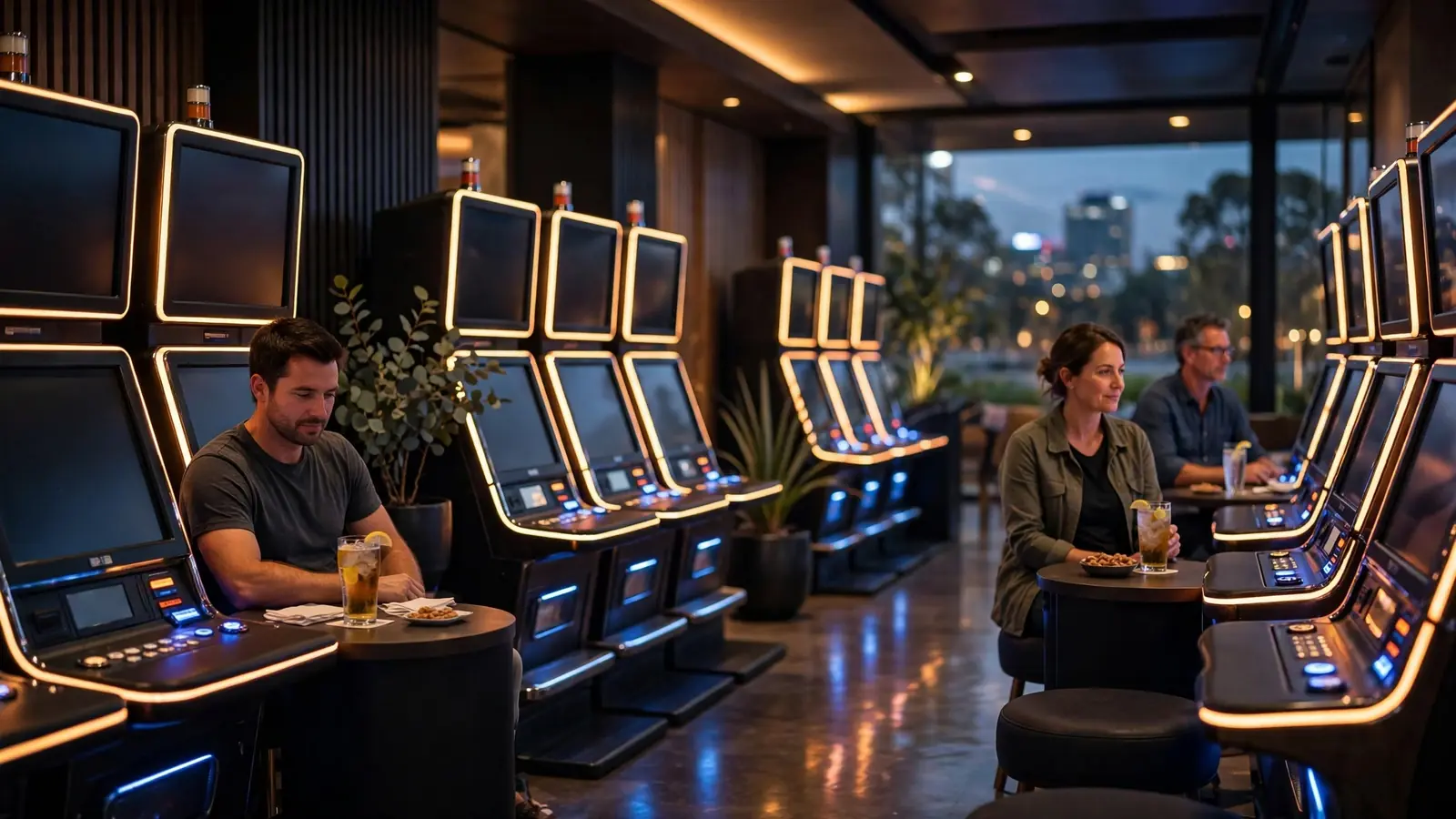
An “open” label can answer a narrow question: whether a venue is advertising itself as open at that moment. It does not necessarily answer the more practical one: whether its gaming room is operating and available. The distinction matters because a venue is a collection of spaces and services, not a single switch. A public bar, restaurant or reception area may have different hours from the room containing pokies.
That difference is easy to lose in a short listing. Opening information is often compressed into a status, a schedule or a line on a map. Those formats make a complicated operation look binary: open or closed. For someone deciding whether to travel, the missing detail is not the venue’s general status but the status of the particular area they intend to use.
A listing may also lag behind a change in arrangements. Published hours describe what a venue says its schedule is; they are not, by themselves, a live confirmation that every part of the property is operating. A temporary closure, a change to room access or a different schedule for gaming can make the simple label less useful than it first appears. “Open now” is a signpost, not a guarantee.
Choosing pokies in Perth for 2026 means checking the practical details behind each option, including licensing information and any stated payment terms. Use these brief verdicts as a starting point when deciding what to look into further.
Rollero Casino
Rollero Casino lists a Curaçao Gaming Control Board licence, OGL/2023/176/0095, held by Hollycorn N.V.
LuckyVibe
LuckyVibe lists a Curaçao Gaming Control Board licence, OGL/2023/176/0095, held by Hollycorn N.V.
House of Pokies
House of Pokies gives a PayID payout window of 1–24 hours and a minimum deposit of A$30, or A$10 when using PayID. Its source describes an international iGaming licence but does not name the jurisdiction.
Wild Tokyo
Wild Tokyo lists a Curaçao licence and a minimum deposit of A$10. Its stated payout times are 30–60 minutes for crypto and 1–5 days for fiat.
Uptown Pokies
Uptown Pokies lists a Curaçao licence, has operated since 2017, and sets a minimum deposit of A$20.
MrPacho
MrPacho states crypto payouts take 30–120 minutes and fiat payouts 24–72 hours. Its minimum deposit is A$30.
Golden Pokies
Golden Pokies lists a Curaçao licence.
WinSpirit Casino
WinSpirit Casino lists a Curaçao eGaming licence, OGL/2024/923/0383, held by Antillephone N.V. Its minimum deposit is A$30.
JustCasino
JustCasino lists a Curaçao Gaming Control Board licence.
Kingmaker
Kingmaker states that crypto payouts take about 90 minutes and fiat payouts 1–5 days. Its minimum deposit is A$30.
This is why searches for early or late access cannot establish a Perth gaming room’s hours. The wording signals a desired time, not a verified timetable. Nor does a venue appearing in a list of open businesses show that its pokies are running. The distinction is ordinary, almost bureaucratic, and still consequential: the wrong interpretation can turn a seemingly settled plan into an unnecessary journey.
The same caution applies to the word “opening”. It can refer to a venue’s advertised operating hours, the time its doors become accessible, or the hours of one service inside it. These meanings are often folded together in casual descriptions, although they describe different things. A gaming room’s operating status is the specific detail that matters; the broader venue label may not settle it.
There is no sound basis for turning a general Perth opening claim into a universal rule. Hours belong to individual venues and can change, while a search result or directory entry is only as useful as its accuracy and scope. A careful check would look for information that explicitly refers to the gaming area, rather than relying on a venue-wide status alone. If the wording is unclear, direct confirmation from the venue is the practical way to distinguish its general opening from the room’s availability.
That distinction also prevents a different kind of confusion: hours are not a measure of how a pokie behaves. A room being open says nothing about a machine’s return setting or the likely outcome of a session. Those are separate questions, and a timetable cannot answer them. The word “payout” sometimes appears beside opening information because people want one quick answer about where and when to play; the two subjects do not become evidence for each other simply by sharing a page.
For Perth, the sensible reading of an “open” notice is therefore limited. It may indicate that a venue is presenting itself as open, but it should not be stretched into confirmation that its gaming area is operating at that moment. Nor can a phrase promising early access or late access supply the missing venue-specific detail. No magic in the wording.
There is a cultural habit behind the demand for a single status. Digital directories invite the public to treat places as neat entries, each with a present-tense answer. Yet a venue is staffed, divided into rooms and governed by schedules; its operations do not always fit the map’s small green label. The interface prefers certainty. The building may be more complicated.
For anyone comparing Perth options, the useful question is not simply whether a venue is open, but whether the gaming room itself is operating at the time in question. Until that detail is confirmed for the particular venue, “open now” remains a general indication rather than a dependable answer about pokies.
A return percentage can look like a compact answer to a complicated question: which pokie gives the better prospect over time? It is not a forecast for a visit, and it does not identify a reliably “best-paying” machine in Perth. At most, a return setting describes a game’s designed payout behaviour across play under that setting. It says nothing certain about the result of a particular session.
There is a further complication: the title of a game does not necessarily identify one universal return setting. A specialist review reports that some providers allow casinos to select among different RTP settings for the same pokie. If that account applies to a particular game, its setting at one casino may differ from its setting elsewhere. The familiar name and artwork can remain unchanged while the underlying configuration does not.
That is a reason to be careful with claims that a game is among the best-paying pokies in Perth. A ranking without a confirmed setting for the specific machine gives the appearance of comparison without establishing that the compared figures belong to the machines in question. Even a published percentage may not settle the matter if it is unclear which configuration it describes. Precision in a table can conceal uncertainty in the premise.
RTP, or return to player, is also a long-run measure, not a promise about what comes back during a single evening. It does not mean that a machine owes a certain amount after a run of losses, or that a win is due because play has continued for a while. The percentage is not a balance that a player can watch fill and then claim. It is a way of describing the game’s return design over repeated play, not a timetable for individual outcomes.
Each spin is generated separately by the game’s Random Number Generator. In practical terms, one result does not set up the next. A sequence of losses does not make a win more likely on the following spin, and a recent jackpot does not make the machine “cold” afterwards. The past can make a session feel as though it has a plot. The mechanism does not share that literary instinct.
This distinction matters in a casino, where nearby machines, lights and sounds can make patterns feel visible. A player may remember a run of wins at one machine or a long stretch without one. Those memories are real as experiences, but they do not reveal the next result or verify the return setting. A short session is too local to establish the long-run behaviour described by an RTP figure; a striking result is still only a result.
The same caution applies to the phrase “best pokies in Perth”. It may mean a game with an appealing theme, a particular style of play, a published return figure, or simply one that paid out during someone’s visit. Those are different claims. A personal favourite is not a statistical ranking, and a recent payout does not prove that a machine offers a higher return than another.
For casino-level comparison, the useful questions are narrower: whether the exact game and its setting are identified, and whether the figure being quoted actually refers to that configuration. Without those details, a percentage attached to a game name cannot establish how a particular Perth machine is configured. Nor can it turn a general description into a prediction for the next spin.
There is no reliable way to read a machine’s recent sequence as a signal. The design setting may describe expected behaviour over extended play; the Random Number Generator governs each outcome on its own. These are not competing explanations. One concerns a game’s overall configuration, the other the independence of the event in front of the player.
The distinction is modest, but consequential. Return figures can describe a design; they cannot promise a session.
A venue’s machine count can describe the scale of its gaming operation. It cannot explain what happened during one person’s session: whether play was brief or prolonged, whether money was lost, or whether someone left feeling in control. Aggregate figures belong to the venue; experience belongs to the person. The distinction matters whenever “best” is made to sound like a measurable quality.
Reporting and oversight requirements are more useful for understanding what a venue is expected to do than for identifying a supposedly superior room. In a report on changes to venue safeguards, regionriverina.com.au said that, from 1 July, venues operating more than 20 gaming machines would need a dedicated responsible gambling officer (RGO) present while those machines were running. The threshold links the requirement to the scale of the operation, while the duty is tied to the period of machine use. It does not turn an RGO into a measure of a venue’s atmosphere, machine performance or patrons’ outcomes.
The same report described a one-month grace period for venues to remove signage and put the responsible gambling officer arrangements in place. That transition period concerns implementation, not a promise that every venue will respond identically or that a patron’s risk can be read from a poster. Rules can establish responsibilities. They cannot make the human part automatic.
A further responsibility is the keeping of a gambling incident register. The register is intended to record events, including occasions when a patron’s behaviour suggests that gambling may be causing harm or putting them at risk. In principle, this makes the venue accountable for noticing and documenting more than the machinery: the people gathered around it, and signs that may call for attention. A record is not a diagnosis, however, and its existence alone says nothing about how a particular incident was handled.
That is the boundary between venue-level information and individual experience. A register can show that an occurrence was recorded; it cannot stand in for a complete account of a person’s circumstances. A machine count can indicate the size of an operation; it cannot reveal what a single session cost someone, financially or emotionally. Even a venue’s compliance with a stated duty should not be confused with evidence that gambling harm has been prevented.
The public language of “best pokies venue in Perth” often compresses several questions into one: which venue has machines, what safeguards are present, and what kind of experience might follow. These are not interchangeable. Oversight rules speak to obligations placed on venues, while a person’s session is shaped by events that venue totals cannot narrate. Numbers are orderly. People are not.
For a reader comparing Perth venues, the responsible gambling officer requirement and incident-register duty offer a way to think about accountability, not a league table. They do not rank rooms, identify the most attentive staff or establish the quality of any machine. Nor do reporting requirements reveal an individual’s wins, losses or decisions. The useful question is narrower: what responsibilities sit with the venue, and what can those responsibilities reasonably tell the public?
The answer is modest but important. Venue records and staffing rules can make certain duties visible and create a framework for responding to potential harm. They cannot certify a session as safe, explain every patron’s experience or turn a venue into the “best” choice for everyone. Oversight is a public obligation, not a prediction.
A request for pokies near Perth Airport is first a request about geography: somewhere close to a particular arrival point, rather than a judgement about the machines themselves. The same is true of searches centred on the CBD, Perth Central or North Perth. Yet a place name beside “pokies” does not establish that a venue is there, that its gaming area is available, or how long the journey would take. Those are separate claims, and each needs dependable venue and transport information.
This distinction matters because location language can make a result feel more definite than it is. “Near” has no fixed radius. It might mean a short walk to one person and a taxi ride to another; around an airport, the relevant starting point might also be a terminal, a car park or another part of the precinct. Without a confirmed venue address and a defined starting point, a distance or travel estimate would be decoration, not guidance.
The CBD raises a different but related problem. A result associated with central Perth may refer to a business in the wider area, a page mentioning the city, or a venue whose gaming facilities have not been established. A prominent address is not proof that pokies are available there. Nor does being centrally located make a venue the nearest or most practical option for a particular journey.
The phrase “near me” adds another layer of uncertainty. It depends on the location used by a device or service, and on how that service interprets nearby. A result may be geographically relevant without confirming what the venue offers. The useful sequence is therefore modest: establish the exact venue, confirm its address through a current and reliable listing, and check that the information actually concerns its gaming area rather than the property in general. A pin on a map is not a guarantee of the thing being sought.
Other place names can be equally slippery. North Perth points towards a suburb; Perth Central may refer to a central area or a named destination; a search mentioning Parkes may need clarification before it can be treated as a Perth location. Similar words do not settle which place is meant. Location searches compress a journey into a few terms, and the compression can hide the most important detail: where, exactly, the destination is.
This is not merely a technical nuisance. Travel information has a way of borrowing authority from maps, signs and familiar place names. A neat route can look like evidence that the venue exists in the expected form, even when it only shows a route to an address. The map can answer “how to get there” only after the more basic question—“what is there?”—has been answered.
For anyone comparing possible journeys, the responsible distinction is between a confirmed venue address and an inferred one. No distance from Perth Airport, the CBD or another local area can be responsibly stated without that anchor. And no list of nearby places should be treated as a list of pokies venues unless each entry has been independently identified as one.
Geography begins with a pin. Verification begins before it.
A search for pokies at Crown Perth is a request for information about one named property, not a general description of Perth’s gaming rooms. The distinction matters. A venue’s name does not establish which machines it has, how its gaming areas are arranged, what facilities sit nearby or when those areas operate. No dependable statement about those particulars follows from the name alone.
That leaves little room for the confident catalogue often attached to casino searches. A description of a “best” room would require evidence about the rooms being compared and the qualities used to judge them. Without that, the label is atmosphere masquerading as assessment. The same applies to claims about a particular selection of pokies: familiarity with a property’s name cannot stand in for a confirmed account of its machines.
The question of a maximum cash payout is narrower still. It concerns a specific machine, its rules and the conditions that govern a win; it cannot be answered responsibly as a single property-wide figure without those details. A number detached from its terms may sound useful while concealing what it actually measures. Here, precision would be theatre.
This is not an argument that Crown Perth lacks any particular room, facility or arrangement. It is a boundary on what can be stated. Property-specific facts should remain property-specific: machine availability, room layout, operating arrangements and payout conditions are not interchangeable details, and a claim about one does not establish the others.
The distinction also explains why generic descriptions are poor substitutes. A general account of how gaming venues are overseen can describe responsibilities that apply across the sector, but it cannot settle the particulars of one property. Nor does a general description of how pokies work identify which machines are present at Crown Perth. The name does not fill those gaps.
A useful account of the property would need to identify what is being described and keep each claim within its proper scope. A room’s existence is not evidence of its hours; a machine’s presence is not evidence of a maximum payout; a facility’s association with a venue does not explain its operating terms. Those are separate questions, not details that can be assembled from a familiar name.
The phrase “Crown Perth pokies” may sound like a complete subject. In practice, it is only a starting point. The sensible limit is to avoid turning a property label into an inventory, a ranking or a promise about cash outcomes. Specificity without support is not helpful specificity.
A name is not a floor plan.
A search for online pokies connected with Perth can blur two different things: a player’s location and an operator’s legal status. The Interactive Gambling Act 2001 makes it unlawful for companies to provide real-money online pokies to people in Australia without a domestic licence. No such licences have been issued, so there is no Australian-licensed online casino.
That distinction matters more than a site’s branding or the wording of its offers. A Perth reference does not make an online service local, and a promise of play without a deposit does not change the law governing the operator. Nor does a claim about high stakes or large potential returns make a service authorised in Australia. Promotional language is not a legal category.
The law places the prohibition on operators, not individual players. That does not turn offshore play into a protected transaction. If an offshore casino refuses to pay winnings, an Australian player has no legal recourse in Australia to recover them. The gap is stark: a site may be reachable, yet the ordinary protections associated with a domestic licensed service are not available because there is no such online casino here.
Depositing money therefore carries a risk beyond the chance of losing it through play. A payment may go through without establishing that the operator is licensed, that a stated offer will be honoured, or that a disputed withdrawal can be pursued through Australian channels. Ease of payment is a feature of the transaction, not evidence of legal standing. A balance displayed on a screen is not the same thing as money securely held under Australian casino regulation.
The same caution applies to offers described as “no deposit” or “real money”. Those phrases can make an arrangement sound frictionless, but they do not remove conditions attached by an operator or supply local recourse if a dispute arises. Reading promotional terms cannot repair the basic legal divide. A bonus is still an offer from the company making it; it does not confer a domestic licence.
Perth’s land-based casinos and gaming rooms belong to a different setting from an online service accessed on a phone or computer. The city name in a website’s title, a local-looking payment option or a page tailored to Australian visitors does not change where the operator stands under the Act. Online and physical gambling are not interchangeable simply because both use the word “pokies”.
The law also places responsibility on companies that provide prohibited interactive gambling services. Individual players are not the target of that operator prohibition, but the absence of player liability should not be mistaken for a guarantee of safety or a remedy when money is withheld. Those are separate questions. One does not answer the other.
For anyone weighing an online offer, the central fact is plain: Australia has no licensed online casino for real-money pokies, and a dispute with an offshore operator may leave no Australian route to recover winnings. Convenience can conceal that distance. It cannot close it.
“24-hour pokies” sounds like a promise of uninterrupted access. In practice, the phrase can be a shorthand in a listing, a search result or a venue description, rather than a confirmed timetable for a particular gaming room. It does not establish that a Perth venue is open around the clock, or that its pokies operate whenever the wider premises do.
That distinction matters because a venue is not a single switch. A building may have several areas, each with its own operating arrangements. A bar, dining space or reception area being accessible would not, by itself, prove that the gaming area is open. Nor does a general claim about a venue’s hours necessarily settle whether its pokies are operating at that moment.
The word “open” also carries more certainty than it deserves when detached from a time and place. A page can remain visible after arrangements change; a broad description can omit temporary closures or differences between parts of a property. None of that establishes anything about a specific Perth venue. It simply means that round-the-clock wording should not be mistaken for a live status report.
A genuine claim of continuous operation would need to refer to the particular venue and, crucially, to its gaming area. Without that connection, “24-hour pokies in Perth” remains a description of what someone is looking for, not a reliable statement of local opening hours. The phrase “open now” adds immediacy but does not supply confirmation on its own.
There is a quiet social history in the expectation that entertainment should be available at every hour. Cities have increasingly learned to describe access as a convenience, while the practical limits of staffing, premises and regulation remain less visible. A search term compresses all of that into a few words. The room itself is less compressible.
Perth’s round-the-clock label should therefore be read as a request for a specific fact, not as that fact. General venue descriptions, broad opening-hour claims and gaming-room schedules are not interchangeable. The distinction is modest, but consequential: the first tells what a label suggests; the second tells whether a particular gaming area is actually operating. A phrase is not a timetable.
A club in Perth’s central business district is not, by virtue of being a club, a confirmed place to play pokies. The label describes an organisation or venue category; it does not establish what facilities are on site. Nor does a general reference to Perth say whether a particular CBD location has gaming machines, whether they are operating, or what arrangements apply there.
That distinction matters when club names and city-centre terms are gathered into a shortlist. A map pin can establish where a business is listed, but it cannot establish the presence of a gaming area. A venue’s public description may also be incomplete or out of date. The useful unit of information is therefore the individual venue’s current, specific account of its facilities—not an assumption drawn from the word “club”.
The same restraint applies to claims about the “best” choice. Without comparable, venue-specific information, a ranking would turn a location label into a verdict. The word “best” might mean easy to reach, suitable facilities, or some other preference, but none can be inferred from a CBD address alone. No particular Perth club can be singled out on that basis.
Self-exclusion is a separate matter from venue identification. It is among the responsible-gambling tools used in Australia, alongside deposit, loss and session-time limits. Those tools do not prove that a particular club offers a particular process. BetStop, specifically, applies to Australian-licensed operators and does not bind offshore sites; it should not be mistaken for a venue-level self-exclusion arrangement. The distinction is practical: a national register and a venue’s own procedures are not interchangeable.
Perth’s club and CBD angle is thus a question of particulars, not a category-wide answer. A name in a directory, a central address, or the word “club” cannot establish machine availability or suitability. Confirmation needs to come from the specific venue and relate to the specific facility in question. Until then, the careful description is simply that a club is listed in the CBD—not that it has pokies.
Perth belongs to Western Australia; South Australia is a different state. The distinction is plain on a map, but search phrases can blur it, especially when a place name and a broad term such as “pokies” are entered together. A request about Perth is not automatically a request about South Australian venues, and the reverse is true as well.
That matters because geography is not decoration around a venue listing. State names identify different places, and a result labelled for South Australia cannot establish anything about a Perth location. Nor does the shared Australian setting make two state-level searches interchangeable. The country is one; the map is not.
The national rule relevant to age is straightforward: gambling in Australia, including online pokies, is restricted to people aged 18 or older. That threshold applies across the country, rather than changing with the state named in a search. It is a basic boundary, not a guide to where a particular venue is or what facilities it has.
The phrase “pokies in Perth, Australia” points to Perth in Western Australia. Adding South Australia changes the geographic subject, not the meaning of Perth. Keeping those place names separate is the first useful step in interpreting mixed results; anything beyond that requires information tied to an actual venue and location.
This is a small cartographic correction with practical consequences. A result may look relevant because it contains the same gambling term, yet still refer to another state. The shared vocabulary does not bridge the distance.
“Cashless” can describe a way of moving money, but it does not identify what a Perth venue offers or how its machines operate. PayID, in particular, is not a special kind of gambling account. It is an alias system for bank transfers: a payment can be addressed to an email address, mobile number or Australian Business Number rather than a set of account details.
The system runs through the New Payments Platform (NPP), a network available through all major Australian banks. Transfers use end-to-end encryption. Those are features of the payment infrastructure, not a report card on the recipient. A PayID option does not establish that a gambling service is lawful, that a game is fair, or that its return settings are disclosed.
A specialist review has reported that some Australian banks, including the major four, sometimes block PayID transfers to known gambling merchants. Such controls can depend on the bank and the recipient, so a payment method’s presence—or absence—should not be mistaken for proof about a service.
The legal distinction matters. The Interactive Gambling Act 2001 prohibits companies from providing real-money online pokies to people in Australia, and no Australian online casino licences have been issued. The law targets operators rather than individual players, but an offshore site’s willingness to accept a transfer does not create Australian protection; a player has no legal recourse in Australia if such a casino withholds winnings.
BetStop is not a workaround for that gap: it applies to Australian-licensed operators and does not bind offshore sites. Payment convenience can make a transaction feel ordinary. The legal status remains anything but.
Yes, Australians can legally play on offshore sites that accept them, but operators cannot legally offer real-money online pokies to Australian residents without a domestic licence, and none have been issued. Players have no legal recourse in Australia if an offshore casino refuses to pay.
Yes, PayID is treated like any other qualifying deposit method at the recommended sites. Check the bonus terms, including wagering requirements and any withdrawal caps.
No strategy can predict or control a spin: each one is an independent random event. If you choose to play, use tools such as deposit, loss and session limits to manage your gambling.