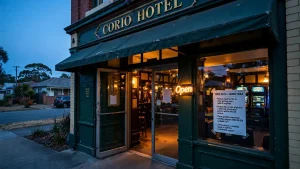
Venue schedules, gaming-area access and online legality require separate checks; a general listing cannot confirm every operating detail.
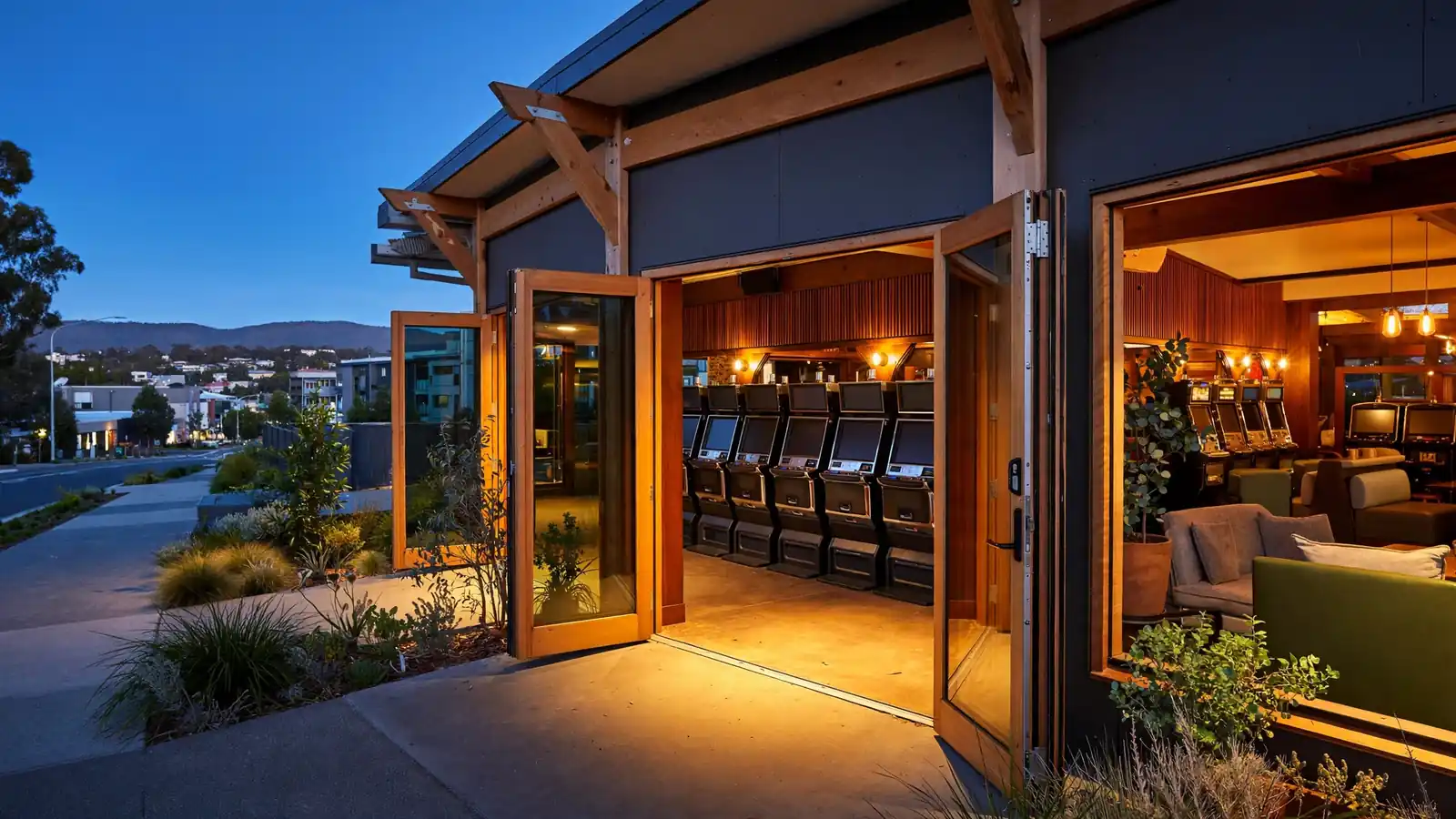
“Open now” sounds like a simple status, but it can conceal several different things. A venue may be open while its gaming area is closed; a venue may admit patrons at one time and stop operating particular facilities at another. The word *open* does not, by itself, settle which of those conditions applies.
There is no single Canberra-wide opening time for pokies. Hours belong to individual venues, and they can change. A city-level answer cannot establish whether a particular venue is admitting patrons at this moment, whether its gaming area is operating, or whether a temporary change has altered its usual schedule. Those are separate details, even when they appear together on a listing or map.
That distinction matters because searches for early or late access are often treated as if the city offered a common timetable. It does not follow that a venue open in the morning has pokies operating then, or that a late-closing venue keeps every part of its business open until the same hour. A headline, directory entry or general description may refer to the venue as a whole rather than to the specific activity being asked about.
The useful question is therefore narrower than “Are Canberra pokies open?” It is whether a named venue’s current hours cover the gaming area at the time in question. Without a current schedule tied to that venue and that facility, a confident yes or no would be guesswork dressed as local knowledge.
That may seem an unsatisfying answer to someone deciding whether to leave home. It is still more useful than a made-up time. Opening information is perishable: an ordinary schedule can be affected by a public holiday, maintenance, a private function or a change in operations. A timetable copied from an old listing can remain visible long after it has ceased to describe the present. Digital certainty is often just old information wearing a fresh coat.
There is also a difference between a stated regular schedule and live confirmation. The former describes what a venue normally plans; the latter indicates what is happening at that moment. Even a schedule that appears current may not record an unplanned interruption. The more immediate the question, the less dependable a broad directory description becomes.
Search results flatten these distinctions. They compress a venue, its facilities and its hours into a few words, as if one label could perform the work of a receptionist and a clock. But “open” may mean that the building is accessible, that a particular service is available, or merely that a listing has not been updated. The ambiguity is not a technicality. It is the whole answer.
For anyone comparing a morning visit with an evening one, the sensible standard is a venue-specific, current confirmation that explicitly refers to the gaming area. A general venue listing is not equivalent. Nor does a recurring schedule prove that today follows the usual pattern. If the information does not say what is open and when, it should not be stretched to answer a more precise question.
This is why a citywide statement about pokies being open now would be misleading even if some venues happened to be operating. It would turn a changing set of individual schedules into a single public fact. Canberra is a city, not a shift roster.
The same caution applies to claims about early access. A time appearing in a search result may belong to the venue’s broader trading hours, not to its gaming facilities. The distinction should be checked rather than assumed. Late access presents the same problem in reverse: a venue’s stated closing time does not necessarily describe the hours of every area within it.
For a current decision, a direct and recent confirmation from the venue is more informative than a generic city result. If that confirmation is unavailable or unclear, the honest status is not “open”; it is unconfirmed. That is less satisfying than a neat green indicator, but it respects the difference between a schedule and an assertion.
The phrase “open now” asks for a live fact. A standing page can supply context, but it cannot turn an unverified venue schedule into a live update. Where timing matters, precision begins with the individual venue—and with the exact facility whose status is being checked.
A clock needs a name beside it.
Choosing an online pokies site for a Canberra-focused search means checking the details that are actually available before deciding where to play. This list offers a concise reference to each selected operator and its stated features.
Rollero Casino
Rollero Casino lists a licence from the Curaçao Gaming Control Board, under Hollycorn N.V. The licence reference is OGL/2023/176/0095.
LuckyVibe
LuckyVibe lists a licence from the Curaçao Gaming Control Board, under Hollycorn N.V. The licence reference is OGL/2023/176/0095.
House of Pokies
House of Pokies lists an international iGaming licence, though the source does not name the jurisdiction. It states PayID payouts take 1–24 hours and the minimum deposit is A$30, or A$10 with PayID.
Wild Tokyo
Wild Tokyo lists a Curaçao licence and a minimum deposit of A$10. Its stated payout times are 30–60 minutes for crypto and 1–5 days for fiat.
Uptown Pokies
Uptown Pokies lists a Curaçao licence and says it has operated since 2017. Its stated minimum deposit is A$20.
MrPacho
MrPacho states a minimum deposit of A$30. Its listed payout times are 30–120 minutes for crypto and 24–72 hours for fiat.
Golden Pokies
Golden Pokies lists a Curaçao licence. No other operator details are provided here.
WinSpirit Casino
WinSpirit Casino lists a Curaçao eGaming licence, OGL/2024/923/0383, under Antillephone N.V. Its stated minimum deposit is A$30.
JustCasino
JustCasino lists a licence from the Curaçao Gaming Control Board. No other operator details are provided here.
Kingmaker
Kingmaker states a minimum deposit of A$30. Its listed payout times are approximately 90 minutes for crypto and 1–5 days for fiat.
“Best-paying” sounds like a property stamped on a pokie, as fixed as its title or artwork. It is not so simple. A game’s name alone cannot establish the return setting in use, and a claim about one version may say little about the same game elsewhere. That matters when people compare Canberra venues or try to decide which pokies deserve the label “best”.
A specialist review has reported that some game providers give casinos a choice of return-to-player, or RTP, settings for a given pokie. If a venue uses one available setting and another venue uses a different one, the game can have different theoretical return percentages in those places, despite sharing its name and design. The point is not that every pokie has multiple settings, or that every Canberra venue selects them in the same way. It is that a title is not enough evidence to settle the comparison.
The percentage itself also needs careful reading. RTP is a long-run measure of the proportion of stakes a game is designed to return across play, not a promise about the outcome of a particular session. It cannot tell anyone what the next spin will do, nor does a high figure turn a losing session into an unlikely one. Without reliable information about the setting actually used, a bare percentage attached to a game name may leave out the most important part of the claim.
There is another limit, less visible but more stubborn. Each spin is generated separately by a Random Number Generator, so earlier results do not dictate the next one. A run of losses does not make a win due; a recent win does not make another win more likely. People are good at finding a plot in a sequence, especially when money is involved. The machine supplies no such plot.
That independence can make short runs look persuasive in either direction. A player may see repeated near-misses and imagine that a result is approaching, or remember a striking win as evidence that a pokie pays generously. Neither observation establishes the game’s RTP setting. A memorable outcome is a story about a small stretch of play, not a measurement of the game’s long-run return.
This is why “best-paying pokies in Canberra” cannot be answered responsibly by listing familiar titles and attaching a confident verdict. A meaningful comparison would need to identify the particular game version and the return setting applied to it, with evidence that the setting is current and relevant to the venue being discussed. A general claim about a game, repeated from one place to another, cannot supply those missing links.
Even a confirmed RTP setting would not rank venues by the experience of an individual player. The figure describes theoretical behaviour over a very large number of plays. It does not predict the outcome for one person, one evening or one sequence of spins. Nor does the word “best” tell whether the comparison means the highest published theoretical return, the most frequent small wins, or simply a game someone remembers fondly. Those are different claims, and they should not be bundled together.
In practical terms, a Canberra pokie cannot be called the best-paying solely because its title appears on a list or because someone reports a large win. The same caution applies to a game found in a club, a casino-style venue or a CBD setting: location does not, by itself, establish which RTP configuration is active. Familiarity is not a specification.
The language of “best-paying” offers a neat ranking where the evidence may be conditional and the outcomes remain random. That neatness is part of its appeal. It is also the trap. A title can be recognised; a return setting needs verification; a spin cannot be forecast. None of those facts turns a game into a reliable way to make money.
The phrase “online pokies in Canberra” can blur two different questions: whether a company may offer real-money games to people in Australia, and whether an individual player is the target of the law. The distinction matters. The Interactive Gambling Act 2001 prohibits operators from providing real-money online casino games, including pokies, to people located in Australia unless they hold a domestic licence. No such licences have been issued. Australia has no licensed online casino.
That places online play on a different footing from the familiar local use of the word “pokies”. A game’s availability on a website does not make its provision lawful in Australia, and an offshore company’s claims about its own permissions do not create an Australian licence. The law is directed at the service provider. It is not a simple rule that treats the player as the operator.
Australians are not subject to individual liability merely for playing on an offshore site that accepts them. That distinction should not be mistaken for approval, protection or a reliable route to winnings. A site may be reachable, but reachability is not the same as lawful domestic licensing. The legal arrangement is unusually one-sided: the operator is prohibited from providing the service here, while the player is not the party targeted by that prohibition.
The practical weakness becomes clearest when money is disputed. If an offshore casino refuses to pay a player’s winnings, Australian players have no legal recourse in Australia. There is no domestic online-casino licence behind the transaction and no Australian-licensed casino framework through which that claim can be pursued. A promise displayed on a foreign website cannot supply the protection absent from Australian law.
This is the point at which searches for real-money play, a deposit-free offer or high-stakes online games meet a boundary rather than a local menu. Those terms describe what a website might promote; they do not establish that the service is lawful here or that a player has a remedy if the operator breaks its promise. Nor does an online offer become safer because it is described as suitable for Canberra. A city name changes the wording, not the legal status.
BetStop requires particular care in this context. It applies only to Australian-licensed operators and does not bind offshore sites. Since Australia has no licensed online casino, BetStop cannot be treated as a safeguard that reaches offshore casino services. An exclusion mechanism tied to a domestic system cannot compel an offshore company to honour it.
The contrast says something about the design of the law. It draws a firm line around what companies may provide, while leaving individuals outside the offence described here. Yet that separation does not settle the ordinary questions of trust, payment or enforcement. A player may not be the party the Act targets and may still be left without an Australian remedy when a site withholds winnings.
For a Canberra resident, therefore, “online” does not mean a local casino operating at a distance. It means a service governed by a legal framework that bars domestic provision, with no Australian-licensed casino available and no local recourse for unpaid offshore winnings. The distinction is exact, even if the outcome is not reassuring.
“Near Canberra” sounds precise until the journey begins. Canberra Airport, the central business district and North Canberra are distinct places, and a venue described as close to one may be inconveniently placed for someone heading to another. A map pin, a suburb name or a broad city label cannot substitute for a confirmed venue address.
Nor can that establish that pokies are available inside the airport itself. The distinction matters: a search for a nearby venue is not the same as a claim about machines in the terminal, and neither is established merely by the word “Canberra”.
Distance is only one part of proximity. A place may look close on a map yet sit on the other side of a route that makes the trip awkward. Travel mode matters too: a short drive, a walk and a journey by public transport are not interchangeable measures. Without a named venue and address, “near the airport” remains a loose description rather than useful directions.
The same problem follows a CBD search. “Central” can describe a broad area, not a specific door. Someone staying in the city centre may mean a walkable venue; someone arriving from the airport may mean a stop along a route. The phrase alone cannot tell which, and it cannot identify a club, hotel or other premises as a place with pokies. Geographic shorthand is handy, but it is not a venue listing.
North Canberra narrows the map only slightly. It is still a broad area, and a result labelled with the district name would need a precise address before its relevance could be judged. Likewise, “near me” depends on where the person is standing and how far they are prepared to travel. There is no universal radius hidden inside the word “near”.
A further wrinkle is the phrase “Canberra, Victoria”. Canberra is the name of Australia’s capital, while “Canberra, VIC” may be an imprecise location label or a mistaken state reference. It should not be treated as proof of a Canberra venue in Victoria. Place names can be copied, abbreviated or entered carelessly; the map still needs to resolve them to a real address.
A useful location check therefore starts with the venue’s own name and street address, then compares that address with the intended destination and route. If the result supplies only a city, airport or district label, it has not answered the practical question of where the venue is. That is a small distinction with real consequences: “close by” is not a place.
A venue’s responsibility is measured not only by what happens at a machine, but by whether staff can recognise when play has become harmful. The rules described in a report by regionriverina.com.au place specific duties on venues operating larger groups of gaming machines: from 1 July, a venue with more than 20 machines must have a dedicated Responsible Gambling Officer (RGO) on duty whenever those machines are operating.
That threshold matters. The obligation is not simply to appoint someone whose title looks reassuring on a roster; the officer must be present while the machines are in use. The role puts a named point of responsibility inside the venue, at the time when gambling-related concerns may arise. It is a practical safeguard, though no job title can substitute for a venue’s wider responsibility to respond to signs of harm.
The same report describes a one-month grace period for venues to remove signage and introduce RGOs. That transition period recognises that staffing and signage do not change by decree alone: rosters must be altered, and material around the gaming area reviewed. It is a short administrative bridge, not a permanent exemption. The report does not establish which Canberra venues fall within the machine-count threshold or whether any particular venue has completed those changes.
Signage has its own limits. Material directing patrons to gaming lounges should not be placed within eyeshot of ATMs or EFTPOS terminals; signs directing patrons to ATMs should not be visible from gaming machines. The distinction is small in wording and large in purpose. A venue should not make the route from a machine to more cash part of the room’s visual instruction.
A further duty described in the report is a gambling incident register. It is intended to record occurrences, including situations in which a patron’s behaviour suggests they may be at risk of, or already affected by, gambling harm. The register turns an encounter that might otherwise vanish into an undocumented staff conversation into a record the venue is expected to keep.
That record is not the same thing as preventing harm, and the existence of a register cannot establish how consistently a venue notices or responds to concerning behaviour. It does, however, make the venue’s role more concrete: concerns are not merely matters of individual discretion, but incidents to be documented. Paperwork is not compassion. It can still make neglect harder to hide.
For someone comparing Canberra venues, these obligations are a more useful measure of accountability than a claim that a room is “best.” A venue’s machine count determines whether the dedicated-officer requirement described in the report applies; the register and signage duties speak to how gaming is managed around patrons. None of this, by itself, ranks venues or proves that a particular one is safer. It sets a standard for what responsible operation is meant to involve.
“Twenty-four-hour pokies” is a stronger claim than late trading. It means a venue’s pokies remain available through every hour of the day and night, not merely that the venue opens early, closes late or operates for long stretches. A broad label cannot establish that schedule for a particular Canberra venue.
The distinction matters because opening hours and pokies hours are not necessarily the same thing. A venue may have areas with different operating arrangements, and a published trading schedule for the premises does not, by itself, confirm continuous access to pokies. Even a statement that a venue is open around the clock would need to be read carefully: it describes the venue unless it specifically covers its gaming area.
There is a quiet oddity in the phrase “24-hour pokies”. It makes time sound like a feature of the machines, when it is a decision made by a venue under the rules that apply to its operations. The label can therefore travel more easily than the fact it is supposed to describe.
Canberra opening hours should be treated as venue-specific, not inferred from the city’s general character or from a claim that a place stays open late. A schedule can also be subject to change. An old listing, an undated directory entry or a result that repeats another listing may preserve a past description without showing whether it still applies. The words “open now” add another complication: they refer to a moment, while a 24-hour claim concerns an uninterrupted span.
For a genuine round-the-clock claim, the useful detail is explicit: whether pokies are available continuously, and which parts of the venue the stated hours cover. Without that distinction, “open all day” can be mistaken for “pokies available all day”. They are not interchangeable statements.
This is not a matter of splitting hairs. A late-night visit and a continuous operating schedule are different arrangements, and the difference affects whether a venue fits the specific expectation behind the phrase. The sensible reading is narrow: a 24-hour description belongs to a named venue and its stated pokies schedule. It should not be transferred to other Canberra venues, or treated as a city-wide feature, simply because the phrase appears in a listing.
The clock is not the venue.
The Crown name can suggest a familiar picture: a large casino, rows of pokies, a room with its own rules and rhythms. But a name in a search result is not a map pin, and it cannot establish that a Crown casino operates in Canberra or that Crown pokies are available there. No such connection should be assumed.
That distinction matters because casino names travel easily across websites, news stories and conversations. A brand may be associated with a city elsewhere without having a venue in the place being searched. Similar wording can make the association look settled; it does not make it so. In Canberra, the Crown label alone establishes neither an address nor a gaming offering.
The same caution applies to requests for a “best” pokies room under that name. A ranking needs identifiable venues and comparable information. Without those, the phrase is only a preference in search of a place. Nor does the Crown name establish a maximum cash payout for a Canberra pokie: a brand is not a machine specification, and a machine name would not by itself settle payout conditions.
There is a broader reason to keep the categories separate. Australia’s Interactive Gambling Act 2001 prohibits companies from supplying real-money online casino games, including pokies, to people in Australia; no domestic online-casino licences have been issued. That is a rule about online services, not evidence about a physical venue. The legal position should not be used to infer a Crown location, or to turn a search for a land-based room into an endorsement of an offshore website.
The word “casino” can also conceal different things: a physical gaming venue, an online service, or simply a brand reference. Those are not interchangeable. An online page using a Crown-related phrase cannot demonstrate that a Canberra venue exists, while a physical casino elsewhere cannot establish that its machines or terms apply locally.
So the careful reading is narrow. The Crown name does not, on its own, establish Crown pokies in Canberra, a Crown casino address, a ranked room, or a maximum payout. Those claims need venue-specific evidence, not the confidence of a familiar brand. Familiarity is not proof.
A club can be part of the social geography of a city: a place for a meal, a meeting or an evening out, with pokies sharing space with other activities. The word “best” is less useful when the measure is responsible play. A venue’s appeal cannot be reduced to its machines, and a list of names would say little about how someone can keep gambling within bounds.
Responsible-gambling tools are designed to make those bounds more concrete. A deposit limit sets a ceiling on money put into play; a loss limit puts a boundary around losses; and a session time limit marks how long a gambling session lasts. Self-exclusion is a different measure: it is intended to prevent access to gambling for someone who chooses to step away. Together, the tools address money, time and access rather than promising control over the result of any spin.
The distinction matters. Limits do not change the random outcome of a pokie, and they are not a way to predict a win. Their purpose is narrower: to put conditions around participation before decisions made in the moment begin to replace decisions made in advance. A limit is a boundary, not a strategy.
Availability and operation can differ between gambling settings, so the useful question is not whether a tool exists in the abstract but what it covers and how it is applied. A deposit cap, for instance, concerns funds added; it does not mean losses are capped at the same figure. Session limits concern time, while self-exclusion concerns access. Those differences are worth keeping distinct.
Sets a ceiling on the total amount of money put into play.
Establishes a boundary around the amount of money lost.
Marks the specific duration of a gambling session.
Designed to prevent total access to gambling for those choosing to step away.
For people using BetStop, an important boundary applies: the service covers Australian-licensed operators only and does not bind offshore sites. It is not a universal block on gambling. The distinction reflects the limits of a national system when services operate beyond its reach.
In the CBD, clubs and pokies sit within ordinary public life, where hospitality and gambling may share a room. Responsible-play measures are most meaningful when they are treated as practical safeguards, not as a badge that makes gambling harmless. A pause can be useful. So can a firm limit. Neither turns chance into certainty.
Parkes can mean the Canberra suburb or the regional town in central-western New South Wales. That distinction matters: a place name alone does not establish which local area is meant, let alone identify a venue with pokies. There is no sound basis for turning the words “pokies in Parkes” into a local shortlist or a claim about the best place to play.
The broader phrase “Canberra pokies” can also blur separate locations into one imagined market. A result associated with the capital does not automatically describe Parkes, and a venue elsewhere in the territory is not a Parkes venue simply because both appear in a Canberra-focused search. Geography should do more work than a convenient label.
Nor does the word “best” repair the gap. A ranking needs named venues and comparable, current details; without those, it would be decoration rather than guidance. The word carries the confidence of a verdict, while offering no way to test what the verdict rests on. A polished list can still be an empty one.
This is a small but useful distinction in a country where clubs and pubs often sit within local social life. A familiar town name may suggest a nearby room, regulars, and a bank of machines. Suggestion is not confirmation. No Parkes location, machine count or venue ranking can be responsibly attached to that picture.
The practical reading is modest: Parkes is not a substitute for a specific Canberra address, and a Canberra-wide label should not be treated as proof of a Parkes option. The location needs to be established before any venue-level claim can mean much. Anything more would dress a place-name ambiguity as local knowledge.
“Cashless” describes how a pokie is funded or played: the transaction does not rely on notes or coins. PayID, by contrast, is a way to direct a bank transfer. The terms belong to different parts of a payment process, even when both appear in conversations about going cash-free.
PayID works as an alias layer over the New Payments Platform (NPP). A transfer can be addressed using an email address, mobile number or ABN rather than bank account details. The NPP is supported by all major banks in Australia, and its transfers use end-to-end encryption. Those properties explain how PayID transfers operate; they do not establish how any particular Canberra machine accepts payment.
That distinction matters in interpreting claims about cashless pokies in Canberra. The presence of PayID in the Australian banking system is not evidence that a venue has cashless machines, nor that PayID can be used at them. A bank-transfer alias does not itself connect a pokie to a payment terminal. Venue-specific payment arrangements would need to be established separately.
Nor does a payment method certify the character of a gambling service. PayID’s existence says nothing about whether a particular service is licensed, how a game is configured, or whether its terms are fair. A familiar banking mechanism is still only a mechanism. Dry distinction, but an important one.
Searches that combine Canberra with Newcastle may also blur the difference between a place, a machine and a way of paying. The cleanest reading is simple: cashless play concerns the machine’s payment setup; PayID concerns the addressing of bank transfers through the NPP. One does not confirm the other.