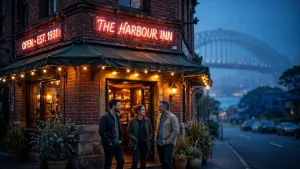
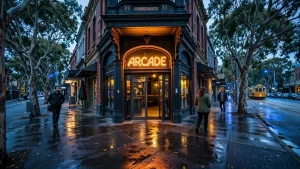
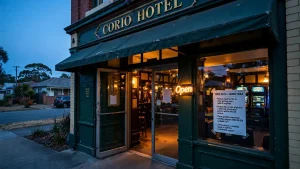
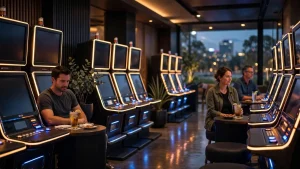
Opening times are venue-specific, while rankings, airport access and online access each have limits worth checking.

A search for Adelaide pokies open now is asking a small, urgent question: whether a particular place can be entered at this moment. The answer belongs to the venue, not to a city-wide timetable. Adelaide has no single opening schedule that can be applied to every gaming room, and a result showing a venue’s name is not the same thing as confirmation that its doors are open.
That distinction matters most when plans depend on the next hour rather than some future visit. A venue may publish opening information on its own website or another official channel, but a listing can be incomplete, out of date or too general to settle the immediate question. Checking the venue directly is the sounder way to establish whether it is open at the time in question. A quick call can clarify what a broad listing leaves uncertain.
The phrase “open in Adelaide” makes the city sound like a single operation, as if every gaming room answered to one clock. In practice, opening arrangements are set venue by venue. Different operators may make different choices about when to open and close, and those arrangements cannot be inferred from a neighbouring business or a general idea of local nightlife.
This is why searches for early or late access need a specific destination behind them. Someone looking for pokies open early in Adelaide is not helped by an assumption that hospitality venues share a standard start time. The same goes for a late visit: a venue being known locally, or appearing in a directory, does not establish that it is accepting visitors at that moment.
The useful question is therefore not simply whether pokies are open in Adelaide. It is whether the intended venue is open today, at the relevant time, and whether the information comes from the venue itself. That is less satisfying than a universal answer. It is also less likely to turn a short trip into a closed door.
Searches for access at particular times often arise from practical schedules: an early start before work, a late finish after an event, or a narrow window between other commitments. Those needs are real, but a typed time is not evidence of a venue’s hours. No general assumption can establish that a particular Adelaide location opens at dawn, stays open late, or remains accessible throughout the day.
A reliable check should be specific. Confirm the venue’s current opening hours through its official contact details, and ask whether the information applies to the day in question. If a listing gives only broad hours, or does not clearly distinguish between different parts of a venue, the direct answer is more useful than interpreting the listing. A posted schedule may describe the wider premises without resolving every practical detail about access.
There is little value in travelling on the strength of a guess assembled from old listings, snippets or somebody else’s recollection. Opening information is only useful when it refers to the place and time being considered. The modest act of checking first is less glamorous than spontaneity. It is also efficient.
The word “open” can conceal several different questions. A venue may be open to visitors, while access to a particular area is subject to its own arrangements. A broad online listing may not explain those distinctions. For a visit planned around gaming, it is sensible to confirm the specific access needed, rather than treating the venue’s general status as a complete answer.
This is still a question of immediate availability, not a way to infer what happens inside once gaming begins. A door being open does not tell anyone how a machine is configured, what its published return setting is, or what any individual session will produce. Those are separate matters. Opening hours answer when a visit might be possible; they say nothing about the outcome of play.
Nor does an opening time create a promise that the experience will suit the plan. Conditions can change, and a venue’s own confirmation is the clearest basis for deciding whether to set out. If the information cannot be confirmed, treating it as uncertain is more sensible than converting a search result into certainty.
Adelaide’s gaming rooms do not share a single clock. For anyone trying to establish whether a venue is open now, the dependable answer is local and direct: check the chosen venue’s current information, and confirm with the venue when the timing matters. The city can wait; the door has its own hours.
Choosing pokies in Adelaide means finding an online option that suits your preferences and payment needs. Use this list as a starting point, and check the details that matter to you before signing up.
Rollero Casino
Rollero Casino lists a licence from the Curacao Gaming Control Board, held by Hollycorn N.V. under OGL/2023/176/0095.
LuckyVibe
LuckyVibe lists a licence from the Curacao Gaming Control Board, held by Hollycorn N.V. under OGL/2023/176/0095.
House of Pokies
House of Pokies lists an international iGaming licence, though the source does not name its jurisdiction. PayID withdrawals are stated as taking 1–24 hours, and the minimum deposit is A$30, or A$10 with PayID.
Wild Tokyo
Wild Tokyo lists a Curacao licence and a minimum deposit of A$10. Its stated payout times are 30–60 minutes for crypto and 1–5 days for fiat.
Uptown Pokies
Uptown Pokies lists a Curacao licence and has been operating since 2017. Its minimum deposit is A$20.
MrPacho
MrPacho lists crypto payouts at 30–120 minutes and fiat payouts at 24–72 hours. Its minimum deposit is A$30.
Golden Pokies
Golden Pokies lists a Curacao licence; no further details are provided here.
WinSpirit Casino
WinSpirit Casino lists a Curacao eGaming licence, OGL/2024/923/0383, issued to Antillephone N.V. Its minimum deposit is A$30.
JustCasino
JustCasino lists a licence from the Curacao Gaming Control Board; no further details are provided here.
Kingmaker
Kingmaker lists crypto payouts at about 90 minutes and fiat payouts at 1–5 days. Its minimum deposit is A$30.
The word “best” sounds decisive. In practice, it can refer to different things: a game’s published return setting, its pace or features, or simply the experience a player prefers. Those are not interchangeable measures, and none identifies a pokie that will pay out on a particular visit.
A specialist review reports that some game providers allow casinos to choose among different return-to-player settings for the same pokie. That means a game’s name alone may not tell the whole story: its configured return percentage can differ between casinos. Where a setting is published, it describes a theoretical return across play over time, not a forecast for one person or one session. The distinction is less thrilling than a winning story. It is also more useful.
Each spin is a separate random event determined by a Random Number Generator. A previous result does not make a particular outcome due, and a run of losses does not tell anyone what the next spin will produce. The same applies after a win. A game’s mechanics may shape how its features work, but they do not turn its next result into a predictable event.
That is why claims about the best-paying pokies in Adelaide need careful reading. A stated return setting can support a comparison only when it refers to the specific configuration in use and is disclosed in a way that can be checked. It cannot establish that one player will collect more than another, or that a machine in a particular room is about to pay. A headline that turns a theoretical measure into a personal promise has crossed from comparison into theatre.
The same caution applies to comparisons of Adelaide casino pokies or machines in the CBD. A familiar title does not prove that every venue has the same version or setting. Nor does a game’s reputation establish its current configuration. “Best” might mean a return figure on paper, a theme someone enjoys, or features that suit a preferred pace; those preferences say something about the player, not about the certainty of an outcome.
For pokies in Adelaide city, location and game quality are separate questions. A machine being nearby does not make its return setting better, while a published percentage cannot tell whether a venue has the game or configuration being discussed. Search language often bundles those ideas together, as though “best” and “nearby” describe one property. They do not.
There is also a limit to what online descriptions can settle. A listing may state a return setting, but that statement should not be treated as a guarantee of an individual result. The term “RTP” can sound like a promise because it is numerical and technical; it is not a personal payout schedule. Randomness does not keep accounts with players.
A sensible comparison therefore asks what is actually being compared: the specific game, its stated setting, and the source of that information. If those details are absent, a ranking can be confident without being informative. If they are present, they still describe a statistical setting rather than a reliable way to choose a winning spin.
The appeal of a “best” list is understandable. Lists turn uncertainty into an orderly row of names. But without comparable, confirmed details, naming a top pokie or a top Adelaide venue would only lend certainty to guesswork. “Best” can describe a preference or a disclosed setting. It cannot name the next winner.
A trip from Adelaide Airport, a hotel or a suburb towards a gaming room begins with a practical question: where, exactly, is the destination? A map result can make a place look close by placing a pin on a screen; it cannot settle whether the venue is open, whether its gaming area is available, or how straightforward the journey will be. Those details belong to the venue and the route, not to the promise of a nearby result.
Airport searches are especially prone to collapsing separate places into one. A venue described as being in Adelaide may be outside the airport precinct; a result labelled “near the airport” may still involve a transfer, a walk or a change in transport. Even the word “near” is elastic. It can mean a short drive, a longer trip across the city, or simply a location that appears beside the airport on a broad map.
The same caution applies to searches around the CBD, North Adelaide and other nearby areas. Adelaide’s districts are not interchangeable points on a map, and a name that sounds central does not establish how long a journey takes from a particular starting point. “Near me” is more personal still: its answer depends on the actual location, the time of travel and the route available. A search phrase can indicate a direction of interest, but it is not a transport plan.
A sensible journey check has several parts. The venue’s own address is the starting point; a current map can then show the route from the airport or accommodation. Travel time should be considered alongside distance, since road conditions, walking access and public transport connections can make two apparently similar trips feel quite different. If the destination is a club or hotel, it is worth confirming that the gaming room is part of the venue being mapped rather than assuming that every facility shares the same entrance or access.
Airport arrival adds its own friction. Luggage, delayed flights and the gap between landing and leaving the terminal all affect the shape of a trip. A short distance on a map may be less useful than a clear route and a confirmed destination. Conversely, a place farther away may be easier to reach if the transport connection is direct. Geography is rarely as obedient as the search box.
There is also a difference between a place being in Adelaide and being inside Adelaide Airport. The latter wording can suggest that a gaming room sits within the terminal itself. That should not be inferred from a search result that merely associates a venue with the airport area. Exact addresses and venue information matter more than a broad label.
For anyone travelling from interstate or unfamiliar with the city, spelling out the destination before setting off is more reliable than navigating by a loose neighbourhood description. The same goes for a driver or rideshare journey: a precise venue name and address reduce the chance of arriving at the wrong entrance or at a nearby business with a similar name.
Location is the beginning of the decision, not its whole substance. A mapped route can explain how to get somewhere; it cannot establish what will be available on arrival. That distinction is plain enough. It is often overlooked.
A venue’s gaming room is not governed only by the rules of play. Its own procedures matter too: who is present when pokies are running, what happens when someone appears distressed, and whether staff actions leave a record. These obligations make oversight part of the room’s daily operation, rather than a notice pinned to a wall and forgotten.
A report by regionriverina.com.au describes a requirement taking effect from 1 July: venues with more than 20 gaming machines must have a dedicated responsible gambling officer (RGO) on duty while those machines are operating. The threshold matters. The requirement is described for larger machine rooms, not every venue that happens to have pokies.
The officer’s presence gives the role a practical shape. A responsible gambling officer is not simply a title on a staff list; the position is tied to the hours in which machines are in use. That connection reflects a familiar tension in gambling regulation. The venue earns from keeping a room active, while its safeguards must be ready during that same activity. Oversight is meant to exist where the risk exists, not merely in policy language.
The report also describes a one-month grace period for venues to remove signage and bring in responsible gambling officers. That is a transition window, not a permanent exception. Signage is part of the room’s visual environment: it can direct attention, normalise a place, or point people towards services. Its removal is therefore more than housekeeping, although the report does not make every sign interchangeable. In gambling rooms, a small instruction can carry an unusually large implication.
There is also to be a gambling incident register. It is intended to record occurrences, including situations in which a patron’s behaviour suggests they may be at risk of gambling harm or already affected by it. The register turns an impression into something the venue can document and follow through on. Without a record, concern can remain private to the staff member who noticed it; with one, the venue has an account of what happened.
That is the less visible side of comparing Adelaide pokies venues. A room may be judged by its setting or by the machines it contains, but its procedures show how it handles the human consequences of gambling. Records and designated staff cannot remove those consequences. They can make it harder for a venue to treat a troubling moment as if it never occurred.
The rules also reveal what regulation asks of a business: not just to display a warning, but to assign responsibility and preserve evidence of incidents. There is a difference between a safeguard that exists on paper and one built into the shift. One is easier to overlook.
The legal distinction is not between a deposit method that works and one that does not. It is between a service an operator may lawfully provide in Australia and one the law prohibits. Under the Interactive Gambling Act 2001, companies cannot offer real-money online pokies to people in Australia without a domestic licence. No such licences have been issued, so there is no Australian-licensed online casino.
That matters when a search for Adelaide pokies shifts from local gaming rooms to online play for cash. A site’s Australian-facing language, a deposit button or an offer of spins without an initial deposit does not change the legal status of the service. A bonus is still part of an online gambling offer; it does not create a lawful exception. The distinction can feel less vivid than the promise on a screen. It is more consequential.
PayID also needs to be understood as a payment route, not as a mark of approval. For real-money use at an online casino, PayID must first be linked to a bank account. That describes the mechanics of the transfer; it does not establish that a casino is licensed in Australia, that its games are fair, or that its terms are transparent. Payment infrastructure and gambling regulation answer different questions.
Banks and card companies may also prevent a transaction from reaching a gambling merchant. A specialist gambling-payment review reports that Australian institutions are increasingly blocking transactions to known gambling sites. This is a reported trend, not a guarantee that a particular payment will be accepted or declined: decisions can depend on the bank, the merchant and the transaction. A failed payment does not make the service lawful, any more than a successful one makes it licensed.
The same caution applies to searches for real-money play or no-deposit offers. The wording of an offer does not override the Act, and a deposit channel cannot supply the missing domestic licence. The law places the prohibition on operators providing the service; it does not turn a payment method into a legal shield. In a market where no domestic online-casino licence exists, there is no licensed Australian online casino to recommend.
Deposit searches often compress several separate concerns into one: whether funds can be sent, whether an offer has conditions, and whether a service may legally be offered to Australians. Those questions should not be collapsed. A transfer can be technically possible while the underlying offer remains prohibited. The interface may make the transaction look ordinary. The law does not.
A phone can make a distant service feel local. A page opens in a browser, buttons fit a small screen, and the game appears ready to play; none of that changes where the operator is based or what Australian law permits. Real-money online casino games offered to people in Australia are prohibited under the Interactive Gambling Act 2001. A polished mobile site is not an Australian licence in disguise.
That distinction matters for searches about playing pokies online from Adelaide. A service may accept Australian customers from offshore, but acceptance is not domestic authorisation. The law’s enforcement target is the operator, rather than the individual player. That does not turn offshore play into a protected local service, nor does it make a phone-based version safer than a desktop one.
The regulator’s response is not merely a notice on a web page. The Australian Communications and Media Authority can add illegal gambling sites to a blocklist, and internet providers must act on that list. As a result, a site that once loaded may become inaccessible through an Australian connection. A change in access says little about the operator’s conduct; it says more about the reach of enforcement.
A screen can conceal the distance until something goes wrong. If an offshore casino refuses to pay winnings, Australian players have no legal recourse in Australia against that operator. The convenience of an app-like interface cannot supply the local remedies that the service itself does not provide. The small rectangle is persuasive. It is not a courthouse.
Identity checks belong to the same practical picture. A specialist review of offshore casinos reports that operators may ask for identity documents before a first withdrawal, including identification and proof of address; some may also request a photograph of the account holder holding an identity document. The request can arrive after play has begun, when the account holder is seeking to withdraw. Providing documents does not make the operator Australian-licensed, and it does not create an Australian avenue for resolving a dispute.
The appeal of a mobile screen is partly its lack of ceremony: no journey, no visible threshold, only a login and a game. Yet the legal and practical conditions remain those of the service behind the screen. Searching from central Adelaide, or using a phone while elsewhere in the city, does not establish that an operator is local, lawful, or accountable here. Nor does a larger advertised stake alter those conditions.
For anyone considering an offshore service, the central risk is not whether its pages adapt neatly to a handset. It is that the operator sits beyond the domestic protections implied by a familiar interface. Enforcement can restrict access; a refusal to pay can leave a player without recourse in Australia. Mobile access changes the route in. It changes nothing essential.
“Open all night” can describe a building, a bar, a dining room or a gaming floor—and those are not necessarily the same thing. A venue’s doors may remain open while particular services close, or its public hours may change on certain days. The phrase “24-hour pokies” collapses these distinctions into a promise of uninterrupted access. Without a venue’s own current schedule, it is not a reliable description of Adelaide.
The distinction matters because opening hours and machine operating hours answer different questions. Opening hours tell when a venue admits people; operating hours tell when its pokies may be used. One does not automatically establish the other. A listing that marks a venue as open around the clock cannot, by itself, settle whether its gaming machines are operating throughout that period.
Nor does a city-wide pattern solve the problem. Adelaide is not a single establishment with one timetable. Each venue sets and communicates its arrangements, and those arrangements can be revised. A search result, an old directory entry or an undated social post can preserve a schedule long after the relevant hours have changed. The clock on the page may be more current than the information beside it.
That is why a late-night plan needs a venue-specific check, rather than an assumption drawn from the words “24 hour”. The useful confirmation is not simply that the premises are open, but that the gaming room and its machines are available at the intended time. If a venue publishes separate hours for different facilities, those details matter more than its broad headline listing.
There is a small cultural oddity in the demand for round-the-clock certainty. The phrase makes leisure sound like a utility: always there, ready at the tap of a search result. But a gaming room is part of a managed venue, with staff, operating decisions and hours that belong to that business. Convenience does not erase the timetable.
For Adelaide, no general schedule can be treated as proof that a particular venue offers pokies at every hour. “Open now” is especially time-sensitive: a result may reflect a venue’s general trading status, not the current status of its gaming room. The distinction is mundane, but it is the difference between a building being accessible and the activity being available.
A dependable answer therefore has to come from the venue’s current information, with the gaming-room hours confirmed separately where necessary. A search label is a starting point, not a timetable. “Twenty-four hours” is a claim to verify, not a city-wide rule.
A name in a search phrase can feel like a small piece of evidence. It is not. Words linking Crown, Adelaide and pokies express what someone hopes to locate; by themselves, they do not establish that a Crown venue operates in Adelaide, or that any particular machines are available there.
That distinction matters because names travel more easily than places. A brand may be familiar from elsewhere, while a local result may refer to a discussion, an old page, a map label or an unrelated use of the same word. None of those possibilities confirms a venue’s ownership or the machines inside it. Familiarity is not a floor plan.
The same caution applies to searches for the best pokies room in Adelaide. “Best” may mean a room’s atmosphere, its location, a particular game or a player’s idea of a generous payout. Those are different claims, and a search phrase does not settle any of them. Nor does a reference to Crown establish that a particular room exists locally or that its machines have been compared with others.
Payout language calls for its own restraint. A search for the maximum cash payout at an Adelaide pokie venue does not provide a maximum, or show how any venue handles a win. No figure should be inferred from a name, a promotional phrase or a result that merely repeats the wording. A number without a clearly identified machine and applicable terms is decoration, not useful guidance.
There is a broader reason to be careful with the word “casino”. It can suggest a place, a brand, a particular style of room or an online service, though those meanings are not interchangeable. In Australia, the Interactive Gambling Act 2001 prohibits operators from providing real-money online casino games to people in the country. That legal position does not turn a search phrase into proof of a local physical venue; it simply makes precision more important when a name appears in different contexts.
A page that names a Crown room in Adelaide without establishing what the name refers to would do more than leave a loose end. It could send people towards a place or an offer that the wording has not actually identified. Better to separate recognition from confirmation, and a requested payout from a documented one.
Names are not addresses.
Searches for Adelaide CBD clubs and pokies can make the city centre sound like a single gambling room. It is not. A club is a social institution before it is a machine floor: a place shaped by membership, meals, sport and the ordinary business of gathering. That wider life does not make gambling harmless, nor does it make one venue a better choice than another.
The useful distinction is between finding a place and deciding what role gambling will have there. No particular CBD club can be treated as a recommendation on the basis of its machines alone. Pokies are designed to keep play moving; a boundary set before entering is more meaningful than one improvised after time and money have already gone.
Australia’s legal minimum age for gambling, including online pokies, is 18. Age is a threshold, not a measure of whether gambling is affordable or comfortable. The same activity can be entertainment for one person and a source of mounting pressure for another. Clubs may offer company and routine, but neither atmosphere nor familiarity changes the arithmetic of a loss.
Common safeguards include deposit limits, loss limits and session time limits. Each addresses a different point at which play can expand: the amount put in, the amount lost, or the time spent. Self-exclusion offers another boundary by restricting access to gambling. These tools do not turn a random game into a predictable one; their purpose is to make a person’s own limits harder to drift past.
Self-exclusion in Adelaide is not a single promise that every gambling setting will become inaccessible. BetStop applies to Australian-licensed operators and does not bind offshore sites. Its scope matters: a name on a register is not a universal lock on every place or service where gambling may occur.
The language of “best pokies” often turns a public question into a private contest between machines. Responsible play asks something less glamorous: whether the visit remains within a chosen limit, and whether stopping remains possible. A club can be a meeting place; a machine can still demand attention long after the meeting has ended.
That is the boundary worth keeping in view.
“Cashless” can mean different things in a venue: a payment method, a machine interface or simply a label used in discussion. The word alone does not establish which arrangements an Adelaide pokies room offers. Nor does it say anything about a venue’s standing or the way a game is configured. Payment convenience is a narrow fact, not a certificate.
PayID is not a separate wallet. It is an alias layer on the New Payments Platform, allowing a bank transfer to be addressed through an email address, mobile number or Australian Business Number. The bank account remains the source of the money. That can make PayID sound like a simple switch, but it does not turn a payment into evidence that a gambling service is lawful or that its games are fair.
There is also a practical complication: a specialist review reports that some Australian banks, including major banks, may block PayID transfers to gambling merchants they recognise. Bank policies can change, so that report should not be mistaken for a fixed rule applying to every account or transfer. A failed payment may reflect a bank’s controls, rather than a technical fault in the alias itself.
The Newcastle wording sometimes attached to Adelaide searches is best understood as a location mix-up, not a local recommendation. Newcastle and Adelaide are distinct places; a phrase joining them does not establish that a particular venue, machine or payment arrangement exists in either city. Search language can travel farther than its facts.
For physical venues, payment arrangements need confirmation directly with the venue. For online gambling, the distinction is sharper: PayID support does not make an online casino Australian-licensed. The Interactive Gambling Act prohibits operators from supplying real-money online casino games to people in Australia, and there is no Australian-licensed online casino. A bank transfer remains a bank transfer. It cannot soften that line.
Yes, Australians can legally play on offshore sites that accept them, but companies cannot legally offer real-money online pokies to Australian residents without a domestic licence, and none have been issued. Players have no legal recourse in Australia if an offshore casino refuses to pay winnings.
You must be at least 18 years old to gamble online in Australia.
Check the wagering requirement and calculate the total bets needed before withdrawing winnings. For example, a $500 bonus with a 40x requirement requires $20,000 in bets; if the requirement applies to a $500 deposit plus a $500 bonus at 35x, it requires $35,000 in bets.