Hotel, gaming, online, dining and amenity searches can point to different needs, while listings and headlines do not establish what a venue offers.
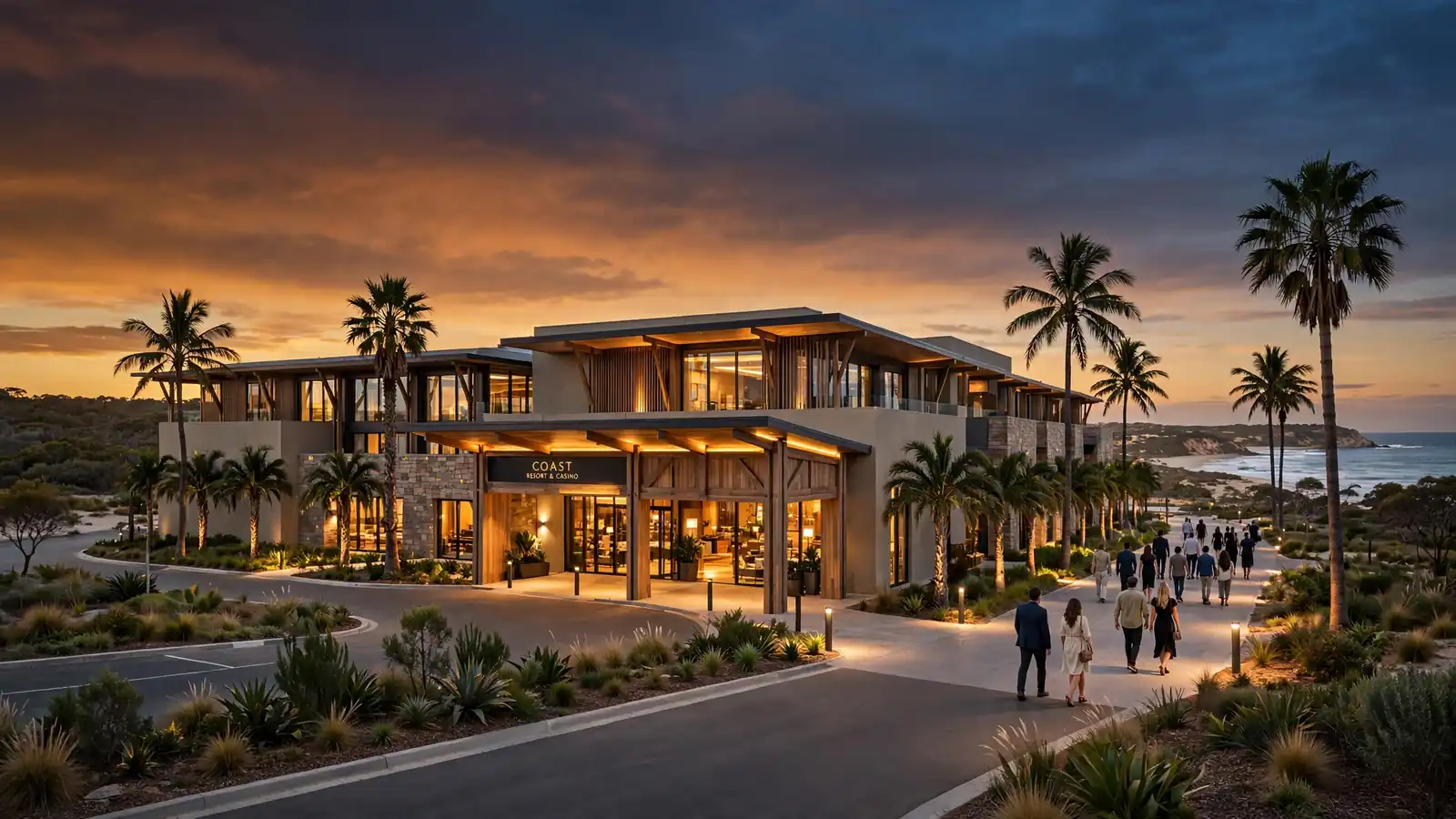
A casino hotel sounds like a single proposition: a room upstairs, a gaming floor downstairs, and the practical promise that the evening need not end with a journey across town. But the phrase can describe several different arrangements. A hotel may be part of a casino complex, connected to one, or simply mentioned alongside a casino because travellers are comparing places to stay. The words alone do not settle which arrangement applies.
That distinction matters when looking for a casino hotel in Western Australia. A search for rooms or hotel deals expresses an accommodation need; it does not confirm that a particular property exists, that it operates as a casino hotel, or that a quoted rate is available. Nor does the word “deal” tell anything about what is included. A room price may be a room price, while meals, parking, access to facilities and cancellation conditions may be treated separately. The detail lives in the booking terms, not in the attractive compression of a headline.
Choosing an online casino from Western Australia calls for checking the details that matter to you, including licensing and any stated payment terms. This list provides a concise reference to the information available for each operator.
Rollero Casino
Rollero Casino lists a Curaçao Gaming Control Board licence, OGL/2023/176/0095, held by Hollycorn N.V.
LuckyVibe
LuckyVibe lists a Curaçao Gaming Control Board licence, OGL/2023/176/0095, held by Hollycorn N.V.
House of Pokies
House of Pokies lists an international iGaming licence, though the source does not name the jurisdiction. Its stated PayID payout speed is 1–24 hours; the minimum deposit is A$30, or A$10 when using PayID.
Wild Tokyo
Wild Tokyo lists a Curaçao licence and a A$10 minimum deposit. Its stated payout times are 30–60 minutes for crypto and 1–5 days for fiat.
Uptown Pokies
Uptown Pokies lists a Curaçao licence and says it has been operating since 2017. Its minimum deposit is A$20.
MrPacho
MrPacho lists a A$30 minimum deposit. Its stated payout times are 30–120 minutes for crypto and 24–72 hours for fiat.
Golden Pokies
Golden Pokies lists a Curaçao licence.
WinSpirit Casino
WinSpirit Casino lists a Curaçao eGaming licence, OGL/2024/923/0383, held by Antillephone N.V. Its minimum deposit is A$30.
JustCasino
JustCasino lists a Curaçao Gaming Control Board licence.
Kingmaker
Kingmaker lists a A$30 minimum deposit. Its stated payout times are approximately 90 minutes for crypto and 1–5 days for fiat.
The appeal of staying on site is easy to understand. It gathers travel, sleeping arrangements and an evening’s entertainment into one plan. For some guests, that convenience may be the point; for others, the hotel is simply somewhere to return after a visit. Yet convenience is not a property feature that can be assumed from a name or a general description. The actual relationship between hotel and casino, along with the facilities open to overnight guests, needs to be stated by the operator or booking provider.
Rooms, too, are not a uniform product. A listing may distinguish room types, occupancy, views, accessibility, inclusions or restrictions. A photograph can make a room look like a promise; the written conditions say what has actually been booked. Before treating an advertised rate as comparable with another, the useful questions are ordinary ones: what room category is included, what charges are added, what can be cancelled, and whether the reservation is for the dates intended. Without those particulars, “hotel deal” is a label, not a complete offer.
The phrase “casino hotels in Western Australia” can also create an impression of a broad, settled category. It does not, by itself, establish how many such hotels there are or which ones meet a traveller’s definition. A casino with accommodation on the same site is different from a hotel that merely makes a casino visit possible. Even an official property description should be read for the exact relationship it claims, rather than translated into a stronger one by assumption.
That is why a useful comparison begins with the property’s own accommodation information and the booking conditions attached to the room. Dates, room type, inclusions and cancellation rules should be considered together. If the description is vague about whether the hotel is part of the casino complex, that point deserves clarification before booking. A polished package title cannot answer it.
There is a quieter question beneath the hotel choice: what kind of stay is being planned? An overnight visit tied closely to casino entertainment is not quite the same as a general holiday with a casino stop along the way. The first makes location and the hotel-casino relationship central; the second may leave room for a wider choice of accommodation. Neither intention makes a property better in itself. They simply call for different evidence.
Likewise, opening hours belong to the casino’s current operating information, not to the hotel reservation by implication. A hotel can have its own check-in arrangements while casino access follows separate hours or conditions. A room booking should not be read as confirmation that every part of a venue will be open throughout the stay.
The sensible standard is modest: treat a casino hotel as a specific accommodation claim, and ask what the claim means in practice. A room, a casino and a shared address may form one experience—or may not. A name cannot do the checking.
A request for a poker room in Western Australia sounds precise, but the phrase alone establishes only what someone hopes to find: a place to play poker, perhaps with tables set aside for it. It does not confirm that a particular casino has such a room, that poker is offered there, or that the facility is operating now. Search language is a map of interest, not a floor plan.
The same distinction matters for tournaments. A tournament is not simply a poker table with a date attached. It requires an organiser, a format, registration arrangements and a schedule that can change. Without current information from the venue, a general interest in casino poker tournaments cannot establish that one is taking place, how it works, or whether places remain. An old listing can outlive the event it once described; a title can outlive the room.
This is a modest but important limit on what a location-based phrase can tell anyone. Western Australia is the setting in the request, not proof of a particular facility or event. No named poker room, tournament calendar or venue-specific arrangement can responsibly be inferred from the wording alone. The gap is not solved by confident adjectives such as “popular” or “regular”. They merely make an unverified claim sound settled.
There is also a small ambiguity in the word “rooms”. In a casino context it might mean a dedicated poker space, private gaming rooms, or simply the rooms of a casino hotel. Those are different things. A hotel room is accommodation; a poker room is a place for a game; a private room may imply a particular arrangement. Treating the terms as interchangeable blurs the very distinction a visitor is trying to make.
Nor does “poker at a casino” settle the question. Poker can describe a game, a scheduled competition, or a venue feature. Each claim needs its own current confirmation. A photograph of a table, even if genuine, would not establish that cash games or tournaments are presently available. A past event announcement would show that an event was once announced, not that the same schedule continues. The calendar is not permanent furniture.
A casino sports bar is another separate proposition. The phrase suggests a place to watch sport and have a drink, but it does not verify that such a bar exists at a Western Australian casino, or that it is open at a particular moment. Likewise, asking whether a casino is open today or now requires live operating information. A poker listing cannot answer a bar question, and a venue name cannot provide today’s hours by implication.
These distinctions are especially useful because venue descriptions often compress several functions into a single label. “Casino” may refer to a building, a gaming operation or a broader destination; “room” may refer to accommodation or a gaming area. A careful description keeps the nouns separate and gives the detail only when it is current and attributable to the venue. Otherwise, the honest answer is narrower: the phrase identifies an interest, not a confirmed service.
Poker searches deserve that restraint. The game has a public vocabulary of tables, tournaments and rooms, but vocabulary is not evidence of local provision. Until a venue confirms the details directly, claims about Western Australian poker facilities, tournament dates, sports bars or immediate opening status remain unestablished. That is not evasiveness. It is the difference between a plausible itinerary and a dependable one.
A search for a casino in Western Australia can mean a physical visit, but adding “online” changes the question. Dining, bingo or parking belong to the practical business of going somewhere; an online casino is a gambling service delivered across a legal boundary. Similar words do not make the two activities interchangeable.
Under the Interactive Gambling Act 2001, operators based in Australia cannot provide real-money online casino games to people in the country. Pokies, blackjack and roulette fall within the restricted category. The law places the obligation on providers, not on a person merely for using an offshore platform: Australian players do not incur criminal liability simply for playing there.
Offshore services occupy an uneasy position. It is technically not illegal for an Australian player to use one, but those platforms are not regulated under Australian law. That distinction is less reassuring than it may sound. Offshore casinos are actively blocked and enforcement is directed at making prohibited services inaccessible; they do not acquire Australian oversight merely by accepting customers from Australia. A familiar logo or polished interface is not a local licence.
The border can also be drawn inside a game catalogue. Online operators may restrict games or software providers according to the player’s country. A platform can use the player’s IP address to estimate their location, then block access from places excluded by its terms or licensing obligations. When a game is unavailable from an Australian IP address, it may not appear in the lobby; a loading failure can also reflect a regional restriction rather than a fault with the device.
This is not an abstract mechanism. NetEnt removed its wide-area progressive jackpot games from Australian access in 2016, including Mega Fortune and Hall of Gods. NYX Gaming, also known as Next Gen, region-blocked titles including Foxin’ Wins and Doctor Love. Such examples show how licensing decisions can reshape a catalogue without changing the player’s physical surroundings. A screen makes the border look soft. The software does not.
A VPN can make a connection appear to come from another country, but using one to reach a blocked pokies site breaches that site’s terms of service and may lead to account suspension. It is not a workaround that turns an offshore service into a regulated Australian one, nor does it make a restricted game lawful to provide here. The apparent change of location is precisely what the block is designed to detect or prevent.
So “best casino in Western Australia” and “online casino in Western Australia” point toward different kinds of decision. A land-based venue is a place to visit; an online casino involves a service that Australian law bars local operators from providing and that offshore operators may restrict or be blocked from offering. Search wording can blur that difference. The law does not.
A room near a casino is not necessarily a room in one. The distinction sounds obvious until a booking page, a map pin and a venue promotion begin to blur together. Nearby accommodation may be independently run, while a casino hotel is part of the venue’s own operation. The distance between the two can matter less than the relationship between them: who takes the booking, what is included and who is responsible when plans change.
That is why “accommodation near a casino” is a different request from casino accommodation. The first is about the surrounding area and its places to stay; the second may mean rooms inside the venue or a package sold by it. A location search alone cannot settle that difference. A marker on a map shows a point, not whether a property has a booking arrangement with the casino, provides transport, or shares any services.
The same caution applies to deals. A promotion associated with a casino might concern gaming, dining, a stay, or a bundle of several things. The word “deal” does not explain the conditions. Before treating an offer as an accommodation price, its description needs to make clear which property is providing the room, what dates apply, whether the booking is made through the venue or another business, and what is excluded. Without those details, a headline is only a headline.
In Western Australia, the phrase “casino accommodation” does not identify a particular property or establish that rooms are available. Nor does it tell anyone how much a stay costs, whether a package is running, or how close a separate hotel is to a casino. Those are practical facts that can change, and they belong to the actual provider’s current booking information—not to the broad wording of a place-based label.
A useful comparison begins by separating three things: the casino’s own rooms, independent accommodation nearby, and any package that links a stay to the venue. Each has a different booking party and potentially different cancellation terms. Even where two options appear side by side on a map, the apparent convenience of proximity does not make their policies interchangeable.
There is also a small but important difference between a venue promotion and an accommodation offer. A casino may advertise a promotion without that promotion having anything to do with rooms. Conversely, a lodging business may offer a stay close to a casino without being endorsed by it. The language of advertising often compresses these distinctions; the booking terms have to restore them.
For anyone comparing stays, the useful questions are plain rather than glamorous: What is the property’s exact location? Who operates it? What does the quoted rate include? Which business handles changes or refunds? Is the supposed casino connection stated in the terms, or merely suggested by nearby wording and imagery? Until those points are clear, “near” remains a geographic description, not a promise of a package.
A map can orient. It cannot book the room.
A request for a casino’s contact details is practical in a way that a request for a game or a room is not: it is usually a step towards confirming a visit. Yet a phone number, map pin or venue page is useful only when it belongs to the operator and is current. Search listings can be outdated or copied, so contact information should be checked against the casino’s own website before plans depend on it. No address or contact number can be assumed from the name of a search.
The same caution applies to a map. A pin may mark a main entrance, a hotel entrance, a loading area or simply the centre of a large site. For a visit, the operator’s map—if it provides one—can clarify which entrance suits the intended destination and whether access is available on foot or by car. Directions from a third-party map can help with the journey, but do not establish which entrances or facilities are operating.
A search for a bar at a Western Australian casino signals interest in a place to meet or pause during a visit; it does not establish that a particular bar exists, what it serves or when it opens. Those details belong to current venue information. Concert searches need the same distinction: an event listing should identify the performer, date, location and ticket arrangements, while an old listing is not evidence of a future programme. “Casino concerts” is a broad label, not a calendar.
Car parking also needs specific confirmation. A map may show nearby parking without proving that it is operated by the casino, available to visitors or suitable for a particular arrival. The operator’s visitor information is the place to check entry points, access arrangements, fees and any restrictions. None should be inferred from a map symbol alone.
A little administrative patience is less glamorous than a night out. It is also cheaper than arriving at the wrong door.
Baccarat and craps are games a visitor may hope to find, but a game name in a search does not verify that a Western Australian venue offers it. Availability can depend on the venue’s current offering, so confirmation should come directly from its published information or contact channel. That is a question about the land-based visit, not proof of a particular table or schedule.
For Electronic Gaming Machines (EGMs), venues are required to check identification before gambling. Failing to comply with applicable requirements can have legal consequences. A visit plan therefore involves more than finding a bar or parking entrance: identification and entry conditions matter too.
When a detail affects the journey—how to contact the venue, where to enter, whether an event is scheduled, or whether a game is offered—the safest reference is current information published by the operator. A search result can point towards that information; it cannot stand in for it.
Breakfast can be part of a hotel stay, a separate meal, or a buffet service; the word “casino” does not settle which arrangement is available. A resort label is no more precise. It may suggest a combination of accommodation and leisure facilities, but it does not establish that breakfast is included, that a buffet operates, or that either is open to outside guests. Those details belong to the venue’s current dining and booking information, not to the label.
That distinction matters when comparing a physical meal with a rewards offer. A breakfast inclusion is a service with practical conditions: who qualifies, when it is served, and whether it is part of a booking. A rewards scheme may instead concern points, member pricing or other benefits, each with its own eligibility rules. Neither should be assumed to exist at a particular Western Australian casino merely because the terms appear together in a search.
Employment searches belong to a different ledger again. Casino jobs can mean hospitality, gaming, maintenance, administration or other work, but a search phrase cannot confirm vacancies, recruitment practices or conditions. Current openings and application requirements need to come from the employer’s own recruitment information. A breakfast promotion and a job listing are both attached to a venue’s name; that does not make them the same kind of offer.
Online bonuses require a more exact reading. Free spins are not cash in hand: winnings may have to be wagered before withdrawal, and the conditions can include high wagering requirements, maximum cashout limits or clauses that allow winnings to be voided. A report published by psu.com described free-spin winnings as carrying wagering requirements in the range of 20 to 50 times the winnings. That is a reported range, not a universal rule. Separately, a specialist review described a 30-times wagering condition for free-spin winnings. These figures should not be combined into a promise about any particular offer; the terms attached to the offer control.
The calculation can also depend on which games count. Pokies generally contribute the full amount of a qualifying wager toward a wagering requirement, but that does not remove the requirement or make a bonus equivalent to withdrawable money. A large contribution rate is a rule about accounting, not a shortcut around the fine print.
Australia’s legal setting makes online casino bonuses especially distinct from breakfast or a venue-based rewards card. The Interactive Gambling Act 2001 prohibits operators from providing real-money online casino games to people in Australia. An online promotion should not be mistaken for evidence that the service is lawful for Australian customers. Physical dining and employment are separate matters, governed by the venue’s own current arrangements.
The useful comparison is therefore not “which offer sounds largest?” but what kind of offer it is, who can use it, and what conditions attach. For a meal or a job, the relevant details are operational. For a bonus, the wagering rules and withdrawal clauses are part of the product itself. Fine print is the product.
A question about whether a Western Australian casino is open sounds simple until “open” begins to mean several things. A venue may admit guests while a particular service is unavailable; a published schedule may differ on a public holiday; a reopening notice may refer to one area rather than the whole property. The distinction matters more than the confident tone of a search result.
Opening hours are practical information, but they are also a moving record of decisions: staffing, maintenance, licensing conditions and the pattern of local demand all shape when a venue operates. A static directory entry can preserve yesterday’s answer with admirable efficiency. Current hours are best treated as a dated operational detail, checked against an official venue channel before making a trip. Where a notice gives no date or scope, “open” remains an incomplete description.
The same care applies to reports of a casino reopening. The word can describe a return after temporary closure, a phased restart or the resumption of one facility. It does not, by itself, establish that every service is available or that normal schedules have resumed. A reopening announcement should be read for its date, the areas it covers and any stated conditions—not expanded into a promise about the whole venue.
Entertainment and events have their own calendar. A performance listing may be a one-off booking, while a regular programme can change without changing the casino’s overall operating status. An event announcement therefore answers a narrower question than “what is happening at the casino?” Dates, ticketing arrangements and access rules belong to the specific listing, not to an old promotional page that happens to remain online. There is no virtue in treating an event as current merely because its page is still easy to find.
Development is less a single project than a long negotiation between buildings, jobs and public expectations. A casino development can be discussed in terms of construction, redevelopment, employment or the surrounding district, but those subjects require separate evidence. A headline about investment does not establish the number or type of jobs created; a proposal does not establish that work has begun. The language of development often makes a future sound settled. It is not.
Employment questions deserve the same distinction. A venue’s existence does not reveal current vacancies, working conditions or the scale of its workforce. Those details change with hiring cycles and operational needs. An employment notice is meaningful when it identifies the role, location and date; a broad claim about casino jobs says little about who is being hired now.
A review can help with atmosphere, service or a visitor’s impression, but it cannot reliably settle today’s hours, current entertainment or the status of a development. Nor does a menu mention establish what is being served at a particular time. Those are separate, changeable details, best judged by the relevant current notice. The useful review is not the most enthusiastic one; it is the one clear about when its account was written and what it actually observed.
A restaurant described as being “at” a casino and one described as “near” it answer different practical questions. The first suggests dining within the venue or its complex; the second may mean an independent restaurant elsewhere in the surrounding area. Search results can blur that boundary, especially when a casino name is used as a location rather than as the name of the business serving the meal.
For anyone comparing casino restaurants in Western Australia, the useful distinctions are ordinary ones: where the restaurant is, whether it is part of the casino premises, what kind of meal it serves, and whether it is operating on the intended date. Those details should come from the restaurant or venue’s current official information. A label such as “casino dining” does not, by itself, establish a restaurant’s name, menu, location, opening status or booking arrangements.
The difference matters because a dining plan can be built around very different assumptions. A restaurant inside a casino may be convenient for a visit to that venue; a restaurant nearby may require a separate journey and may have no connection to the casino at all. A map pin or a shared address is not a substitute for checking the business identity. Hospitality listings have a way of borrowing the gravity of a large landmark.
“Western Australia casino restaurants” is therefore not a single category with a known menu or standard format. It is a broad description that might encompass distinct businesses and locations. Cuisine, prices, dietary options, reservations and service times cannot sensibly be inferred from the casino setting. They are details to verify directly, not qualities supplied by the word “casino”.
The same caution applies to searches that suggest a rooftop restaurant. A rooftop bar and a restaurant are not interchangeable, and a rooftop label does not confirm that food is served, that seating is available for a meal, or that the venue belongs to a casino. These are separate points, not fine print. Before making a plan around a particular view or dining experience, the venue’s own current description should make clear what is actually offered.
A sensible comparison begins by separating the casino itself from independent restaurants around it, then checking each business on its own terms. Menus and service arrangements can change; an old listing may persist after the details have moved on. The casino name can help locate a place, but it cannot verify the meal.
That is the whole distinction: proximity is geography, not affiliation. A restaurant near a casino is not automatically part of it, and a restaurant said to be inside one should be identified and confirmed as such before it becomes the centrepiece of an evening.
A spa, an address and a dress code belong to different kinds of information, though they can appear together in a plan for a casino visit. The address locates a venue; a dress code sets a condition of entry; a spa describes a facility or service. None can be inferred from the others, and a casino-themed search does not establish that all three are available at one place in Western Australia.
An address should be tied to the particular venue, not assembled from a broad regional label. “Western Australia” is too wide to identify a building, and similarly phrased venue names can make an outdated directory entry look plausible. A reliable listing needs to identify the actual operator and location. Without that match, even a precise-looking address can send a visitor to the wrong place.
Dress requirements are also venue-specific. There is no basis for treating a formal dress code as universal, or for assuming that a relaxed standard applies everywhere. Policies may be stated separately for different areas or occasions; only a current venue notice can settle what applies. The distinction is mundane, but it is the difference between an expectation and a rule.
The spa searches invite a similar separation between a category and a confirmed amenity. A casino may be part of a larger hospitality complex, but that does not establish that it contains a day spa, offers treatments, or allows access to another operator’s facilities. A spa listing would need to identify its own location, services and operating arrangements. The word “casino” alone supplies none of those details.
Searches for games require careful wording too. They can refer to activities inside a physical venue or to online casino-style games, which are not the same legal question. Under the Interactive Gambling Act 2001, operators may not provide real-money online casino games, including slots, poker and table games, to people physically in Australia. That restriction should not be blurred into a claim about what a particular land-based venue offers. Its games and entry conditions require venue-specific confirmation.
Careers are another separate matter. A job listing indicates recruitment, not a visitor facility or an invitation to enter restricted areas. It should be connected to the employer and a current vacancy before being treated as useful information.
Bars may also appear in the same cluster of practical searches, but their presence, access rules and relationship to a casino need individual confirmation. A venue name can gather amenities under one roof in the imagination before the real building has had a chance to answer. Verify the particular facility. Nothing more elaborate is required.
Food-court searches point to a practical kind of visit: somewhere to get a quick meal without turning the stop into a restaurant occasion. General questions about food at a Western Australian casino can mean much the same thing, but they do not establish that a food court exists, what it serves or when it operates. A familiar label is not a facility plan.
That distinction matters because “food” covers several different arrangements. A food court suggests casual counters and a choice of quick options; a restaurant implies a separate dining setting. Neither can be inferred from the other, and neither follows simply from the word “casino”. Names, menus, prices and opening times would need confirmation from the venue’s own current information before they could guide a visit.
Pools invite an even larger leap. The idea of combining gambling, dining and a swim belongs to the broad resort image attached to some casino destinations, but an image is not evidence of a Western Australian amenity. A pool may be part of a hotel or leisure complex elsewhere; that does not make it a feature of every casino, or even of a particular property without confirmation.
The useful distinction is between a venue’s confirmed facilities and the atmosphere suggested by a search result. Before planning around a meal or a swim, details should be checked against the specific venue’s official channels, including whether access is restricted to hotel guests, whether facilities are operating, and what conditions apply. Those are operational details, not decorative footnotes: a pool that cannot be accessed by a day visitor is not the same proposition as a public amenity.
Casual food and a pool are reasonable things to look for, but the terms alone settle nothing about what is available in Western Australia. The search can identify an expectation. Only current venue information can turn it into a plan.
Yes. The Interactive Gambling Act restricts Australian-based operators from offering online casino games such as pokies, blackjack and roulette to players in Australia. Offshore sites are not regulated under Australian law, and they or their software providers may block Australian players or games.
Offshore online casinos are not regulated under Australian law, although it is technically not illegal for Australian players to use them. In NSW, players must be at least 18 to use poker machines, and mandatory pre-commitment systems require players to set a loss limit before playing.
Online pokies use a Random Number Generator (RNG), and each spin is independent. RTP describes the theoretical share of wagers a game pays back over a very large number of spins; it does not predict the result of an individual spin.
Free-spin winnings commonly have wagering requirements of 20x to 50x, and one stated condition is 30x wagering before withdrawal. A buy-bonus feature may cost 50x to 100x the stake to enter a bonus round directly.
An RNG determines each result, and every spin is independent, so previous spins do not affect what comes next. RTP is a theoretical payback percentage calculated over a very large number of spins, while progressive jackpots grow from a small portion of each bet.